
Weekly Report: Resistance Units Execute Defiant Operations Across Iran
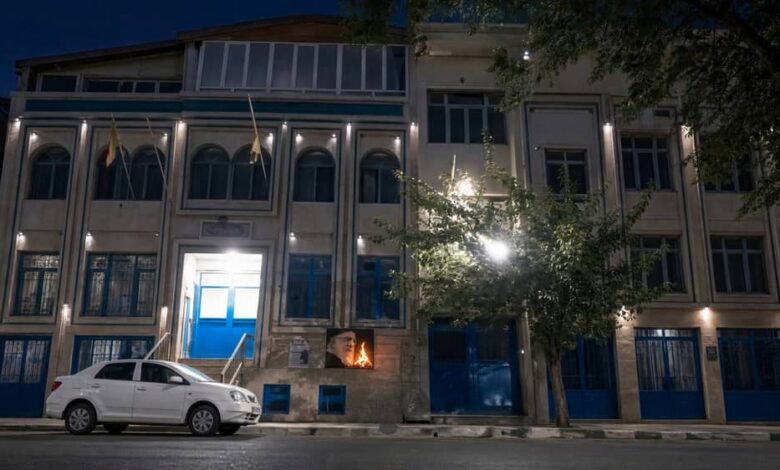
October 6, 2026 — Shahriar, Tehran Province: Resistance Units torch a banner featuring eliminated regime supreme leader Ali Khamenei | Actual footage has been enhanced by Grok AI
Written by
Mohammad Sadat Khansari
During the weekly reporting window of October 4–10, 2026, the clerical dictatorship confronted an escalating nationwide security and political crisis as organized Resistance Units executed a synchronized wave of daring sabotage operations, targeted facility blazes, and defiant protest actions spanning dozens of cities. Eschewing spontaneous public demonstrations, these units independently conducted targeted operations to challenge clerical authority from the capital to remote border provinces. Despite the regime’s heavy reliance on arbitrary hangings and state terror to project an aura of absolute control, this relentless wave of decentralized operations exposes a profound internal deadlock, demonstrating that institutional repression has catalyzed rather than crushed organized domestic opposition.
October 10, 2026
The international observance of World Day Against the Death Penalty coincided with a new series of operations by the Resistance Units, as well as a direct political challenge to the regime’s president Masoud Pezeshkian during his visit to Karaj.
Resistance Units confronted Pezeshkian’s presence in Karaj through repeated public slogans rejecting his authority. Messages included “Pezeshkian, Karaj is no place for you,” “Pezeshkian, get out of Karaj,” and “Pezeshkian, have some shame and leave Karaj.” Other slogans accused the president of supporting the crimes of the ruling establishment and demanded his immediate departure.
The challenge in Karaj accompanied a broader campaign of direct action associated with World Day Against the Death Penalty. The PMOI official website reported 10 strikes against security, ideological and government-linked targets in nine cities.
Tehran
Resistance Units set fire to billboard regime supreme leader Mojtaba Khamenei pic.twitter.com/LrlMP3kUHi— People's Mojahedin Organization of Iran (PMOI/MEK) (@Mojahedineng) October 8, 2026
In Qazvin, the Resistance Units reported a strike against a religious seminary described by the opposition as an institution of ideological repression. In Kermanshah, another operation targeted premises associated with the Imam Khomeini Relief Committee.
In Mashhad, an IRGC-affiliated Basij base was set ablaze using a Molotov cocktail. In Bandar Abbas, another incendiary operation targeted a complex of the regime’s cultural control.
The campaign extended into southeastern and western Iran. In Zahedan, a banner displaying images of Ruhollah Khomeini and Ali Khamenei was torched. In Dehloran, a Basij base affiliated with the Revolutionary Guards’ tribal units came under an incendiary attack. In Chabahar, a banner bearing Ali Khamenei’s image was burned.
In Iranshahr, the Resistance Units reported setting fire to two separate IRGC-Basij bases, while in Khash, another Basij installation was targeted with a Molotov cocktail.
The operations were accompanied by a statement from death-row prisoners in General Ward 2 of Ghezel Hesar Prison. The prisoners described the psychological burden of living under the constant threat of execution, saying that for many inmates, every footstep in a prison corridor could signal a final farewell.
Iran’s Resistance Units defy regime’s execution campaign with operations across the country https://t.co/gXkexBBknj
— People's Mojahedin Organization of Iran (PMOI/MEK) (@Mojahedineng) October 8, 2026
October 9, 2026
On the eve of World Day Against the Death Penalty, the Resistance Units executed an extensive campaign of banners, placards, printed declarations and public messages across Iranian cities. The operations sought to make capital punishment a central political issue while emphasizing solidarity with prisoners facing execution.
In Tehran, the Resistance Units displayed statements of Maryam Rajavi, the President-elect of the National Council of Resistance of Iran, condemning executions as an instrument of political power. The messages argued that capital punishment served not merely as a criminal penalty but as a means of preserving the ruling establishment. Other banners invoked freedom, humanity and solidarity with the condemned.
In Karaj, resistance messages commemorated World Day Against the Death Penalty with appeals for collective opposition to executions. One prominent message called for a united voice in defense of life and against capital punishment.
In Mashhad, placards featured Mrs. Rajavi’s commitment to abolishing the death penalty in a future democratic Iran. Other messages characterized the anti-execution movement as a vehicle for expanding public opposition to state repression.
In Ahvaz, materials from supporters of the People’s Mojahedin Organization of Iran (PMOI/MEK) demanded the dismantling of the country’s machinery of hanging and execution. In Sowme’eh Sara, printed materials and typographic displays emphasized compassion, human dignity and opposition to state killing.
Resistance Units in Zahedan reject Shah and mullahs, denounce executions, and call for democratic change https://t.co/0FXJ33gS7t
— People's Mojahedin Organization of Iran (PMOI/MEK) (@Mojahedineng) October 10, 2026
The campaign also reached Robat Karim, where messages urged the public to heed the voices of condemned prisoners before it was too late. In Quchan, placards called for solidarity with prisoners under death sentences, while in Kerman, campaign materials combined opposition to imprisonment and executions with support for political prisoners. An audio message from Eslamabad called for an end to executions.
A separate campaign in Zahedan connected opposition to executions with support for university students and the demand for a democratic republic. Resistance Units displayed banners and placards featuring messages from Maryam Rajavi and Massoud Rajavi.
The messages emphasized freedom, equality, the rejection of torture and discrimination, and opposition to both clerical and monarchical dictatorship. Several specifically called for universities to remain centers of political resistance and insisted that students should not surrender their role in struggles for democratic change.
The slogans in Zahedan included “Death to the oppressor, whether Shah or Supreme Leader,” “Neither Shah nor the mullahs— freedom and a democratic republic,” and “A century of crimes under monarchy and clerical rule.” Others declared that Baluchestan rejected both forms of dictatorship and linked the southeastern city with the wider country through the slogan, “From Zahedan to Tehran, death to the oppressor, whether Shah or Supreme Leader.”
Iranian political prisoners defy execution threats and demand international action to stop Tehran’s killing machine https://t.co/C6kDqeHzAW
— People's Mojahedin Organization of Iran (PMOI/MEK) (@Mojahedineng) October 10, 2026
October 6, 2026
The Resistance Units executed a separate nationwide series of direct operations following the executions of Alireza Sepahi and Alireza Raeisi. Opposition sources characterized the campaign as 20 preliminary retaliatory operations directed against the symbols, institutions and communications infrastructure associated with the regime’s system of repression.
In Tehran, a billboard bearing Ali Khamenei’s image was reportedly set on fire. In Shahriar, another Khamenei banner was burned, while a separate operation targeted a sign identifying an IRGC-linked intelligence-reporting facility. In Andisheh, within Shahriar, the Resistance Units burned an additional Khamenei banner.
In Chabahar, an operation targeted an IRGC-Basij base. In Iranshahr, another strike was reported against the government office responsible for enforcing administrative and commercial penalties.
In Isfahan, the Resistance Units burned Khamenei banners at two separate locations. The operations were accompanied by slogans rejecting the principle of absolute clerical rule, praising the National Liberation Army and expressing support for the Resistance.
In Mashhad, posters of Mojtaba Khamenei were reportedly set ablaze at two locations.
PMOI Resistance Units carried out 20 operations across Iran in response to the execution of two protesters arrested during the January 2026 uprising. They targeted centers and symbols of repression, including Basij and the regime’s security forces and regime propaganda posters. pic.twitter.com/mUqCSuPKP0
— People's Mojahedin Organization of Iran (PMOI/MEK) (@Mojahedineng) October 9, 2026
In Bandar Abbas, an incendiary operation targeted a directional sign associated with an IRGC intelligence-reporting center. In Genaveh, another operation burned a sign pointing toward a Ministry of Intelligence facility. Molotov cocktails were used in both operations.
In Sari, a banner bearing images of Ruhollah Khomeini and Ali Khamenei was burned. In Birjand, another propaganda display carrying images of Ali and Mojtaba Khamenei was destroyed by fire.
In Zahedan, the Resistance Units targeted a sign identifying an IRGC-Basij base. In Nik Shahr, a banner displaying images of Ruhollah Khomeini, Ali Khamenei and Mojtaba Khamenei was set alight with a Molotov cocktail.
In Sabzevar, two separate operations targeted propaganda banners featuring Mojtaba Khamenei and Ali Khamenei. In Sarbaz, a billboard displaying senior regime figures, including Khomeini and the two Khameneis, was burned. In Azna, an additional operation targeted a Ministry of Intelligence directional sign featuring images of the same figures.
Alongside these operations, the 141st week of the “No to Execution Tuesdays” campaign was marked by anti-execution activities in 12 cities. Prisoners in 66 prisons participated in the campaign through hunger strikes, according to Iran Human Rights Monitor. Resistance Units and their supporters reinforced the prisoners’ demands through public photo displays, wall writing, leaflets and banners.
In Tehran, photo displays proclaimed opposition to executions and invoked the blood of fallen comrades as a reason to continue the struggle. In Karaj, another display demanded the cancellation of death sentences issued against Mansour Jamali, Manouchehr Fallah, Issa Chari, Ehsan Faridi and Zahra Tabari.
In Shiraz, a photo display opposed the execution of Amirhassan Akbari Monfared. In Qaemshahr, fabric banners rejected imprisonment, executions and further killings, and called for the abolition of hanging in Iran.
In Mashhad, Resistance Units distributed or displayed leaflets bearing the “No to Execution Tuesdays” message. In Isfahan, similar materials combined rejection of the death penalty with the slogan “Yes to Life.”
In Ahvaz and Shahrekord, leaflets opposed the executions of Alireza Mardasi and Issa Chari. In Yazd, wall writing declared that the threat of hanging and execution would not silence opposition.
In Nishapur and Kamalshahr, campaign materials reaffirmed determination to continue the struggle in memory of those killed and promoted the demand for an end to capital punishment.
In Robat Karim, photo displays and leaflets called for urgent attention to prisoners facing imminent execution. They also rejected the country’s retributive punishment laws as inhumane and cited the abolition of the death penalty as a component of Maryam Rajavi’s Ten-Point political program.
These operations extended the campaign beyond prison walls, connecting the demands of condemned prisoners to the Resistance Units’ organized presence in urban public spaces. The simultaneous use of printed materials, wall writing and photo displays demonstrated the network’s emphasis on repeated, geographically dispersed messaging.
October 5, 2026
The immediate catalyst for the week’s retaliatory operations was the execution of Alireza Sepahi and Alireza Raeisi, two men arrested in connection with the January 2026 uprising in Isfahan.
Their deaths became a rallying point for the Resistance Units’ subsequent operations and the wider anti-execution campaign. The executions were not isolated judicial decisions but as part of a systematic reliance on capital punishment to suppress political resistance.
The week’s developments point to a central contradiction in the clerical dictatorship’s exercise of power. Its strategy of terror and executions appears to have backfired within organized opposition networks, transforming punishment intended to intimidate into a catalyst for further underground operations. The reported attacks on security facilities, the destruction of state propaganda and the declarations emerging from death row reveal a regime confronting resistance both inside and outside its prisons. These events expose its internal deadlock: coercion may preserve its institutions, yet it has failed to extinguish organized defiance. Behind the official projection of invincibility lies a continuing struggle over political legitimacy, public fear and the future of the Iranian state.