

Iranians at Home and Abroad Raise $7.5 Million for Resistance Broadcaster Simaye Azadi
Written by
Shamsi Saadati
iran ntv simaye azadi telethon 27th 1
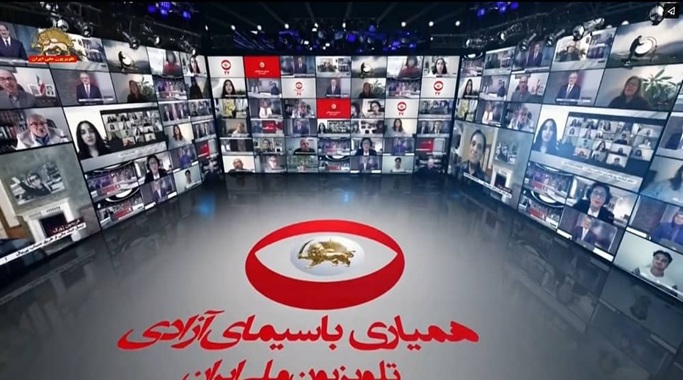
In an era where international political broadcasting is increasingly underwritten by state treasuries, an underground Iranian opposition television network has demonstrated the enduring power of a purely grassroots financial engine. Over five days and 47 hours of continuous live transmission, Simay-e Azadi—also known as Iran National Television—concluded its 30th annual national telethon, drawing $7.54 million from callers across North America, Europe, Australia, and, most notably, the heavily surveilled cities of Iran.
The marathon fundraising drive unfolded against a dark political backdrop in Tehran: a sharp spike in state executions targeting political dissidents and detainees from recent January uprisings, coinciding with the anniversary of the 1988 prison massacres in which 30,000 political detainees were systematically killed. Operating for three decades as an independent Persian-language broadcaster, Simay-e Azadi has maintained its 24-hour satellite footprint without accepting financial assistance from foreign governments.
🚨 Message from Ghezel Hesar Prison for Simay Azadi’s 30th Telethon
In a message from Ghezel Hesar Prison, political prisoner and PMOI supporter Loghman Aminpour, imprisoned for nearly a decade, expressed his support for Simay Azadi’s Telethon:
“I regret that I cannot offer you… pic.twitter.com/S0amCkM7TH
— SIMAY AZADI TV (@en_simayazadi) August 9, 2026
While the $7.54 million (1.402 trillion tomans) total was heavily anchored by the Iranian diaspora, the broadcast’s most poignant and high-risk contributions originated from inside Iran. Facing acute economic deprivation and severe state intelligence surveillance, working-class citizens repeatedly risked detection to place calls and send audio messages to the banned network.
Calling from the impoverished southeastern province of Sistan and Baluchestan, a caller named Akbar pledged the cash equivalent of a single meal for his family. Stating that he comes from a region where people risk their lives for a single loaf of bread, Akbar told the broadcast team that despite his poverty, he was giving the money from the bottom of his heart in the hope of Iran’s freedom. In the industrial city of Karaj, a woman named Setareh donated her entire monthly wage of 30 million tomans—approximately $150.
🚨 Another Young Voice in Support of Simay Azadi
Sania, another young supporter from Germany, has announced her support for Simay Azadi’s 30th Telethon, highlighting the importance of the channel’s work as an independent source of news and information about Iran.
She is calling… https://t.co/AdWvwWOMc9 pic.twitter.com/qf1pWcptWn
— SIMAY AZADI TV (@en_simayazadi) August 8, 2026
The broadcast aired a steady stream of calls highlighting extreme personal sacrifice from within Iran’s borders. From the northeastern city of Mashhad, a caller named Reza contributed five million tomans—the equivalent of ten days of hard physical labor. In the southern port city of Chabahar, Ahmad liquidated his motorcycle to fund his contribution, while Ali, calling from Baneh, dedicated one million tomans, representing his entire daily food budget. Organized dissident networks also surfaced during the telethon, with PMOI Resistance Units in Isfahan collectively pledging 100 million rials directly to the channel.
The political gravity of the drive was further underscored by messages smuggled out of Iran’s penal system, including the notorious Central Karaj and Ghezel Hesar prisons. Political prisoners, operating under immense danger, submitted joint and individual statements to the network. Unable to provide financial support, these prisoners pledged to stand against the regime with their entire being, offering their lives as a sacrifice for the freedom of their country. Moved by these smuggled messages, many diaspora callers added extra funds to their own pledges on behalf of the incarcerated, describing the prisoners as symbols of the Iranian people’s honor, resistance, and independence.
<blockquote class=”twitter-tweet”><p lang=”en” dir=”ltr”>🚨 Voices of Support | Ryan from the United States<br>Ryan from the United States has announced his support for Simay Azadi's 30th Telethon, saying<br><br>"I support Simay Azadi's telethon because they are the only source that shares the real voices from inside Iran. Please join us in… <a href=”https://t.co/UrUQzaieig”>https://t.co/UrUQzaieig</a> <a href=”https://t.co/tQSUcpSu2f”>pic.twitter.com/tQSUcpSu2f</a></p>— SIMAY AZADI TV (@en_simayazadi) <a href=”https://x.com/en_simayazadi/status/2085774430199034100?ref_src=twsrc%5Etfw”>August 7, 2026</a></blockquote> <script async src=”https://platform.x.com/widgets.js” charset=”utf-8″></script>
🚨 Voices of Support | Ryan from the United States
Ryan from the United States has announced his support for Simay Azadi’s 30th Telethon, saying“I support Simay Azadi’s telethon because they are the only source that shares the real voices from inside Iran. Please join us in… https://t.co/UrUQzaieig pic.twitter.com/tQSUcpSu2f
— SIMAY AZADI TV (@en_simayazadi) August 7, 2026
The demographic mix of the supporters crossed generational lines, seamlessly linking long-time dissidents who actively fought the former Shah’s regime with young children. A nine-year-old named Shahrzad donated her €50 allowance, while a five-year-old in Denmark offered 100 kroner. Throughout the broadcast, callers frequently rallied around the movement’s defining geopolitical mantra, “Neither Shah nor the mullahs,” explicitly repudiating both the current ruling theocracy and a return to the monarchical past. This slogan remains a cornerstone for the Iranian Resistance, which advocates for a secular, democratic republic.
This immense domestic risk was matched by staggering personal sacrifice from the international diaspora. The largest single pledge announced during the drive was a 1.5 million Canadian dollar contribution from a couple in Canada, Behzad and Azar, who stated they had dedicated their business efforts entirely toward backing the broadcaster and the opposition movement. In the United States, Sadegh and Soheila pledged $500,000, pointing to the movement’s enduring record of honesty, sacrifice, and loyalty to the Iranian people.
In Washington, D.C., an anonymous supporter liquidated his primary residence, land, and vehicle to contribute $220,000, describing his donation as a personal document of honor and independence during a decisive year for the movement. In Sweden, Dr. Sina Dashti allocated 1.2 million Swedish kronor to the channel after foregoing his vacations and taking on extra emergency shifts across hospitals.
Grassroots exile groups also pooled joint donations, with a collective in the Netherlands marshaling €47,835, a U.S.-based group contributing $35,000, a Toronto coalition gathering $27,500, and supporters in the United Kingdom raising £26,015. The broadcast also featured testimonies from families who have borne the brunt of state repression, including an exile named Sadegh Shojaei who recounted the execution and massacre of 15 family members.
🚨 Ten Days of Hard Work to Support Simay Azadi
Reza from Mashhad called Simay Azadi’s 30th Telethon from inside Iran, describing the severe economic pressures people face and explaining why he nevertheless contributed five million tomans.
“I did not contribute for the sake of… https://t.co/dt8SjVTQjz pic.twitter.com/38ROnQlbKy
— SIMAY AZADI TV (@en_simayazadi) August 10, 2026
By the time the broadcast concluded, the network had demonstrated that despite aggressive censorship and severe repression inside Iran, Simay-e Azadi continues to serve as an essential nexus. For the millions tuning in, the 30th annual telethon was a resounding indicator that the Iranian Resistance continues to sustain an organized, deeply rooted opposition movement across international borders, funded not by foreign states, but by the very people it seeks to liberate.