
Hunger Strike Escalates Across 59 Iranian Prisons in 132nd Week of Anti-Execution Campaign
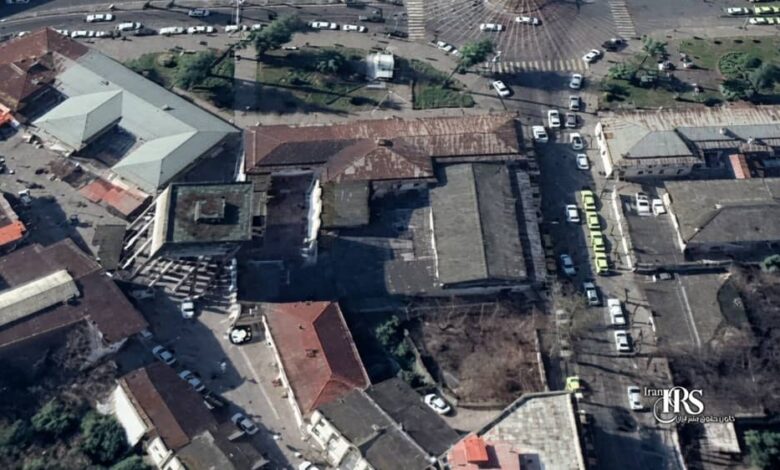
Aerial view of Rudsar Prison, Iran
Written by
Safora Sadidi Mohammadi
In an uncompromising statement marking its 132nd consecutive week, the “No to Execution Tuesdays” campaign announced that hunger strikes against capital punishment have expanded across 59 prisons throughout Iran on Tuesday, August 4, 2026.
The announcement comes amidst a sharp spike in state executions, with campaign organizers reporting that Iranian authorities have executed at least 35 individuals since late July, including a juvenile offender, a woman, and three protesters arrested during the nationwide protests of December 2025/January 2026.
Rising Executions and Domestic Crackdown
According to the statement, 28 of these executions took place in a single six-day window between July 28 and August 4. The hunger-striking prisoners condemned the clerical regime for using external conflicts and regional instability as a pretext to tighten its grip on domestic society and suppress popular dissent.
“As we have witnessed in recent weeks, the crisis-ridden and crisis-fueled regime ruling over the lives of the people has expanded executions,” the statement read. “The regime of Velayat-e Faqih, which has pegged the continuation of its rule to the suppression and exploitation of the people—especially the deprived and working classes—has launched a heavy assault on people’s lives and livelihoods under the pretext of war.”
Iran’s ‘No to Executions Tuesdays’ campaign marks week 132 as inmates defy regime crackdown https://t.co/38gh8BRLs1
— People's Mojahedin Organization of Iran (PMOI/MEK) (@Mojahedineng) August 4, 2026
The statement further highlighted the authorities’ strategic motives behind escalating militarization at home while maintaining regional tensions:
“They have no fear of war; rather, foreign threats are viewed as a ‘blessing’ similar to the eight-year war with Iraq. The sole fear of all ruling factions, despite their many differences, is the taking root of an internal uprising. They know well that through their ‘missile cities,’ they can buy time against foreign adversaries to guarantee their survival.”
A Stand Against Foreign Intervention and State Terror
Emphasizing their commitment to self-determination, human rights, and internal democracy, the campaign firmly rejected both domestic tyranny and external interference:
“Despite the warmongering of the Iranian state, no foreign country or power is the bearer of peace, democracy, equality, and human rights for Iran and the region. As opponents of execution, we are naturally opposed to war and foreign intervention, and we have declared this repeatedly.”
Together with UN experts, we published two press releases on the treatment of religious minorities: Iran’s Christian (15 July) and Bahá’í (29 July) communities.
29 July : https://t.co/Ca3JW77g7U
15 July: https://t.co/7C0R5WLwMN
At least 61 Bahá'ís and at least 79 Christians (the…— Mai Sato (@drmaisato) July 30, 2026
Addressing the core purpose of state-sanctioned violence in Iran, the prisoners noted that capital punishment serves as a calculated instrument of political intimidation: “In Iran, every execution has a political goal: to create fear and terror. Threatening society with this anti-human act now encompasses all of Iranian society… Execution means the ‘deprivation of life’ and is a form of state violence.”
Expanding Resistance Across 59 Prisons
Despite mounting pressure and recent threats from state prosecutors to penalize anti-execution speech, the campaign reported significant resistance behind bars. In one notable action at Ghezel Hesar Prison (Unit 2), approximately 1,500 inmates engaged in an unyielding two-week hunger strike, refusing to back down until prison and prosecution officials pledged to halt impending execution orders.
The campaign stressed that the prosecution’s threats against anti-execution advocates only prove the movement’s growing influence: “The fact that the regime’s prosecutor has threatened opponents of execution with punishment—even for simply expressing their opinion—demonstrates the advance of the ‘No to Execution‘ movement and its significance. Therefore, it is essential that opposition to execution becomes even more widespread, encompassing all those sentenced to death, whether political prisoners of any inclination or non-political prisoners facing any charge.”
“As we have stated repeatedly, our strength lies in our solidarity, and through resistance and organization, we will break the barrier of tyranny and execution.”
🚨 Iran: Six Political Prisoners Taken to Unknown Location After Evin Prison Raid
Prison guards raided the political prisoners’ section of Ward 7 at Evin Prison at approximately 11:30 a.m. on Saturday, August 1, reportedly beating inmates before transferring six prisoners to an… pic.twitter.com/Oyezb1SFLA
— SIMAY AZADI TV (@en_simayazadi) August 1, 2026
Participating Facilities
The August 4 hunger strike saw participation across a vast network of facilities spanning the country, including:
Tehran & Alborz: Evin (Men’s and Women’s Wards), Ghezel Hesar (Units 2, 3, and 4), Central Karaj, Fardis Karaj, Greater Tehran, Qarchak, and Khorein Varamin.
North & Caspian: Qazvin (Chubin Dar), Rasht (Men’s and Women’s Wards), Gorgan, Sari/Qaimshahr, Rudsar, Haviq Talesh, Azbaram Lahijan, Sabzevar, and Gonbad-e Qabus.
West & Kurdistan Region: Kermanshah (Dizel Abad), Sanandaj, Saqqez, Baneh, Marivan, Kamyaran, Ilam, Khorramabad, Borujerd, Arak, Hamedan/Asadabad, Urmia, Khoy, Salmas, Nagadeh, Miandoab, Mahabad, and Bokan.
Northwest & Azerbaijan: Tabriz, Ardabil, and Ahar.
Center & South: Isfahan (Dastgerd), Shiraz (Adel Abad and Nezam Wards), Sheiban Ahvaz, Sepidar Ahvaz, Bushehr/Borazjan, Zahedan (Men’s and Women’s Wards), Yasuj, Dehdasht, Behbahan, Ramhormoz, Kerman, Bam, Kahnooj, Yazd, Tabas, Birjand, Mashhad, Borujen, and Nishapur.