
New Iranian Espionage Scandal in Sweden Exposes the Costs of Western Appeasement
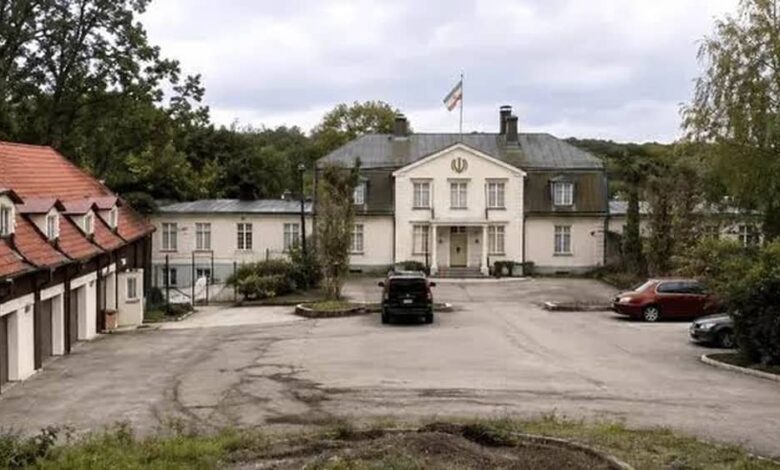
Iranian regime’s embassy in Sweden
Written by
Shahriar Kia
A widening espionage scandal in Sweden has exposed another suspected security breach involving individuals connected to Iranian intelligence, intensifying questions about whether Western governments have been dangerously complacent toward Tehran’s operations on European soil.
On November 1st, Sweden’s TV4 News reported that a senior manager at the Swedish Migration Agency had been suspended, stripped of security clearance, and reported to police following the discovery of numerous unauthorized searches in confidential government databases.
The manager was linked to a former agency employee dismissed in February 2025, after Sweden’s domestic intelligence service, Säpo, uncovered extensive contacts between him and Iranian intelligence operatives.
According to TV4’s investigation, the former employee supplied sensitive information concerning Iranian exiles and government personnel to individuals associated with Tehran’s intelligence services. Surveillance records documented meetings with an Iranian intelligence officer operating under diplomatic cover at Iran’s embassy in Stockholm. Both that officer and a subsequent intelligence contact were eventually expelled from Sweden.
#Iran News: Swedish News Outlet Exposes Rouzbeh Parsi’s Ties to Regime’s #Influence Networkhttps://t.co/9xkCG1TKZ9
— NCRI-FAC (@iran_policy) January 29, 2025
Swedish investigators also uncovered the employee’s communications with members of Bandidos, a criminal motorcycle gang, including the transmission of photographs from Iranian passports.
The former employee has denied wrongdoing. A Swedish court upheld his dismissal in June 2026.
The new manager faces a preliminary investigation into suspected unauthorized database access. Swedish outlet Riks previously reported that the dismissed employee’s daughter occupied a management position at the agency, although the newly suspended manager’s identity remains unconfirmed.
The revelations nevertheless add to a troubling record of Iranian intelligence activity across Scandinavia—and revive a political question European leaders have repeatedly preferred to avoid: has diplomatic engagement with Tehran become an excuse for tolerating its conduct?
Another report on #Iran's "experts"&"researchers" acting as spies or advancing Iran's disinformation.
Researcher accuses PET of appointing Iranians as spies of the clerical regime:"You only do this kind of thing with non-Western countries"https://t.co/YxwopD7A58 #DisinfoIs4Terror— Kaveh Novin (@KavehNovin) February 21, 2024
In Norway, the dangers of disregarding Iranian counterintelligence risks became a national controversy in 2018, when Fisheries Minister Per Sandberg travelled to Iran with his Iranian-born girlfriend, Bahareh Letnes, without following government security procedures. Sandberg resigned amid speculation that he had fallen victim to an Iranian intelligence honey trap. The episode illustrated the vulnerability of senior officials to potentially compromising relationships.
More concrete evidence emerged in Denmark, where a Norwegian citizen of Iranian heritage was convicted of participating in an Iranian intelligence operation targeting an exiled opposition figure. In 2020, Mohammad Davoudzadeh Loloei received a seven-year prison sentence for illegal intelligence activities and complicity in an attempted killing.
Sweden has witnessed similar cases. In 2019, a Stockholm court convicted a Swedish-Iraqi man of gathering intelligence on Iranian opposition activists for Tehran. In 2024, Sveriges Radio revealed that a couple who had entered Sweden under false Afghan identities were suspected of preparing attacks on Jewish targets on behalf of Iran. They were expelled without being prosecuted for the alleged plot.
The dangers are not confined to immigration institutions. In 2023, former Swedish security official Peyman Kia was sentenced to life imprisonment for espionage.
The Iranian regime’s embassies are NOT #diplomatic missions — they are global headquarters for sanctions evasion, espionage & terror.
Diplomatic pouches smuggle drone parts, cash & explosives. #IRGC & MOIS “diplomats” run the networks.
Enough.
Cose every Iranian regime embassy…— NCRI-FAC (@iran_policy) June 5, 2026
By May 2024, Säpo had publicly accused the Iranian regime of employing Swedish criminal networks to conduct violent operations against its perceived enemies, including Israeli and Jewish interests.
Yet European governments have continued pursuing diplomatic accommodation with the clerical dictatorship, frequently treating intelligence scandals as discrete security incidents rather than evidence of a sustained campaign of transnational repression.
The latest scandal lends renewed urgency to the longstanding demands of the Iranian Resistance, which has consistently rejected Western appeasement of Tehran. For decades, the NCRI has called for severing diplomatic relations with the clerical regime, closing its embassies—who only serve as hubs of espionage and terrorism—and expelling its intelligence operatives masquerading as diplomats.