
Weekly Report: Resistance Units Challenge Clerical Rule Across Iran
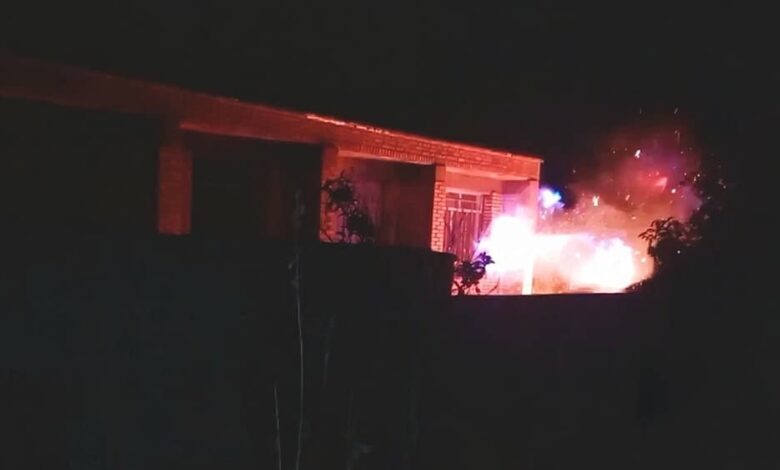
MEK Resistance Units strike a Basij facility in Kohgiluyeh County, western Iran — October 23, 2026
Written by
Mohammad Sadat Khansari
During the weekly reporting cycle of October 25–31, 2026, MEK Resistance Units executed an intensive, nationwide campaign across Iran. Combining targeted incendiary strikes against regime security installations, extensive anti-execution agitation, and coordinated actions for Cyrus the Great Day, Resistance networks demonstrated an expanding operational reach from the capital to remote border provinces. Organized in reverse chronological order, the following details summarize the five distinct operational days of this weekly cycle.
October 29, 2026
On October 29, 2026, Resistance Units in Zahedan carried out public actions under the central slogan “No Shah, no mullahs,” explicitly rejecting both the ruling clerical dictatorship and any return to monarchical rule. Operating under heavy surveillance, youth displayed placards and distributed messages reflecting the political strategy of Massoud Rajavi and Maryam Rajavi, emphasizing national independence, popular sovereignty, and the establishment of a secular, democratic republic.
Simultaneously, a separate nationwide wave of tactical operations was executed across multiple provinces. In Kohgiluyeh County, an incendiary strike hit the “Anti-Imam Sadeq” Basij center. In Khash, Resistance Units targeted an Islamic Revolutionary Guard Corps (IRGC) Basij base. In Shahriar, two separate IRGC Basij facilities—including outposts named after regime commanders—were set on fire. Additional retaliatory strikes were carried out in Kermanshah, where an IRGC Basij center was torched; in Rask, where an IRGC battalion headquarters was set ablaze; in Tabriz, where regime billboards were burned over a bridge; in Chabahar, where an IRGC Basij base was torched; and in Eslamshahr, where a Basij intelligence spy station guidepost was incinerated.
🚨 EXCLUSIVE | 50 More PMOI Resistance Unit Activities Mark Cyrus the Great Day
On October 29, @Mojahedineng Resistance Units reported 50 additional activities across Iran, following the 60 previously reported, bringing the total to 110.
Activities took place in Tehran,… https://t.co/igFpeuwL2g pic.twitter.com/gKccAu5LPP
— SIMAY AZADI TV (@en_simayazadi) October 30, 2026
October 28, 2026
Marking Cyrus the Great Day, Resistance Units mounted fifty revolutionary practices across Iran, utilizing historical commemoration to challenge the regime’s ideological authority. At the historic site of Pasargad, Resistance Units staged tactical visual actions directly in front of the Tomb of Cyrus, displaying handwritten placards rejecting authoritarianism and honoring national and resistance leaders. Similar actions took place at Persepolis (Tacht-e Jamshid).
In Shiraz, youth deployed posters and carried out photo-calls at key historical landmarks, including Darvazeh Quran and Hafeziyeh, displaying slogans committing to reclaim the country from clerical rule. Nationwide, complementary displays, roadside tactical visual actions, vehicle banner installations, and tract distributions were conducted across Tehran, Tabriz, Isfahan, Kermanshah, Hamedan, Arak, Kamyaran, and Kangan (Kengavar).
In addition, a series of retaliatory strikes responded to government raids against working-class vendor stalls at the Tehran wholesale fruit market. These operations included an incendiary action at the “Velayat” seminary in Tehran, Molotov cocktail strikes against a local Khomeini Relief Committee building, and the torching of an IRGC Basij base. Further actions in Shahriar, Tabriz, Mashhad, Masjed Soleiman, Iranshahr, and Nazarabad (Karaj) targeted state propaganda banners, regime leadership portraits, and Basij intelligence guideposts.
🚨 EXCLUSIVE | 60 PMOI Resistance Unit Activities Across Iran Mark Cyrus the Great Day
Exclusive footage received by Simay Azadi shows highlights of 60 activities by PMOI Resistance Units across Iran, marking October 29, Cyrus the Great Day, under the slogan:
"Down with the… pic.twitter.com/QLdYf6Er6J— SIMAY AZADI TV (@en_simayazadi) October 29, 2026
October 27, 2026
The mobilization for Cyrus the Great Day commenced with sixty coordinated operations spanning major urban centers, including Tehran, Shahriar, Shiraz, Mashhad, Isfahan, Karaj, Ahvaz, Rasht, Kermanshah, Bandar Abbas, Hamedan, Arak, Ilam, Lahijan, Shahin Shahr, Jahrom, and Ramsar.
In Tehran and Shiraz, group actions involving multiple participants featured printed tracts and banners promoting Mrs. Maryam Rajavi’s Ten-Point Plan for a democratic republic. In Isfahan, Resistance Units staged collective actions displaying banners condemning supreme leadership and chanting slogans in support of the Liberation Army. In Hamedan and Karaj, two-person acts and wall-writing actions emphasized the continuity of historical resistance against tyranny. Operatives in Ahvaz, Ilam, and Lahijan conducted extensive wall-writing and banner displays across public thoroughfares.
October 26, 2026
In solidarity with the 141st week of the “Tuesdays No to Execution” campaign, Resistance Units conducted widespread protest and support activities across multiple cities to oppose the regime’s escalating use of capital punishment.
In Ramsar, an audio message was broadcast publicly, rejecting state executions, defending political prisoners, and demanding an end to death sentences. In Tehran, activists completed wall-writing, tactical visual action, and poster installations demanding the immediate cancellation of death sentences for political prisoners, including Manouchehr Fallah, Amirhasan Akbari Monfared, Arghavan Fallahi, and student prisoner Ehsan Faridi. In Mashhad, Sari, and Yazd, image and poster distributions highlighted political detainees facing execution, including Zahra Tabari and Eisa Chari, asserting public solidarity with incarcerated dissidents.
The five-day operational cycle across late October demonstrates the compounding economic, political, and security pressures confronting the clerical establishment. Rather than quelling domestic opposition, the regime’s reliance on state terror and capital punishment has catalyzed organized, decentralized resistance directly challenging its core institutions.
The simultaneous targeting of IRGC facilities, intelligence outposts, and ideological monuments—paired with widespread rejection of both monarchical and clerical governance—exposes the regime’s inability to restore internal stability. As domestic exhaustion grows, Tehran’s reliance on forced mobilizations and security crackdowns reveals an establishment operating in permanent emergency mode, where the continuous escalation of repression underscores systemic vulnerability rather than internal control.