
Coronavirus Pandemic: Difference Between Iran and Other Countries
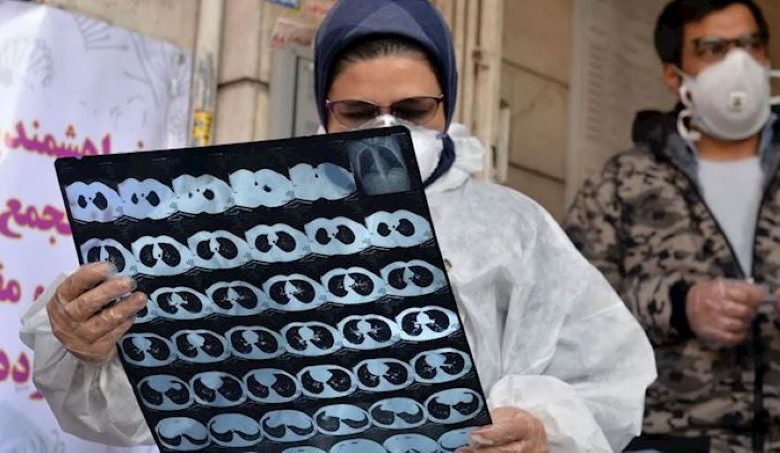
Iran, coronvirus outbreak – a hospital in Tehran
Written by Mansoureh Galestan
The coronavirus has turned to a pandemic. Yet, there is clear difference between the coronavirus outbreak in Iran and other countries.
Since the start of this global crisis, the governments of those countries affected by the virus have taken all the necessary measures to control the spread of the deadly COVID-19 and have told the truth about the coronavirus outbreak in their countries by announcing the real number of those diagnosed with the disease and those who had unfortunately lost their lives.
Bu the situation is totally different in Iran under the mullahs’ regime. Reports published by the People’s Mojahedin Organization of Iran (PMOI, Mujahedin-e Khalq MEK) from Iran confirm that as of Monday, over 5,500 have lost their lives due to the coronavirus outbreak. This is while the regime had denied the existence of this virus, first detected in the city of Qom, for days and avoided quarantining the city. The coronavirus outbreak in Iran coincided with the regime’s sham parliamentary elections. Fearing a general boycott, which indeed happened, and to somehow legitimize its rule particularly after its deadly crackdown on the Iran protests by killing over 1500 people, the regime decided to initiate a criminal campaign of cover-up to somehow achieve its goal of having a larger turnout at its elections.
In a blatant admission two days after the election, the regime’s Interior Minister, Abdolreza Rahmani Fazli, said: “Some had recommended delaying the elections, and insisted on delaying elections in Qom. But, as the official in charge of the elections, I refused to approve these recommendations.”
Satellite images of mass graveyards in the Iranian city of Qom expose the regime’s criminal cover-up of the coronavirus outbreak in Iran. Earlier reports and footages by the MEK network from the city of Qom had confirmed the existence of these graveyards, particularly the excavation of a new massive graveyard in Qom’s cemetery, dubbed the “Crisis section.”
This criminal cover-up and downplaying of the crisis expedited the spread of the virus. While denying the existence of the coronavirus in Qom, the regime sent its clerics and officials, who were diagnosed with the COVID-19, to other cities in Iran and spread the virus across Iran.
Along with its criminal campaign of cover-up and minimizing the situation, the regime’s officials, particularly the Revolutionary Guards (IRGC), instead of providing people with disinfectants, masks and other necessary medications, have been hoarding these necessary supplies and later selling them at the black market.
Horrific videos from Iran, weeks after the coronavirus pandemic, show people falling on streets, nurses and physicians one after another burn out as they don’t have the necessary equipment yet continue helping victims, and in some cases lose their lives.
The Iranian regime’s indifference to the people’s needs in preventing the spread of the coronavirus and treating patients, especially not fulfilling hygienic needs such as disinfecting gels, gloves, and masks has added to people’s anger.
The regime has recently said it will help people by providing them with supporting packages. Mohammad Bagher Nobakht, head of the regime’s Budget and Planning Authority, announced that the government would donate between 200,000 and 600,000 tomans ($13 to $40) to the citizens with low-income in two phases, which would benefit about three million people. Providing a support package to around three million, while the regime’s president, Hassan Rouhani, has confessed the number of people in need of assistance is around 18 million households or about 60 million, is a bogus gesture. In other words, these gestures are only to calm the restive Iranian society, because due to the high inflation rate having $13 to $40 would only provide an Iranian family with basic food for a couple of days.
Other reports confirm that Iran’s prisons and detention centers were among the most vulnerable centers hit by the coronavirus due to regime’s criminal negligence. According to reports received from prisoners, especially those who are detained for political reasons in Fashafouyeh, Evin, Gohardasht, Ghezelhesar, Urumia, Sheyban Ahvaz and Kashan prison, there are infections of the coronavirus among prisoners.
Mrs. Maryam Rajavi, the President-elect of the National Council of Resistance of Iran (NCRI), drew attention to the plight of prisoners, particularly political prisoners in view of the coronavirus outbreak in prisons, reiterating that refusing to release the prisoners under the circumstances is a major crime against humanity, for which Khamenei and other regime leaders are directly responsible. She called on the UN Security Council, the Secretary-General, the High Commissioner, the Human Rights Council, and the European Union and its member states to take urgent action to save the lives of the prisoners in Iran. Global intervention is more important than ever to prevent a humanitarian catastrophe, she said.
As the coronavirus claims more lives, the regime resorts to more suppressive actions. Brig. Gen. Gholamreza Jalali, head of the regime’s Passive Defense Organization, said on Sunday: “Beyond external threats, domestic threats, such as riots, revolutions, coups, famines, and pandemics can also endanger the security and stability of a state, causing its disintegration.”
In a similar development, and to counter growing public outrage over the regime’s criminal cover-up and inaction, the regime’s supreme leader Ali Khamenei assigned Chief of the Staff of the regime’s Armed Forces, Revolutionary Guards (IRGC) Major General Mohammad Bagheri, to form a “health command center” to prevent and treat coronavirus. However, the regime’s real purpose is to prevent popular uprisings and protests.
In this regard Mrs. Maryam Rajavi said: “These futile efforts will intensify the Iranian people’s anger and hatred over the despicable and oppressive velayat-e faqih system, which has done nothing but committing murder and plundering people’s wealth over the past 40 years. The Iranian people have stated unequivocally “our enemy is here” and “Khamenei and Rouhani are our Coronavirus.””
The regime’s inaction and cover-up has not only turned all of Iran into a killing zone, it has turned this country into one of the epicenters of this deadly virus.
Mrs. Rajavi emphasized in this regard, that the United Nations, World Health Organization, and other international human rights organizations must compel the religious fascism ruling Iran to make public all the facts and figures regarding COVID-19 and provide them to relevant international organizations in order to save the lives of the people of Iran and other countries in the region.
NCRI-FAC
✔
@iran_policy
· 7 Mar 2020
Replying to @iran_policy
Maryam Rajavi emphasized that on the orders of the regime’s supreme leader Ali Khamenei, the regime kept the public in the dark about the outbreak of the #CoronaVirus#COVIDー19
View image on Twitter
NCRI-FAC
✔
@iran_policy
Maryam Rajavi emphasized that the UN Security Council, the Secretary-General, and other relevant international organizations must condemn the clerical regime for its continued criminal cover-up of the spread of #Coronavirus in Iran. #COVIDー19 https://www.youtube.com/watch?v=xOnCa1x6blI …
YouTube @YouTube
39
16:41 – 7 Mar 2020
Twitter Ads information and privacy
36 people are talking about this
It is evident for the Iranian people that this crisis and similar crises will continue for as long as this regime is in power. The solution is regime change, and, for this particular case, is staging protests against the regime and helping the victims.
For this reason, Mrs. Rajavi had earlier urged Iranians, especially the youth, to stage protests to force the regime to tell the truth and compel it to allocate medical and health care resources and equipment, widely monopolized by the IRGC and security agencies, to the people, hospitals and physicians.