
Iran: Ali Younesi from Ghezel Hesar Draws a Blood-Soaked Boundary Between Dictatorship and Freedom
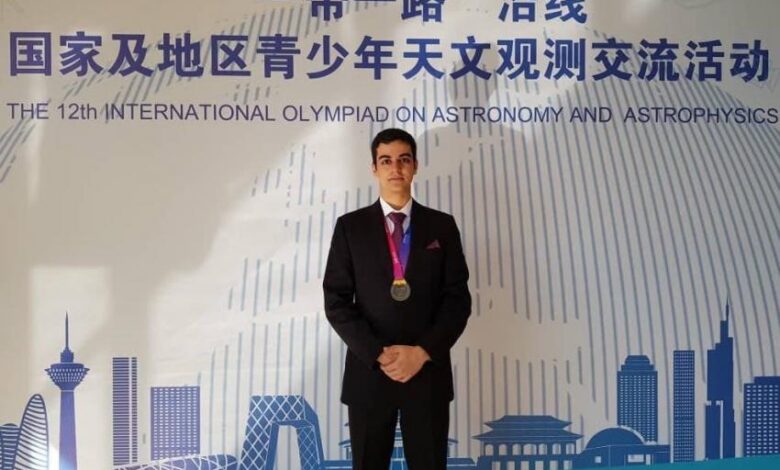
Ali-Younesi
Written by
Mehdi Oghbai
The latest statement by Ali Younesi, the imprisoned elite student and political prisoner held in Ghezel Hesar Prison, is more than a response to the misuse of his name and image by remnants of the Shah’s regime. It is a clear political and moral declaration against two forms of dictatorship: the ruling theocracy of the mullahs and the overthrown monarchy of the Shah.
Younesi is not an unknown prisoner. He is a former computer engineering student at Sharif University of Technology and one of Iran’s most distinguished young academic talents. In 2018, he won the gold medal at the International Olympiad on Astronomy and Astrophysics in China, after previously receiving silver and gold medals in Iran’s National Astronomy Olympiad. Yet the regime treated this brilliant student not as a national asset, but as an enemy. He was arrested in April 2020 after being brought home with visible injuries, while his family was also subjected to pressure and interrogation. The judiciary later accused him and Amir Hossein Moradi, another elite Sharif student, of links to the People’s Mojahedin Organization of Iran (PMOI/MEK).
#Iran News Alert
On the eve of universities reopening, imprisoned elite students Amirhossein Moradi & Ali Younesi wrote:
“Universities have become prisons, and prisons have become universities.”
They vowed:
“Our unbreakable resolve will shape Iran’s destiny—free, republican &… pic.twitter.com/WCUJ9llAlv
— SIMAY AZADI TV (@en_simayazadi) September 20, 2025
On May 26, 2026, from inside Ghezel Hesar Prison, Younesi drew a line that he insisted must never be blurred: the line between dictatorship and freedom.
This statement must be read alongside his earlier letter of May 12, in which he rejected the Iranian regime’s so-called amnesty. The regime, after years of imprisonment, torture, fabricated charges, and pressure against political prisoners and their families, now seeks to present itself as a source of “forgiveness.” But Younesi’s response exposed the moral fraud at the heart of this gesture. Freedom, he made clear, is not a favour to be granted by the executioner; it is a stolen right that must be reclaimed.
In his May 12 letter, Younesi wrote that he had never requested amnesty and never would. To accept such an offer from the very apparatus that had stolen his freedom would be to accept the regime’s false narrative: that the prisoner is guilty and the oppressor has the right to pardon. Younesi reversed that logic. The real question, he argued, is not whether the regime should pardon political prisoners, but whether the victims, the grieving families, and the Iranian people can ever pardon the regime for its crimes.
Iranian students release defiant letters from the regime’s dungeons
The moral centre of that letter was his tribute to six of his cellmates who were sent to the gallows: Vahid Baniamerian, Pouya Ghobadi, Babak Alipour, Mohammad Taghavi, Akbar Daneshvarkar, and Abolhassan Montazar. Younesi described them as proud and defiant prisoners who did not bargain over their lives. In their memory, he refused to bargain over the remaining months of his own imprisonment.
This was not a personal gesture alone. It was an act of political continuity. Younesi placed his own imprisonment within a longer chain of sacrifice, resistance, and struggle for freedom in Iran.
His May 26 statement added another crucial dimension. In recent days, some supporters and promoters of the slogan “Death to the Three Corrupt Figures” had attempted to appropriate Younesi’s name and statement. With sharp irony, he replied that after receiving the “Leader’s pardon,” he had now apparently also received a “royal pardon.” In one sentence, he rejected both the regime’s attempt to parade “amnesty” as legitimacy and the monarchist attempt to exploit his resistance for a project of returning to the past.
Younesi identified himself clearly as a supporter of the People’s Mojahedin Organization of Iran (PMOI/MEK). He then drew a historical line that is central to understanding his position. If the blood of the six recently executed prisoners leaves no room for reconciliation with the mullahs, he wrote, then the blood of Mohammad Hanifnejad and his companions — the founders of the PMOI, executed by the Shah’s regime in 1972 — leaves no room for unity with the Shah and SAVAK.
This is the core of Younesi’s message: the struggle for Iran’s freedom cannot be built on forgetting one dictatorship in order to oppose another. The crimes of the current regime do not cleanse the crimes of the monarchy. The gallows of today do not erase the gallows of yesterday.
Younesi’s statement therefore rejects a false choice that some seek to impose on Iranian society: either the mullahs or the Shah. His answer is neither. His position is rooted in a third principle: the sovereignty of the Iranian people, democratic freedom, and a republic free from both clerical rule and hereditary monarchy.
That is why the slogan he chose carries such political weight: “Death to the oppressor, whether the Shah or the Supreme Leader.” This is not merely a protest chant. It is a democratic boundary. It states that Iran’s problem is not simply the identity of the ruler, but the structure of oppression itself. Whether wrapped in a turban or crowned with a royal title, dictatorship remains dictatorship.
The significance of Younesi’s statement is heightened by the place from which it was issued. Ghezel Hesar is not an ordinary prison. It is a site associated with executions, fear, and systematic repression. The regime uses such prisons to isolate, silence, and break political prisoners. Yet Younesi’s words show that prison has also become a platform of resistance, where the regime’s intended victims continue to speak to society with clarity and courage.
Iran: Six PMOI Prisoners Sing “Rise Up Battalion” In Prison
His message also exposes the two parallel attempts to control the meaning of political resistance in Iran. The ruling regime seeks to turn resistance into repentance, using “amnesty” as a tool of humiliation and propaganda. At the same time, monarchist forces seek to turn the sacrifice of political prisoners into a ladder for their own return to power. Younesi’s response to both is firm: no.
This “no” is not merely a rejection. It is a positive political statement. Younesi declares that he stands on the side of the people and for the people, and that this stand will continue until freedom, democracy, and a democratic republic are established.
Ali Younesi’s statement is a defence of historical memory, political clarity, and democratic principle. It honours the executed prisoners of today, recalls the freedom-seekers executed under the Shah, and insists that Iran’s future must not be built by recycling old forms of oppression.
From behind the walls of Ghezel Hesar, Younesi has reminded Iranians that the struggle is not between rival claimants to power, but between dictatorship and freedom. He has declared where he stands: beside the people, for the people, and on the side of a democratic republic.
And that, in the face of both the mullahs and the remnants of the monarchy, is the blood-soaked boundary he refuses to cross.
Full text of Ali Younesi’s letter translated into English:
Ghezel Hesar Prison – May 26, 2026
In recent days, I and my statement have been supported by some of the creators and users of the slogan “Death to the Three Corrupt Figures…”
It seems that after receiving the Leader’s pardon, I have now also been granted a royal pardon!
As a small supporter of the People’s Mojahedin Organization of Iran (PMOI/MEK), I have my role models: my six proud cellmates who were sent to the gallows.
If the blood of these six and other freedom-seekers leaves no room for forgiveness between us and the Sheikh, then the blood of Hanif and his companions—whose banner these six carried—also leaves no room for unity between us and the Shah and his SAVAK.
The Shah, through the killing of freedom-seekers, paved the way for this regime to come to power. And today, the remnants of the Shah, through the slogan “Death to the Three Corrupt Figures…”, are effectively calling on the Mullahs to repay their favor by helping them reach power through executions, so that they may ride the wave of the bloodshed of the January uprising and, by begging foreign governments for power, once again sit upon the throne.
But never.
There is a border between us and them—a blood-soaked border; the border between dictatorship and freedom.
These boundaries must never be blurred.
And I stand on this side of that border, alongside the people and for the people, under the slogan:
“Death to the oppressor, whether the Shah or the Supreme Leader.”
And this stand will not stop until freedom, democracy, and a democratic republic have been established.
Ali Younesi
Qezel Hesar Prison
May 26, 2026