
Khamenei Too Weak to Intervene Over Anti-Terror Financing Bill
By Shahriar Kia
Iranian Supreme Leader Ali Khamenei is refusing to get involved in the dispute threatening to tear the Regime apart over the passage of anti-money laundering and anti-terror financing laws that are essential to improving Iran’s financial relationship with the rest of the world, despite pleas from the Cabinet.
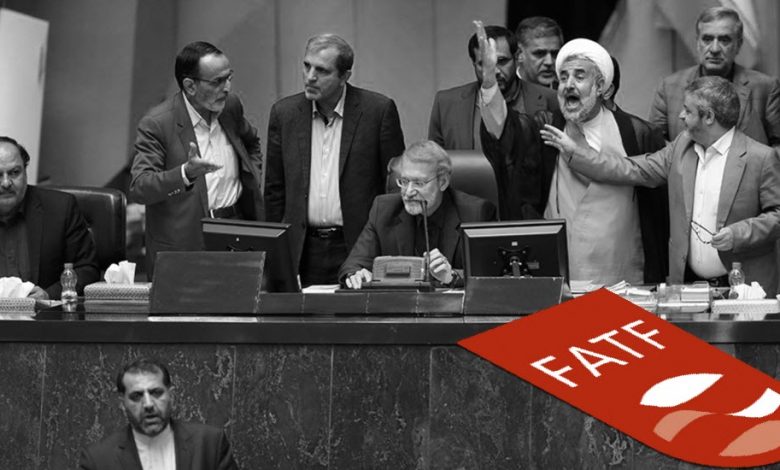
Roughly two weeks ago, eight members of President Hassan Rouhani’s cabinet, led by foreign minister Javad Zarif, wrote to Khamenei and asked him to order that Expediency Council to pass the Palermo and CFT bills – the two remaining of the four bills that need to become law in order for Iran to be approved by the international anti-money-laundering body Financial Action Task Force (FATF).
Time is running out for these to be passed, with Iran now having less than a month to pass the bills and provide enough transparency in its financial transactions that no large-scale money-laundering or terrorism-financing scheme could take place without it being easily identifiable by international monitoring agencies. Yet still, Khamenei refuses to intervene, despite knowing how important it is and that he would be the final word on the situation.
But the truth is that he is stuck, being pushed on by both sides of the argument. Any choice he makes will be seen as the wrong one by at least one faction of the Regime and that could well see him lose political capital. The Rouhani faction claims that this will help Iran to fight US sanctions, but the Regime cannot embrace these international norms without ending the export of its “revolution” through terror groups or the nepotism and corruption that run rampant through the upper levels of the Regime.
Now, some in the Regime has tried to downplay the significance of this letter, including Mahmoud Vaezi, Rouhani’s chief of staff, who claimed that this was a “normal” thing for the ministers to do and criticised those who pointed out the unusualness of the situation. But the fact that Khamenei has not yet intervened shows that he may feel he is not “powerful” enough to do so, according to the Iranian Resistance.
The Iranian Resistance wrote: “When the Supreme Leader tries to dodge a clear response to a letter directed at him about a controversy that has strategic importance to the future of the Islamic Republic, one can be sure that there isn’t much left of his stature and clout so that he doesn’t feel confident enough to gamble some.”