
The World Is Paying the Price for Decades of Appeasing Tehran
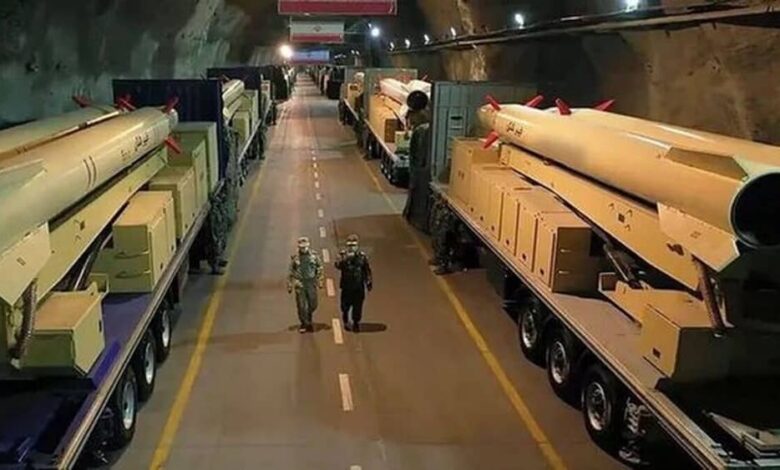
IRGC aero-space personnel walk past transporter-erector-launchers carrying ballistic missiles inside an underground tunnel facility
Written by
Farid Mahoutchi
In 1993, Mohammad Mohaddessin, chairman of the Foreign Affairs Committee of the National Council of Resistance of Iran, published a book warning that “Islamic fundamentalism” had become a new global threat. At the time, many Western officials treated such warnings as the alarmism of exiles. That was a grave mistake.
The NCRI and the movement around it had already lost tens of thousands of members and supporters to the Islamic Republic’s prisons, executions, torture chambers and street repression. Their understanding of the regime was not ideological speculation. It was hard-won experience.
And they grasped something else long before most Western capitals did: once fundamentalism captured a state, it would not remain a domestic creed. It would become a motivating ideal, a source of legitimacy and a practical model for like-minded extremists far beyond Iran’s borders. The cost of dismissing that warning became impossible to ignore on Sept. 11, 2001.
4)In 100s of books, articles & conferences, #NCRI exposed #IRGC's crimes in #Iran & abroad, bombings in Saudi Arabia, Lebanon, Iraq, Syria, Yemen & Argentina. Its 1993 book Islamic Fundamentalism: The New Global Threat, brought attention to #QudsForce for the 1st time. pic.twitter.com/FezglXJVwP
— Mohammad Mohaddessin (@Mohaddessin) January 20, 2023
The moderation illusion
When Mohammad Khatami was elected president on May 23, 1997, Western governments persuaded themselves that moderation had arrived in Tehran. That illusion became the basis for a wider policy of engagement. The Iranian Resistance argued the opposite — that no real reform was possible under velayat-e faqih, because meaningful reform in Iran would mean the end of absolute clerical rule. As the resistance put it at the time, a viper does not give birth to a dove.
But Western governments chose wishful thinking over political reality. The United States designated the MEK in October 1997; the European Union followed in 2002. What followed was not a brief diplomatic misunderstanding but a 15-year legal war: NCRI members and their lawyers fought the U.S. State Department, Britain’s Foreign Office, the French government and the EU Council across case after case until the designations collapsed in court or were lifted. In Britain, the Proscribed Organizations Appeal Commission ruled in 2007 that the continued ban was “perverse”; the EU’s measures were repeatedly struck down by European courts before the final delisting in 2009; the United States removed the MEK from its terrorist list in 2012. What had been sold as counterterrorism was, in significant part, an extension of appeasement.
Events showed rgm incapable of reform & without any future; Rgm’s supreme leader cannot tolerate slightest dissent; #iranelection #iran
— Maryam Rajavi (@Maryam_Rajavi) July 16, 2009
Punishing the whistleblowers
The same mindset shaped the nuclear file. NCRI had been warning about Tehran’s nuclear ambitions since 1991. The world took notice only after the resistance exposed the Natanz enrichment facility and the Arak heavy-water project in August 2002. That disclosure forced the International Atomic Energy Agency and Western capitals to confront what they had either missed or preferred not to confront.
But instead of treating the whistleblowers as a strategic asset, Western governments often treated them as an inconvenience. Even as the resistance continued to provide information on hidden sites and activities, European diplomacy centered on bargaining with Tehran. In 2008, Reuters reported, based on a leaked file, that Tehran had pressed Europe to keep the PMOI on the EU terror list as part of its terms in the nuclear negotiations. That is the real pattern: the regime lied, advanced its covert program and extorted concessions, while those who exposed the danger were politically penalized. The consequences were not confined to Iran. They were exported to the international system.
In light of @iaeaorg BoG resolution on the #Iranian regime's misconduct and failure to cooperate with the @UN watchdog, it's crucial to revisit over 3 decades of secretive activities and the NCRI's constant efforts to prevent a nuclear-armed pariah state.https://t.co/EiJenAsaiU https://t.co/lvD6qbumiY pic.twitter.com/qcXZLwOPO7
— NCRI-FAC (@iran_policy) June 5, 2024
Iraq and the strategic blunder
The same logic reappeared in Iraq. Before the 2003 invasion, Washington opened a confidential channel with Tehran in Geneva; later accounts by Zalmay Khalilzad confirmed those contacts and showed that Iran was already negotiating over the post-Saddam order. The NCRI, by contrast, publicly declared that its troops, the National Liberation Army, were not parties to that war and had no enemy except the clerical regime in Tehran. Yet the United States ended up bombing and then disarming the NLA in Iraq, removing from the field a fully Iranian force that might have checked Tehran’s advance.
What followed was not stability but the opposite: Iran’s Qods Force entrenched itself through militias, clients and covert networks, helping turn Iraq into a sectarian battleground.
That was precisely what Maryam Rajavi warned against. By December 2003, she was saying publicly that “the Iranian regime’s meddling and terrorist activities in Iraq is a hundred times more dangerous than its nuclear threat.”
The years that followed bore out the logic of that warning. Through the Qods Force, its militias and its political clients, Tehran managed to extend a form of occupation across six Middle Eastern countries, hollowing out states, deepening sectarian war, and creating the conditions for ISIS, mass killing and refugee flows on a historic scale. What had been defended as tactical engagement with Tehran became one of the region’s great strategic blunders.
A brief overview on how the #IRGCterrorists Quds Force rearranged the group perceived as the "Iraqi branch of Al-Qaeda" into the "Islamic State of Iraq" and then to #ISIS, helped cracking down on Iraqi and #Syrian uprisings and paved the way to create the PMF. pic.twitter.com/GwacqJhFPH
— NCRI-FAC (@iran_policy) January 18, 2024
The price of appeasement
This is the thread that runs from 1993 to the present. The independent and organized Iranian resistance movement warned early about fundamentalism, nuclear blackmail, the regime’s regional terror apparatus and the impossibility of reform under clerical absolutism. Again and again, Western governments chose the opposite course: appeasement over firmness, illusion over evidence, short-term bargains over strategic clarity.
The result is the world we now inhabit: a region repeatedly set ablaze by Iran’s proxies, a nuclear crisis that never truly left, and a regime whose coercive reach now touches shipping lanes, European security and global markets. This is the cost of a deliberate Western policy that marginalized the right warnings, empowered the wrong actors and gave Tehran decade after decade to expand its methods of blackmail and war.
The world is now paying the price for that choice.