
Tehran Stock Market Plummets Amid Fears of Major Regional Conflict Fallout
Written by
Farid Mahoutchi
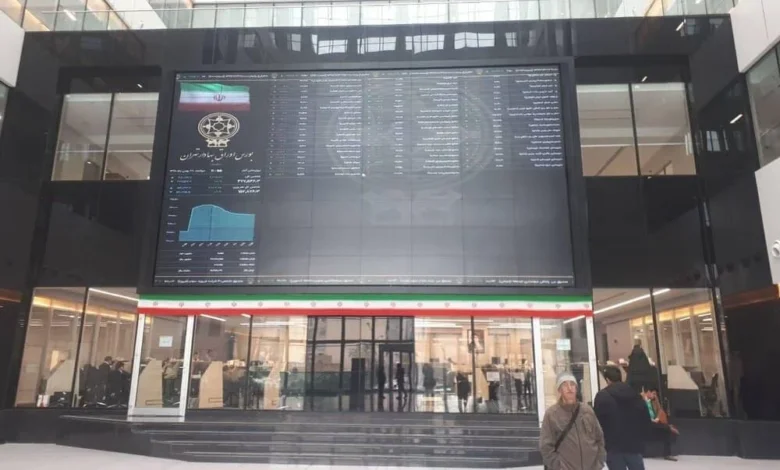
ange has plunged dramatically in the wake of the elimination of Ismail Haniyeh, head of Hamas’ political bureau, in Tehran. This incident has laid bare the regime’s chronic inability to manage the country’s economic and political crises. As markets opened, the main index dropped sharply, wiping over 1.1 trillion tomans of shareholder value.
Iranian authorities have blamed Israel for the assassination and promised retaliation, further stoking fears of escalation. On Saturday, August 3, the Tehran Stock Exchange‘s main index nosedived by 61,705 points. The equal-weight index also suffered a 20,000-point drop, settling at 637,000 points. In a single day, 1.157 trillion tomans of individual investments were withdrawn. With a near three percent decline, the market index now stands perilously around two million points.
This collapse continues despite desperate attempts by the regime to stabilize the market. Mohammad-Reza Aref, the new Vice President, ordered a massive injection of funds from the National Development Fund, beginning last Wednesday. However, these efforts proved futile, with 100 billion tomans injected on Wednesday and an additional 500 billion tomans on Saturday failing to stem the tide.
#Iran News in Brief
According to state media, today, the total index of the Tehran Stock Exchange dropped by 122,000 units to 2,317,000, experiencing the biggest drop in the history of its entire 56-year period of activity.https://t.co/b9fYGdf2MK pic.twitter.com/hkZxIpzwSq— NCRI-FAC (@iran_policy) May 8, 2023
State-controlled media reported that numerous traders at the Tehran Stock Exchange turned off their systems in protest of the dire market conditions and its mismanagement. Senior traders in the stock hall also abandoned their posts.
In an unprecedented move, traders in both Tehran and Isfahan halted their work, abandoning their trading desks and systems in protest against the abysmal market conditions. Today’s trading on the Tehran Stock Exchange saw a continued decline, with the main index plummeting by over 61,000 points, resulting in a nearly three percent drop, bringing the index to a critical low of 2,006,000 points.
Key stocks such as those of steel, copper industries, and Esfahan Oil Refining Company (Shepna) faced massive sell-offs, significantly contributing to the overall index decline.
Iran: New Scandal at Tehran’s Stock Exchange Market
On September 29, the CEO of Tehran’s Stock Exchange Market resigned after it was revealed there were dozens of cryptocurrencies miners discovered in its basement.#Iran #Econom
https://t.co/d9G0cr4Txe— NCRI-FAC (@iran_policy) October 1, 2021
The state-run website, Bourse Press, noted that similar events occurred on May 28, temporarily improving conditions but failing to deliver long-term stability. The stock market has been plagued by inconsistent and contradictory government policies, ongoing price controls, political crises, and unpredictable presidential elections over the past three years. As the regime struggles through its transition period, no immediate ministerial changes are expected, with a potential wait until next week or longer for parliamentary decisions on the cabinet.
Despite the deepening crisis, the High Council of the Stock Exchange and the Securities and Exchange Organization have yet to implement measures such as limiting the fluctuation range to prevent further declines. Market managers have also avoided providing explanations or responses to recent events, demonstrating a glaring lack of accountability.
Some market participants have demanded the replacement of regulatory officials, annulment of today’s trades, and measures to increase the base trading volume and limit the fluctuation range. The regime’s continued failure to address these issues effectively underscores a broader incompetence that threatens the nation’s economic stability.