

Power, Water, and Economic Crises in Iran Escalate into National Security Threats, Regime Insiders Warn
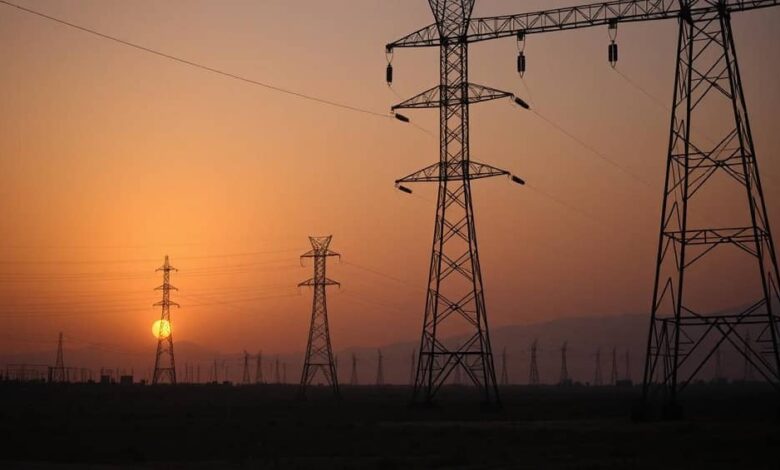
AI-generated image depicting a darkened high-voltage power grid amid widespread electricity shortages in Iran
Written by
Mansoureh Galestan
Iran is facing a multifaceted internal collapse as critical infrastructure buckles under years of mismanagement, corruption, and misplaced priorities by the ruling clerical regime. From rolling blackouts and agricultural ruin to the intensifying water crisis and systemic economic corruption, the Islamic Republic’s negligence is fueling widespread discontent that analysts warn is laying the groundwork for inevitable unrest.
Power Grid at the Breaking Point
One of the most immediate threats facing Iran is the country’s deteriorating power grid. Mohammad Hossein Didban, a state-affiliated energy expert, warned that Iran is facing a “32,000-megawatt electricity shortfall”, equivalent to 45 percent of the national power grid’s total capacity. He further projected that the power crisis in 2025 will be significantly worse than in previous years.
The state-run Javan newspaper, linked to the Islamic Revolutionary Guard Corps (IRGC), admitted on April 7 that electricity shortages have moved beyond a mere nuisance, stating: “Blackouts have become a fundamental crisis impacting the economy, industry, and even national security.” The same report estimated that industries in Iran lost over 44 trillion tomans in 2024 due to power outages, a level of disruption that has choked job creation and destroyed local production capacities.
#Iran’s Economic Crisis: Built to Break, Bound to Burnhttps://t.co/a1ZwyHDI1Q
— NCRI-FAC (@iran_policy) April 9, 2025
Parliamentary representatives are openly voicing alarm. On April 8, MP Ali Kord from Sistan and Baluchestan described the blackout situation as dire: “Power cuts have broken the backs of the people. It’s the end of comfort, livelihood, and stability.”
Another lawmaker, Behnam Saeedi from Kerman, warned that the electricity outages are crippling the agricultural sector: “Cutting power in farming areas means destroying crops. Farmers have no fuel, no water, no electricity—only losses.”
Water Crisis Driven by State Corruption
Alongside power outages, Iran is enduring a worsening water crisis exacerbated by corrupt practices and environmental destruction. Academic expert Mohammad-Hassan Paplizadeh described the situation bluntly: “A sophisticated mafia controls Iran’s water economy. Their profits come from consumption, not conservation. Only 3 percent of the Energy Ministry’s budget is allocated to groundwater, while 97 percent targets surface water.”
#Iran News: State Officials Voice Fear Over Economic Collapse, International Isolation, and Domestic Unresthttps://t.co/mLNMZJ72ok
— NCRI-FAC (@iran_policy) March 30, 2025
In Khuzestan, already devastated by decades of regime-led environmental degradation, MP Mohammad Amir warned that a secretive water transfer project from the Karun River is set to destroy the province’s ecosystem and threaten national food security. The decision, taken in the final days of 1403 (March 2025), was made “without Khuzestan’s participation or environmental clearance.”
These top-down decisions—often concealed from public view—reveal the regime’s prioritization of politically motivated engineering schemes over public welfare. Even when state-affiliated experts or lawmakers speak out, their concern stems not from empathy for the people but from fear of the backlash such policies could provoke.
The Economic Engine of Collapse
Beyond infrastructure, Iran’s economy remains paralyzed by structural imbalance and entrenched corruption. Renowned regime economist Masoud Nili offered a grim forecast: “We’ve reached an extremely dangerous point. As long as our economy remains command-driven and imbalanced, it’s unclear whether we’ll still be sitting here a year from now.”
#Iran’s Economic Collapse and Social Unrest Looming in 2025https://t.co/zN1eMj0Spm
— NCRI-FAC (@iran_policy) March 18, 2025
Nowhere is that imbalance more apparent than in Iran’s currency and export sector, which has become a playground for state-linked mafias. MP Mohsen Zangeneh, deputy chair of the regime’s budget committee, revealed on April 9 that state-run and semi-state corporations are hoarding billions in export revenues. Despite public claims of foreign currency shortages, these companies refuse to repatriate their export earnings, particularly in the metals and petrochemical sectors, where noncompliance with currency return obligations jumped by 80% and 30-40% respectively in 2024.
Zangeneh’s admission exposes how Iran’s economic collapse is not due to sanctions alone but is rooted in systemic theft by regime insiders, who profit from currency speculation while inflation and poverty ravage the population.
Society on the Edge
From rising food prices and abandoned harvests to failing electric grids and a shrinking water supply, the Iranian people are absorbing the full cost of the regime’s incompetence and corruption. In South Kerman, farmers are watching their produce rot due to low prices and a lack of buyers. “Cucumbers and onions are selling for 4,000 tomans. Is that worth harvesting?” Saeedi asked on the Majlis floor.
Regime’s Fear Mounts as #Iranian Officials Warn of Economic Collapse and Public Outragehttps://t.co/eYd3ctUroe
— NCRI-FAC (@iran_policy) November 24, 2024
Meanwhile, citizens in Sistan and Baluchestan are being forced to live without refrigeration or air conditioning, and rural farmers lack diesel fuel to run their tractors. As Javan warned, the blackout crisis is no longer just an economic burden but an issue of national security.
The clerical regime’s obsession with regional power projection, drone production, and nuclear brinkmanship comes at the direct expense of its own people’s basic needs. Rather than investing in infrastructure, the regime props up proxy wars, suppresses dissent, and enriches its inner circle through shadowy monopolies and export cartels.
But this foundation is unsustainable. With its economic engine collapsing, water reserves vanishing, and the energy sector imploding, the regime is facing a convergence of crises that could ignite a new wave of public unrest, more volatile and explosive than any before. As history has repeatedly shown in Iran, when livelihoods become untenable and hope is extinguished, the demand for regime change becomes a force no longer containable.