
Iran: Flooding Worsens and Spreads Further Across Country
By Shahriar Kia
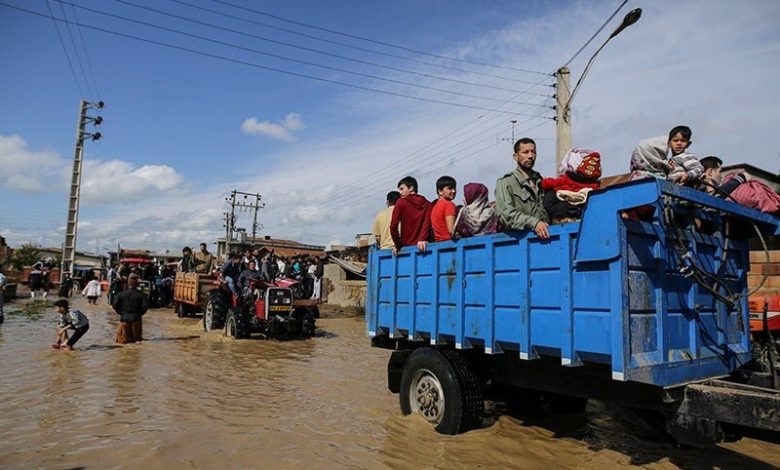
Reports from inside Iran indicate that flooding has occurred in almost all areas of Iran. So far, it seems that only one of Iran’s 31 provinces has been spared the effects of major flooding.
The number of casualties is high, with more than 120 dead in the city of Shiraz alone. Reports show that the conditions are horrific, with countless people suffering from a lack of clean water, no electricity and completely uninhabitable residential units.
In the southwestern part of the country, water levels are rising at an alarming speed. In the northwestern parts of the country there have been severe flash floods.
In Tehran, the country’s capital city, the water levels are rising and the weather organisation has warned that it will most likely be hit by flooding. Already it seems that the water levels are rising and the situation is getting worse by the hour.
Roadways across the whole of the country are being cut off by floodwater and villages are being further isolated. People are losing their homes, while others are losing their livelihoods. Some are losing both.
The most concerning part about this story is that the people are being left to their own devices and are not being supported by the authorities. The situation is at crisis level, yet there is no help to be found. People in the town of Khorramshahr in the southwestern part of the country have been seen trying to prevent floodwaters from invading their homes – but they are using the most basic of tools.
The people of Iran have been holding mass protests and anti-government demonstrations since the end of 2017. It is for reasons like the current flooding disaster that the people have been continually protesting. The regime’s widespread corruption and neglect of environmental issues has provoked problems like this flooding.
At the minute, while they are struggling to survive, the people have made their anger known. They are devastated and extremely angry because their government has let the country’s infrastructure fall into collapse. They are enraged that instead of trying to help the people, the notorious Islamic Revolutionary Guard Corps (IRGC) is in the streets with other suppressive forces trying to prevent further unrest.
An IRGC General has claimed that security is of upmost importance at this time and has tried to justify the establishment of checkpoints. The authorities are also trying to downplay the seriousness of the situation and are underestimating, or hiding the reality, about the number of people that have died as a result of the flooding.
Authorities have claimed that 19 people have died but the real figure is much larger and is continually rising.
It is time, once and for all, for this despicable regime to collapse. The people of Iran are more disadvantaged than most countries in the world in situations like this because the regime cannot manage to prevent or control such incidents. The people should be given the resources that are needed but once again they are neglected and supressed.