
Iran Protests: Workers, Residents, and Defrauded Citizens Demand Justice on January 7
Written by
Sedighe Shahrokhi
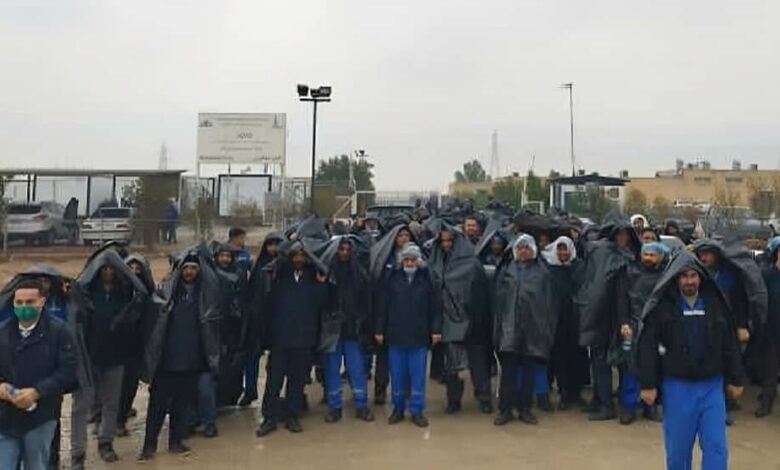
Workers of Yadavaran Oil Field in Khorramshahr, southern Iran, continue their protest for the 15th consecutive day amid cold and rain – January 7, 2025
On January 7, 2025, protests erupted across Iran as workers, residents, and defrauded citizens voiced grievances over poor working conditions, financial fraud, and rising costs. The demonstrations, spanning multiple cities, reflect the growing frustration with systemic corruption and economic mismanagement.
In Tehran, Iran’s capital, municipal enforcement workers rallied outside the city council. These workers, many of whom have been employed for 18 years without permanent contracts, protested poor working conditions and job insecurity. They criticized private contractors for failing to honor agreements, leaving workers to supplement their income through ride-hailing jobs or motorcycle deliveries. Protesters highlighted their low salaries, from which taxes are deducted, leaving them with as little as 20 million tomans ($250) per month.
In Qazvin, Qazvin Province (northern Iran), defrauded customers of the state-backed Rezayat Khodro carmaker resumed rallies in front of the judiciary building. These individuals demanded the return of their lost investments and the prosecution of those responsible for the fraudulent schemes. Many have waited months for justice while facing significant financial hardships.
January 7—Khorramshahr, southwest Iran
15th day of strikes by workers of Iran Ofogh company in the Yadavarn oil field, protesting regime authorities ignoring their demands for better pay and working conditions.#IranProtests pic.twitter.com/0loh64k8wE— People's Mojahedin Organization of Iran (PMOI/MEK) (@Mojahedineng) January 7, 2025
In Bandar Abbas, Hormozgan Province (southern Iran), residents of the West Shahed Complex, a housing project under the state-backed Mehr Housing Company, protested in front of the governorate. They opposed a sudden increase in loan installments, which they say imposes additional financial burdens on already struggling families. Protesters reported that authorities locked the governorate’s doors and refused to address their concerns.
In Khorramshahr, Khuzestan Province (southwest Iran), workers at the Yadavaran oilfield marked the 15th day of their strike. These employees of Iran Ofogh Company protested low wages, poor working conditions, and the regime’s failure to respond to their demands. Despite harsh weather conditions, the workers continued their demonstrations, emphasizing the disparity between the immense wealth generated by the Yadavaran oilfield and their own struggles to survive below the poverty line.
January 7—Qazvin, northern Iran
Defrauded customers of the state-backed Rezayat Khodro carmaker resume protest rallies to demand justice and raise their grievances against government corruption.#IranProtestspic.twitter.com/1HO2G5js3l— People's Mojahedin Organization of Iran (PMOI/MEK) (@Mojahedineng) January 7, 2025
In Korgan, Hormozgan Province (southern Iran), a shocking incident occurred when the city’s mayor, Ali Balak, was set on fire by a citizen and his wife during a confrontation about clearing a blocked pathway. The couple poured gasoline on the mayor and ignited it in protest of the municipal action. Ali Balak sustained 36% burns and was transferred to Bandar Abbas for medical treatment. The incident highlights the rising tensions between citizens and local authorities over perceived injustices and lack of accountability.
The protests in these cities are part of a broader wave of unrest across Iran. Workers defrauded citizens, and disenfranchised communities are uniting to demand justice, better pay, and relief from mounting economic pressures. As authorities continue to ignore their pleas, the determination of protesters suggests that these movements will persist.
January 6—Tehran, Iran
Dismissed workers of Ilam's Arghavan Gostar Petrochemical company rally in front of the offices of the Persian Gulf Holding, demanding policy changes that will ensure employment for locals.#IranProtestspic.twitter.com/wGXrqVj7n0— People's Mojahedin Organization of Iran (PMOI/MEK) (@Mojahedineng) January 6, 2025
This growing discontent highlights the challenges faced by many Iranians as they struggle with rising inflation, unemployment, and corruption, underscoring the urgent need for systemic reforms to address their grievances.