
Iran: Day 23 of Iran Uprising: People Demonstrated, Clashed with Repressive Forces in at Least 21 Provinces
Written by
Secretariat of the National Council of Resistance of Iran (NCRI)
Iran Protest -No. 44
NCRI logo
The nationwide uprising of the Iranian people saw more confrontations with repressive forces in Tehran and at least 21 provinces on Saturday, October 8.
In Sanandaj (Kurdistan province), police precinct 25 was captured by the people and set on fire. Also, defiant youth set fire to the IRGC base and municipality in Naysar. On Saturday evening, brave youths took control of the streets by setting fire; they also set fire to numerous regime centers, including a repression center known as Amr be Maruf (Enjoyment of Good Headquarters). IRGC forces conducted house-to-house searches houses protesters in Jaam-e Jam street and opened fire at the doors of many houses. Several youths were killed by regime’s agents in Sanandaj. On Bahman 6 Street, agents shot and killed the driver of a car who was honking in solidarity with demonstrators. Brave youths of Sanandaj broke the regime’s surveillance cameras and punished one of the regime’s suppressive agents on Adab Street.
In Mashhad, people set a car of repressive forces on fire and punished one of the agents. In Pajouhesh sq., they chanted, “This is the regime’s end”. Repressive forces fired tear gas and bullets at the people and injured a number of them; however, the youths confronted them with Molotov cocktails.
In Kermanshah, people protested by setting fire to the streets. In Javanrud (Kurdistan province), people burned a large poster of Khamenei, and clashes between youths and the regime’s forces continued until late at night. Some parts of the city were under the control of the youth.
In Kamiyaran, demonstrators blocked the streets by burning trash cans and confronted the repressive forces. In Bukan, the youth took control of some areas of the city by barricading and blocking the streets.
In Karaj, the defiant youths set fire to four vehicles and two motorcycles belonging to suppressive forces and to a large billboard that carried Qassem Soleimani’s picture. In Gohardasht in Karaj, the youths blocked the security forces; path by lighting fires. In Hamadan, the people blocked the strategic Qeshlaq bridge.
In Isfahan, the repressive forces, terrified of the people’s uprising, patrolled with helicopters. In the Jolfa district, people staged a night demonstration, chanting: “Cannons, tanks, the mullahs must get lost”.
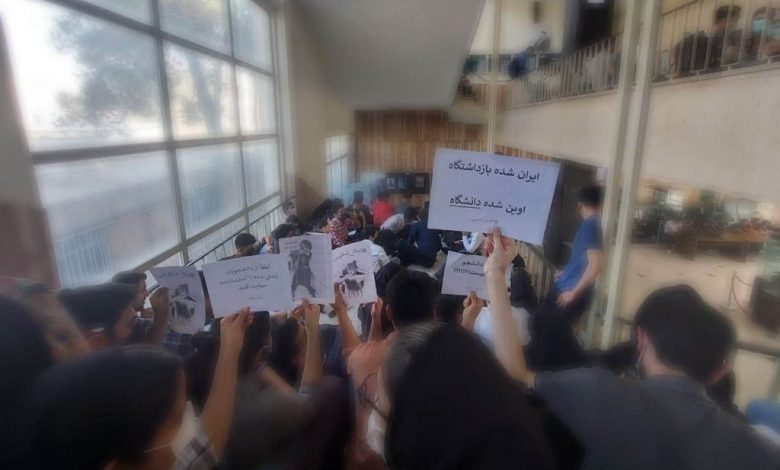
In Kerman, the people protested on Shahab Street and Azadi Square and chanted: “Freedom, Freedom, Freedom.” The suppressive forces opened fire on the crowd. In Zanjan, Rafsanjan, Kashan, and Shahin Shahr, the people protested on the streets. University students in Semnan, Ilam, Tabriz, and Babol staged demonstrations and strikes.
Secretariat of the National Council of Resistance of Iran (NCRI)
October 9, 2022