
Ali Larijani’s First Regional Tour as Security Chief Met With Hostility in Lebanon and Iraq
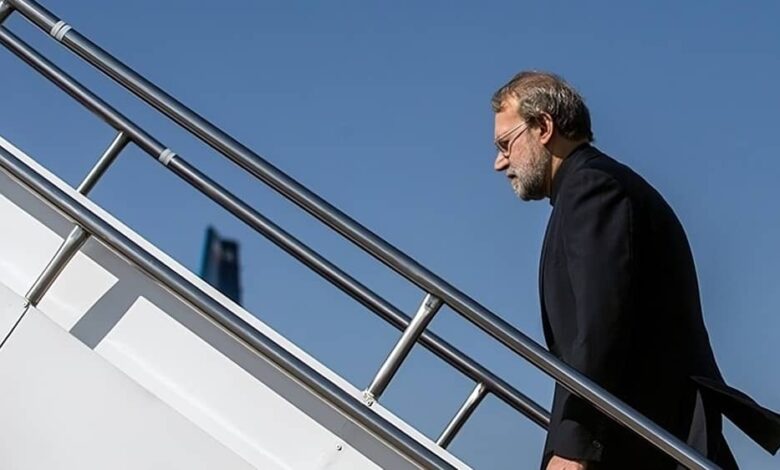
Ali Larijani — now the Iranian regime’s Secretary of the Supreme Security Council — boards a plane on February 11, 2019
Written by
Mehdi Oghbai
Ali Larijani’s debut trip as the Iranian regime’s new Secretary of the Supreme National Security Council — to Iraq and Lebanon — has drawn sharp pushback from regional leaders, media, and analysts, reflecting what many see as Tehran’s weakened leverage and growing isolation in its own sphere of influence.
The tour, which began on August 10 in Baghdad and will conclude in Beirut, comes amid rising pressure on Iran’s proxy forces, especially the Popular Mobilization Forces (PMF) in Iraq and Hezbollah in Lebanon. According to Iraqi political sources cited by local media, one of Larijani’s main goals is to persuade Shia factions to secure parliamentary passage of the PMF law — a move seen in Tehran as vital to cementing the militia’s legal and military standing. These sources believe the visit is linked to “concerns over Baghdad yielding to U.S. pressure” to rein in or dissolve the PMF.
In Lebanon, the trip lands in the middle of a political storm over the government’s decision to approve a U.S.-backed plan to disarm Hezbollah — a policy Iran has openly opposed. The influential daily Nidaa al-Watan cast the visit as “Hezbollah’s appeal to Larijani.” Meanwhile, Huna Lebanon told Tehran in an unusually blunt editorial: “The policy implemented toward Lebanon is a policy that the overwhelming majority of Lebanese do not want.” It accused Iran’s backing of Hezbollah of “shattering the economy” and setting the country “100 years back” without achieving any strategic advantage.
Ali Larijani's Reappointment Marks #Khamenei's Tactical Retreat Amid Deepening Regime Crisis in #Iran https://t.co/zYucnIqiYa
— NCRI-FAC (@iran_policy) August 8, 2025
According to Al-Anbaa, both President Michel Aoun and Prime Minister Nawaf Salam planned to convey to Larijani “a clear and firm position” on Hezbollah’s disarmament and to register Beirut’s rejection of Iranian interference. Lebanon’s Agriculture Minister warned that continued meddling could lead to recalling the Iranian ambassador, while the National Bloc party has already called for him to be declared “persona non grata.”
Samir Geagea, leader of the Lebanese Forces Party, went further, urging the government to call emergency Arab League and Gulf Cooperation Council meetings to address “the threat of the Islamic Republic against Lebanon” and to file a complaint with the UN Security Council. “Iran’s interventions over the past 40 years have destroyed Lebanon and pushed it decades backward,” he said.
Larijani’s rapid deployment to Baghdad and Beirut — just days after his appointment — underscores the tactical purpose behind his reinstatement. Far from a routine diplomatic mission, the trip reflects the Supreme Leader’s attempt to shore up a fraying network of proxies in the face of mounting internal dissent, regional pushback, and deepening international isolation.
Larijani’s Trip Signals #Iran Regime’s Desperation to Maintain Control in #Lebanon and Syriahttps://t.co/A9pti7HAN8
— NCRI-FAC (@iran_policy) November 21, 2024
Government spokeswoman Fatemeh Mohajerani framed his return as a move to “increase national cohesion and strengthen international bargaining power,” but the reality, as analysts note, is more defensive than strategic. The backlash in both Iraq and Lebanon — where political leaders openly rejected Tehran’s interference and media outlets described Iran’s policies as ruinous — has laid bare the erosion of the regime’s once-assumed leverage in its own sphere of influence.
Much like his earlier tenure as national security chief, Larijani’s role is less about moderation than about managing the optics of survival. His presence in the region signals not a shift in policy but an urgent bid to preserve the appearance of control while Tehran faces unprecedented political, social, and strategic pressures.