
Amnesty Identifies 87 Iranian Officials for Criminal Investigation Over 2022 Protest Atrocities
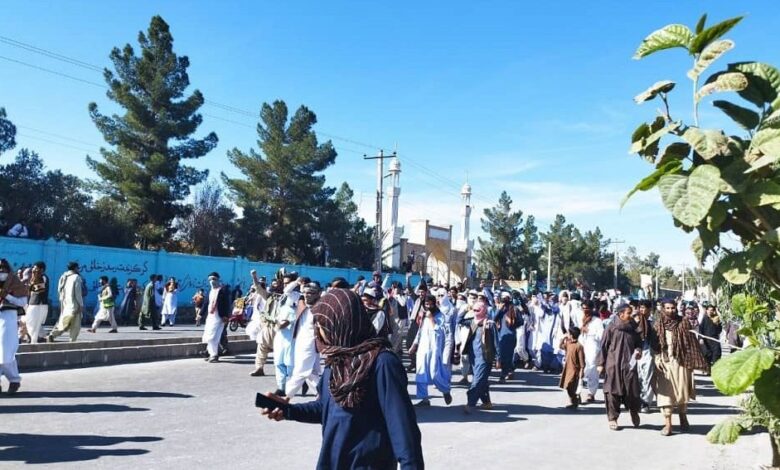
Zahedan residents join anti-regime protests following Friday prayers during the 2022 uprising
Written by
Shahriar Kia
Amnesty International has identified 87 Iranian officials whose roles in the repression of the 2022 uprising warrant criminal scrutiny, tracing potential responsibility from the regime’s highest military leadership to provincial commanders, police chiefs and Interior Ministry officials.
Published on September 16, 2026, Amnesty’s Architects of Atrocities investigation moves beyond documenting crimes against humanity to identifying individuals who, according to its findings, exercised authority over the security forces or helped coordinate and support their operations. The organization is calling for international investigations into surviving officials, while emphasizing that individual guilt must be established through independent judicial proceedings.
From National Leaders to Local Commanders
The list comprises 62 security-force commanders and 25 Interior Ministry officials. Of the 62 commanders, 33 belonged to the Islamic Revolutionary Guard Corps (IRGC) and 27 to the police force, known as FARAJA. The remaining two were the late Supreme Leader Ali Khamenei, who served as commander-in-chief, and the late chief of the General Staff of the Armed Forces, Mohammad Bagheri.
Other prominent names include former IRGC chief Hossein Salami, former IRGC Ground Forces commander Mohammad Pakpour, former FARAJA commander Hossein Ashtari and former national commander of FARAJA’s Special Cohorts Hassan Karami. The Interior Ministry officials include Ahmad Vahidi, who headed the ministry and the State Security Council during the uprising and subsequently became commander of the IRGC, and Majid Mir Ahmadi, then deputy interior minister for police and security.
Most of these officials remain in positions of authority enabling them to unleash further deadly repression in Iran. This impunity emboldened the authorities to unlawfully kill thousands more protesters between 8 and 9 Jan 2026. 2/2
https://t.co/ddbWITeTzT pic.twitter.com/LbMPdHpTLq— Amnesty Iran (@AmnestyIran) September 21, 2026
Amnesty makes clear that the 87 officials it identified do not represent the full extent of potential criminal responsibility within Iran’s ruling establishment. “Amnesty International’s work is in no way exhaustive and should not affect any future consideration of the role of other officials or perpetrators (either direct or indirect) not mentioned in this report,” the organization states. The significance of its findings therefore extends beyond the individuals named: they provide a starting point for broader investigations into the interconnected political, military, security and administrative structures involved in orchestrating and implementing the repression.
Amnesty also names regional commanders, provincial IRGC and police chiefs, Basij commanders, governors and county officials. Its most detailed geographical investigation concerns the unlawful killing of 95 Kurdish protesters and bystanders across 17 counties in Kurdistan, Kermanshah and West Azerbaijan provinces. That research enabled investigators to connect documented incidents to specific security units and examine the roles of officials at successive levels of authority.
The Case Against Commanders
For the 62 military and police commanders, Amnesty principally examines potential liability under the doctrine of superior responsibility. Its investigation considers whether each official exercised effective control over subordinate forces, knew or had reason to know that crimes were being committed, and failed to take necessary and reasonable measures to prevent those crimes or punish perpetrators.
Protesters in Iran have been killed, tortured or imprisoned in the thousands for demanding human rights & fundamental political change. Sign the petition to call for creating an international criminal justice mechanism for crimes against humanity in Iran. https://t.co/ddbWITeTzT
— Amnesty Iran (@AmnestyIran) September 17, 2026
The evidence extends beyond formal rank. Amnesty examined appointment powers, control over weapons and budgets, operational instructions, reporting channels, disciplinary authority, official statements and leaked government documents. The distinction matters because superior responsibility does not necessarily require proof that an individual personally fired a weapon or directly ordered a particular killing.
The report states: “Considering the above and the evidence of crimes against humanity presented earlier and given that the criminal conduct of FARAJA and IRGC forces persisted for three months with widespread notoriety, Amnesty International has reasonable grounds to believe that the 62 commanders named failed to take any necessary and reasonable measures to prevent crimes against humanity within their areas of responsibility.”
The Interior Ministry’s Role
Amnesty examines the 25 Interior Ministry officials principally under a different legal framework: aiding and abetting. Its investigation focuses on their contributions to coordinating security operations, transmitting directives, mobilizing resources and providing administrative and logistical assistance to the forces deployed against protesters.
Victims of crimes against humanity in Iran are demanding justice.
Call on the UN General Assembly to create an international criminal justice mechanism in Iran. It is time to end the normalization of repeated mass protest killings in Iran.https://t.co/ddbWITeTzT pic.twitter.com/AR7FMPCZEE
— Amnesty Iran (@AmnestyIran) September 21, 2026
The report cites, among other documents, State Security Council decisions issued in September 2022. It also examines a January 8, 2023, letter from Ahmad Vahidi indicating that the council had approved the allocation of nine trillion rials on October 13, 2022, for security-related expenditures. According to Amnesty’s analysis, Interior Ministry institutions and provincial and county administrations also helped cover transportation, food and accommodation costs for deployed personnel.
“Based on leaked official documents, official statements and detailed analysis of the roles of the above Ministry of Interior officials, Amnesty International has found reasonable grounds to believe that they substantially assisted the commission of the crimes against humanity it has documented,” the report states.
Amnesty acknowledges evidentiary limitations concerning the extent of some Interior Ministry officials’ direct control over security forces. It therefore concentrates on aiding and abetting while leaving open the possibility that further investigations could establish additional forms of responsibility.
Read @amnesty's groundbreaking 1000+ page report, Architects of Atrocities: State Machinery Orchestrating Crimes Against Humanity in Iran’s 2022 Woman Life Freedom Uprising, published today, here https://t.co/mEyq7WUcNV pic.twitter.com/7Jeis5TVE7
— Amnesty Iran (@AmnestyIran) September 16, 2026
From Identification to Prosecution
The organization is careful to distinguish between identifying officials for investigation and establishing criminal guilt. Its findings apply a reasonable-grounds-to-believe threshold, which is lower than the standard required for conviction. Furthermore, at least six individuals on the list had died before the report’s publication. Amnesty maintains that examining their conduct remains important for establishing the historical record and investigating the possible responsibility of others.
The report explains: “Amnesty International emphasizes that individual criminal responsibility can only be established through fair, independent and impartial criminal investigations and, where sufficient evidence exists, prosecutions conducted in accordance with the right to a fair trial, including the principle of the presumption of innocence, and without recourse to the death penalty.”
Amnesty calls on prosecution authorities in other countries to investigate surviving officials under universal or other forms of extraterritorial jurisdiction and issue arrest warrants where sufficient evidence exists. It also urges the UN Security Council to refer the situation in Iran to the International Criminal Court and the UN General Assembly to establish an international criminal justice mechanism.