
Maryam Rajavi in The Critic: West Must Center Iran Policy on Internal Revolt
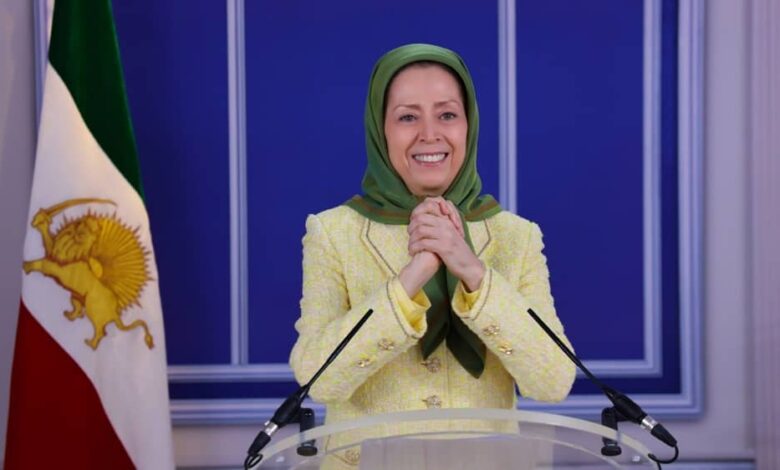
NCRI President-elect Mrs. Maryam Rajavi shares a video message with thousands of Iranians gathered in New York on September 22, 2026
Written by
Shamsi Saadati
In a September 23 article published in The Critic, Maryam Rajavi, President-elect of the National Council of Resistance of Iran (NCRI), calls for a fundamental shift in Western policy toward Tehran, arguing that the clerical dictatorship’s mounting internal crises have created the conditions for political change driven by the Iranian people and their organized resistance.
More than six months after the outbreak of war with the United States, Mrs. Rajavi describes an Iranian establishment grappling with economic collapse, growing social unrest, factional infighting and a leadership crisis. She points to warnings from senior Iranian officials about another uprising and argues that the escalating execution of political prisoners reflects the authorities’ concerns over renewed popular resistance. “Iran’s crisis has only one genuine solution: regime change,” Mrs. Rajavi writes, emphasizing that such change must come from within Iranian society rather than through foreign military intervention.
She urges Western governments to abandon policies that overlook Iran’s internal political dynamics, increase the political and legal costs of repression, confront the Islamic Revolutionary Guard Corps’ financial and transnational networks, support unrestricted communications for Iranians and recognize the role of organized opposition in a transition toward a democratic republic.
The full text of the article, originally published by The Critic follows:
“The central question today is not whether a solution to Iran’s crisis exists. The question is whether Western governments are prepared to move beyond the failed formulas of the past and pursue a policy grounded in the realities of Iran today, rather than the assumptions of…
— The Critic (@TheCriticMag) September 23, 2026
The West must foster Iran’s internal revolt
Iran’s rulers face mounting crises, and repression may no longer be enough
Artillery Row By Maryam Rajavi
23 September, 2026
More than six months after the start of the war with the United States — contrary to the image Tehran’s mullahs are striving to project — the crises confronting the ruling establishment are erupting on all fronts.
A collapsed economy with no prospect of containment, growing social unrest driven by demands for basic needs and rights, factional infighting within the regime over how to prevent the loss of control, and a leader who lacks his father’s authority are but the beginning of the onslaught of crises facing the regime.
Two months ago, the prevailing assessment was that the Memorandum of Understanding — which by the admission of all parties, including former regime officials, served its vital interests — could provide a much-needed breathing space for the ruling theocracy.
Message to the rally of freedom-loving Iranians outside the United Nations in New York
“Iran's seat belongs to the people of Iran and to their legitimate resistance for peace, freedom, and a democratic republic”#FreeIran2026NYRally#UNGApic.twitter.com/toXKTcV6AT— Maryam Rajavi (@Maryam_Rajavi) September 22, 2026
Yet the clerics plainly rejected it.
Not because they fail to recognize their own interests, but because no one understands better than they do the severity of the crises and the strategic deadlock in which they are trapped.
To preserve their increasingly weakened rule, the mullahs remain dependent on relentless repression, the export of crises, warmongering, proxy groups, and continued efforts to acquire nuclear weapons.
Iran’s crisis has only one genuine solution: regime change
Iran’s crisis has only one genuine solution: regime change. Yet such a change can only be brought about by the long-suffering people of Iran and their organised resistance.
Even some senior officials — including the regime’s Parliament Speaker Mohammad Bagher Ghalibaf — have openly acknowledged the prospect of another uprising, admitting that the current course is unsustainable and that the system cannot endure indefinitely.
The unprecedented wave of political executions targeting dissents, particularly members of the People’s Mojahedin Organisation of Iran (PMOI/MEK) and young people arrested during the January 2026 uprising, is less a sign of strength than a reflection of a ruling establishment gripped by anxiety over the prospect of another uprising and the pivotal role of the Resistance in it. It underscores the fact that the regime’s foremost challenge stems not from external pressures but from its internal predicament and the widening gulf between the state and society.
The landmark events of the past year have drawn global attention to the situation in Iran. The tensions and wider ramifications of these developments continue to unfold, sending ripples across the international political and economic landscape.
The current situation can be… pic.twitter.com/ldeAoROn9e
— Maryam Rajavi (@Maryam_Rajavi) September 15, 2026
The current circumstances demand a reassessment of the assumptions that have shaped Western policy for years. If the roots of the crisis lie within Iran itself, realism dictates that any effective strategy must focus on the country’s internal dynamics.
Such a strategy must include increasing the political and legal costs of repression, confronting the mullahs’ transnational networks of terrorism, the export of extremism, and the financing structures of the Islamic Revolutionary Guard Corps, the regime’s principal instrument of repression and terror. It must support Iranians’ free access to information and communications and recognise the Iranian people’s right to determine their own political future. It must also acknowledge the reality that organised opposition forces will play a decisive role in any future political transition toward the establishment of a democratic republic.
The central question today is not whether a solution to Iran’s crisis exists. The question is whether Western governments are prepared to move beyond the failed formulas of the past and pursue a policy grounded in the realities of Iran today, rather than the assumptions of yesterday.