

International Jurists Warn Iran’s Execution Wave Is Reviving the Impunity of 1988
Written by
Shamsi Saadati
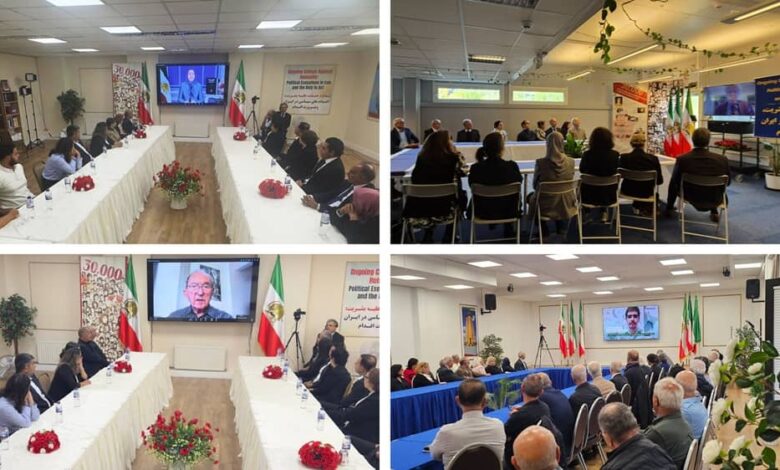
Distinguished international human rights experts participated in an online conference on accountability in Iran on 4 September 2026, marking the 38th anniversary of the 1988 massacre. The conference, organised by Justice for the Victims of the 1988 Massacre in Iran (JVMI), brought together former UN officials, international prosecutors, jurists, human-rights experts, victims’ families and representatives of the Iranian Resistance. Under the title Ongoing Crimes Against Humanity: Political Executions in Iran and the Duty to Act, participants examined the continuity between the unresolved crimes of the 1988 massacre and Iran’s accelerating political executions today, as well as the steps governments and the United Nations should take ahead of forthcoming deliberations in New York and Geneva. Speakers called for an immediate halt to executions, stronger use of universal jurisdiction, an independent international accountability mechanism, protection of political prisoners, preservation of evidence and greater diplomatic pressure on Tehran. Several warned that decades of impunity had enabled today’s repression, while stressing that military intervention was no substitute for accountability, human rights and an Iranian-led democratic future.
In a message to the conference, Mrs. Maryam Rajavi, President-elect of the National Council of Resistance of Iran, linked the current wave of political executions directly to the unresolved legacy of the 1988 massacre, arguing that impunity had allowed the same mechanism of repression to continue. “The movement for justice is part of the Iranian people’s movement to overthrow the regime and achieve a democratic revolution,” she said, adding that the UN’s recognition of the 1988 executions was only “an important first step,” because “justice requires binding decisions and much more serious actions.”
Mrs. Rajavi contrasted the clerical judiciary with the NCRI’s program for a future Iran. “The death penalty will be abolished,” she said. “There will be an independent justice system and an independent judiciary, based on international standards, including presumption of innocence, right to public defense and independence of judges.” She added: “The mullahs’ religious laws will be abolished, and the so-called Revolutionary Courts will be dissolved.”
Maryam Rajavi: Message to Conference Seeking Justice for 1988 Massacre in Iran- Sep 4, 2026
https://ssl.gstatic.com/docs/picker/images/youtube_logo_dark.svg

She then set out concrete demands for international action: “First, create an international mechanism to bring those responsible for the 1988 massacre to justice. Second, use universal jurisdiction to prosecute those responsible for this massacre.” Mrs. Rajavi further urged governments to “make their trade and diplomatic relations with the regime dependent on an immediate end to the executions and the release of all political prisoners,” and insisted that “every international agreement with this regime includes a binding and verifiable end to executions.”
“Honoring the victims is also a tribute to the determination of a people who have been covered in blood many times, but who have never given up their struggle for freedom. They will certainly achieve freedom,” the NCRI President-elect stressed.
Dr. Hanifeh Khayyeri, an international policy expert who moderated the conference, framed the proceedings around what she described as a direct continuum between the mass killing of political prisoners in 1988 and the current wave of executions. She said the gathering was taking place at a moment of “exceptional urgency,” with political charges resembling those used against prisoners in 1988 again being deployed against defendants today. The central question, she said, was what the international community should do when executions are again being used “as political weapon” and crimes left uninvestigated are recurring. Closing the conference after nearly two hours of testimony and legal analysis, Dr. Khayyeri said the proceedings had established that present executions represent “a systematic pattern of political elimination rooted in decades of impunity.” She urged independent investigations, accountability for atrocity crimes and immediate protection of prisoners facing execution, concluding: “Human rights cannot be secondary to diplomacy.”
Professor Claudio Grossman, a member of the UN International Law Commission and former chair of the UN Committee against Torture, closed the substantive interventions by stressing both individual criminal liability and the broader responsibility of the Iranian state. He said Iranians had been subjected to conduct corresponding to many of the crimes contained in the Rome Statute, including torture, enforced disappearance and widespread violations of due-process guarantees, and noted that important prohibitions also arise under customary international law. Expressions of solidarity mattered, Prof. Grossman said, because prisoners themselves draw strength from knowing that others recognize what is being done to them as criminal. But solidarity, he added, must lead to action. He urged creative use of civil and criminal responsibility against perpetrators and support for Iranians seeking to rebuild democracy, while emphasizing that primary responsibility for that future belongs to the Iranian people themselves. “Solidarity means support,” he said, describing accountability as part of preparing for a democratic future rather than merely revisiting the past.
“Ongoing Crimes Against Humanity: Political Executions in Iran and the Duty to Act”
JVMI helped organise an online panel today with distinguished UN experts and Iran's democratic opposition to draw global attention to the wave of political executions mirroring the #1988Massacre. pic.twitter.com/rZdVrJitG4
— Justice for the Victims of 1988 Massacre in Iran (@jvmifoundation) September 4, 2026
Dr. Grażyna Baranowska, a member of the UN Working Group on Enforced or Involuntary Disappearances, focused on victims whose fate and burial places remain unknown. She explained that enforced disappearance is not merely a historical event but a continuing violation that persists until the fate and whereabouts of the disappeared person are established. That legal characteristic, she said, remains particularly important for families of victims from the 1980s and can assist accountability efforts today. Dr. Baranowska said the Working Group had 617 outstanding Iranian cases and had repeatedly pressed the authorities to locate, protect and preserve mass and unmarked graves, conduct investigations and carry out exhumations according to international standards. She also emphasized contemporary disappearances involving protesters and religious and ethnic minorities, noting that even detention concealed for a few days or weeks can constitute enforced disappearance. Families themselves, she said, remain victims and possess rights to truth, reparations and memorialization alongside the state’s continuing duty to investigate and prosecute perpetrators.
Leopoldo Maldonado Gutierrez, the UN Special Rapporteur on the promotion and protection of freedom of opinion and expression, connected Iran’s experience to his own work on impunity in Mexico. Having only recently assumed the mandate, he said his experience had shown that protecting perpetrators creates incentives for further atrocities. In Iran, he argued, dissent was being treated as a threat to be eliminated rather than a legitimate exercise of fundamental rights. The danger extended beyond individual victims: when people risk imprisonment, torture or execution for protesting, criticizing authorities or reporting information, the intended audience is society as a whole. Maldonado also highlighted internet shutdowns as part of the repressive architecture, saying they silence people domestically while obscuring abuses from the outside world. “Peaceful expression, political opposition, and participation must never be punished with death,” he said. Breaking the cycle, he concluded, requires investigation of past crimes, prosecution of those responsible and preventing current abuses from becoming another chapter of impunity.
Dr. Mark Ellis, Executive Director of the International Bar Association, described the escalating use of the death penalty as part of a sustained campaign of political repression rather than a series of isolated abuses. He argued that Tehran was invoking the logic of the 1988 massacre as a model for eliminating current opponents while simultaneously attempting to erase evidence of earlier crimes. Dr. Ellis focused particularly on universal jurisdiction, under which national courts can prosecute certain international crimes irrespective of where they were committed or the nationality of the perpetrator or victim. He cited the prosecution of Hamid Noury in Sweden as an important demonstration of the principle, although he criticized Noury’s subsequent release in a prisoner exchange. Addressing Iranians seeking accountability, Dr. Ellis said lawyers and human-rights advocates had an obligation to amplify silenced voices. “The world is indeed watching, the evidence is being preserved, and the perpetrators of these crimes will be held accountable,” he said.
Ongoing Crimes Against Humanity: Political Executions in Iran and the Duty to Act
Ambassador Stephen Rapp, former U.S. Ambassador-at-Large for Global Criminal Justice and a former prosecutor at the Special Court for Sierra Leone, argued that the present “epidemic of executions” was the predictable consequence of allowing the 1988 massacre to go unpunished. When governments permit perpetrators of mass atrocities to escape responsibility, he said, repression becomes repeatable whenever a regime feels threatened. Amb. Rapp pointed to the January 2026 protests, mass arrests and the continuing risk of execution facing detainees. He also warned that foreign military intervention had diverted attention from Tehran’s own abuses and enabled the authorities to portray domestic opponents as agents of foreign powers. “I don’t think the military intervention helps them… toward the democratic future that we all dream of,” he said. Drawing on prosecutions involving Bosnia and Syria, Amb. Rapp argued that even delayed justice can change political calculations. Accountability, he said, must become an “absolute condition” for normal relations, backed by documentation, universal-jurisdiction cases and sustained diplomatic pressure.
Professor Javaid Rehman, UN Special Rapporteur on human rights in Iran from 2018 to 2024, said warnings contained in his final UN report were now materializing. That report documented systematic executions, torture and enforced disappearances from 1979 through 1988 and concluded that crimes against humanity and genocide had been committed. Dr. Rehman said the continuing validity of Khomeini’s fatwa and the renewed use of charges such as moharebeh and baghi demonstrated a direct ideological connection between 1988 and today. Following the January 2026 nationwide protests, he said, politically motivated executions and death sentences had targeted PMOI supporters and members of the Resistance Units. “Individuals are being sentenced to death and executed not because of any criminal conduct,” he said, but because of political beliefs and organizational affiliations. Dr. Rehman urged sponsors of the forthcoming UN General Assembly Third Committee resolution to explicitly endorse an international accountability mechanism and called on states to expand universal-jurisdiction proceedings.
Ambassador Joachim Rücker, former President of the UN Human Rights Council and former German Permanent Representative to the UN in Geneva, called for an immediate halt to all political executions to become an “urgent and explicit demand” of governments and UN institutions. He described a pattern in which loosely defined capital offenses convert political association, protest and alleged opposition links into crimes punishable by death. Amb. Rücker also drew a parallel between 1988 and the current period: in both cases, he said, authorities turned inward once an external military threat receded and used the aftermath of conflict to intensify domestic repression. He called for a strong 2026 UN resolution addressing the risk of renewed mass killing, referral of Iran’s human-rights record to the Security Council, creation of an independent accountability mechanism, stronger mandates for UN investigative bodies, access for UN monitors to prisons and expanded universal-jurisdiction prosecutions. Any agreement with Tehran that ignored human rights and executions, Amb. Rücker warned, would be “a big mistake.”
https:// Twitter.com/4FreedominIran/status/2096890166627488063
Richard Goldstone, former Justice of South Africa’s Constitutional Court and former Chief Prosecutor of the UN tribunals for the former Yugoslavia and Rwanda, invoked his own experience prosecuting leaders who once regarded international justice with contempt. He recalled the indictments of Radovan Karadžić and Ratko Mladić and noted that leaders who believed themselves untouchable were ultimately brought before international courts. For Iran’s victims, Goldstone said, recognition, accountability and justice were not abstract principles but rights. He strongly supported appeals for action by the UN Security Council and General Assembly and emphasized that the obstacle was fundamentally political. “If the politicians don’t do anything, nothing happens,” he said, while stressing civil society’s ability to compel them to act. Recalling the Rwanda tribunal and continuing investigations into apartheid-era crimes in South Africa, Goldstone argued that the passage of time need not extinguish accountability. The essential task, he said, was to maintain sustained pressure “for the victims.”
Professor Annalisa Ciampi, former UN Special Rapporteur on the rights to freedom of peaceful assembly and association, examined a less conventional component of accountability: the role of technology companies in preserving evidence. She cited the case of two journalists whose videos from a Tehran hospital and a Mashhad morgue during the January 2026 repression were removed by Meta despite warnings that the content was disturbing. Following appeals and a decision by Meta’s Oversight Board, the videos were restored and the company was urged to revise content-moderation policies involving human-rights abuses and armed conflict. Pr. Ciampi said the episode illustrated “how difficult it is to make accountability happen,” particularly when investigators are attempting to document abuses in an environment where information is deliberately restricted. Governments and international institutions remained principal actors, she said, but civil society, academics, independent experts and private platforms also hold evidence that may later prove decisive. Internet shutdowns and state-organized information blackouts in Iran, she argued, make preservation of such material especially important.
Message to the Conference Seeking Justice for Victims of the 1988 Massacre in Iran
The movement seeking justice for the victims of the #1988Massacre in Iran is an integral part of the Iranian people’s struggle to overthrow the clerical regime.
At a time of increasing political… pic.twitter.com/FiZgqwzMaz
— Maryam Rajavi (@Maryam_Rajavi) September 4, 2026
Professor Leila Nadya Sadat, former Special Adviser on Crimes Against Humanity to the Prosecutor of the International Criminal Court, said the 1988 massacre fell squarely within the legal concept of crimes against humanity: widespread or systematic attacks against civilians pursuant to state or organizational policy. She stressed that such crimes carry no statute of limitations and that identified perpetrators can potentially be prosecuted in national courts under universal or other jurisdictional bases. Prof. Sadat argued that torture, disappearances, gender and political persecution, extrajudicial killing and abusive use of the death penalty today were being sustained by the absence of accountability for earlier crimes. She also criticized Tehran’s positions during negotiations over a new international convention on crimes against humanity, saying Iranian representatives had sought to narrow legal obligations and universal-jurisdiction provisions. “Armed force will not be the remedy,” Prof. Sadat said, but international justice might be. She endorsed an independent accountability mechanism, strengthened fact-finding and sustained diplomatic condemnation.
Dr. Stephanie Wolfe, First Vice President of the International Association of Genocide Scholars (IAGS) Executive Board, concentrated on the relationship between impunity, mass graves and collective memory. She characterized the current executions as politically motivated killings intended to crush a population demanding freedom and argued that the same legal concepts used against prisoners in 1988 were again being deployed against protesters. International silence in 1988, she said, effectively told perpetrators that they could “get away with murder.” Dr. Wolfe called for universal jurisdiction, independent international investigations and a complete halt to executions as a condition of diplomatic and commercial relations. She also described what she called a systematic campaign to erase physical traces of the massacre through destruction of grave sites, concrete construction and restrictions on grieving families. Yet those efforts had failed to erase memory, she argued. “The regime can pour concrete, but they cannot pave over a mother’s memory,” Dr. Wolfe said, concluding: “Memory is stronger than concrete. Memory is the ultimate resistance.”
Throughout the past thirty-eight years in Iran, the regime has maintained the pattern of the #1988Massacre.
Every time, it brutally suppresses the people’s resistance and uprisings.
Despite all this, the resistance to change the regime continues. pic.twitter.com/tmNVuO2hBm— Maryam Rajavi (@Maryam_Rajavi) September 7, 2026
Geoffrey Robertson, KC, founding head of Doughty Street Chambers and the first President of the UN Special Court for Sierra Leone, revisited his investigation into the 1988 prison massacre, for which he interviewed survivors and reviewed contemporaneous Iranian material. Robertson described the Death Commissions, summary questioning of prisoners over PMOI affiliation, mass hangings and secret burials without trial or appeal. He argued that the failure to impose meaningful consequences had produced “utter impunity,” later reflected in renewed mass repression. Robertson also sharply criticized the Revolutionary Guards’ role in suppressing recent protests and said foreign military intervention had done nothing to protect demonstrators. He argued that governments committed to humanitarian values should sever diplomatic relations with Tehran. Robertson also proposed an international tribunal capable of trying to identify perpetrators of the 1988 massacre in absentia. Such proceedings, he said, could create an authoritative judicial record of the crimes and prevent future denial, much as landmark international trials have established durable historical records of other atrocities.
Elham Sajedian, an NCRI supporter, brought the consequences of political execution into personal focus. She recounted that her father, Mohammad Sajadian, an engineer with Iran’s national drilling company, had been tortured by SAVAK under the Shah before 1979 and later supported the democratic opposition to the clerical regime. He was arrested by IRGC intelligence shortly before her birth and publicly executed in Shiraz on February 22, 1985, because of his political views and links to the PMOI, she said. Only 15 days separated his arrest and execution, and the family was initially denied his body and prohibited from placing his name on his grave. “Imagine a country where even receiving the body of your loved ones is considered luck,” Sajedian said. She also described witnessing the 2019 uprising in Shiraz and continued harassment of her family by the Revolutionary Guards. Her appeal to the UN and governments was direct: act before present-day protesters and political prisoners suffer the same fate.