
UK MPs Table Cross-party Motion Backing “Democratic Republic” in Iran
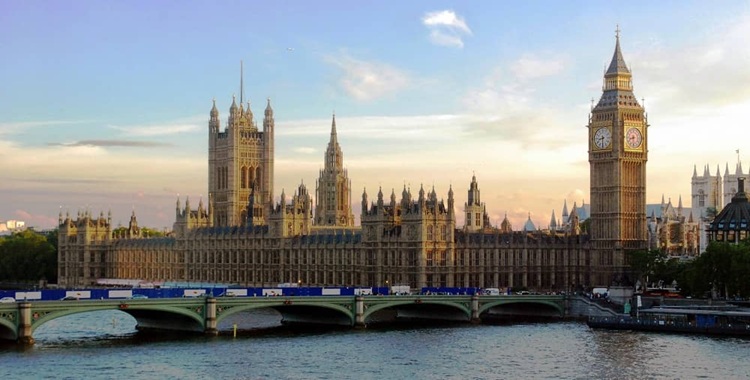
The Palace of Westminster in London, the meeting place of the Parliament of the United Kingdom | Photo courtesy of Wiki Commons
Written by
Amir Taghati
A cross-party group of lawmakers in the United Kingdom has signed a parliamentary motion declaring support for the people of Iran and urging the government to stand with pro-democracy movements, as unrest and repression there continue to drive political pressure in Westminster.
The measure, Early Day Motion (EDM) 2566—listed on the parliamentary database under the “Situation in Iran” page—was tabled in the House of Commons on January 6, 2026, and has since been signed by 71 MPs, with no amendments submitted to date.
In its text, the motion “expresses its strong support” for Iranians’ “ongoing struggle” for “freedom, human rights, and a democratic republic,” and condemns “acts of violence,” citing “the death of 32 protesters,” alongside restrictions on peaceful protest and free expression—attributing responsibility to the Iranian government and the Islamic Revolutionary Guard Corps (IRGC).
I am proud to have signed EDM 2566, in support of the people of Iran, and their courage in their ongoing struggle against the IRGC.
They have clearly signalled their demand for a democratic republic and the UK Govt must stand with the Iranian people.https://t.co/EAfezJKjNs
— Bob Blackman (@BobBlackman) January 7, 2026
The motion is sponsored by Jim Shannon of the Democratic Unionist Party. The first listed sponsors also include Bob Blackman and Sir Julian Lewis, as well as Green MPs Carla Denyer and Siân Berry.
Signatories span multiple groupings, including the Labor Party, Liberal Democrats, Scottish National Party, Plaid Cymru, and the Green Party of England and Wales, alongside unionist parties and an independent MP. The list also includes higher-profile names such as Sir Jeremy Hunt.
The EDM lands amid renewed international focus on Iran following protests that, according to the UK government, began on December 28 after a sharp currency drop and spread rapidly. In an oral statement to Parliament on January 13, 2026, Foreign Secretary Yvette Cooper said reports indicated a “brutal and bloody repression,” warning that the full extent of casualties was unclear amid an internet shutdown and communications restrictions.
On February 2, 2026, the U.K. Foreign, Commonwealth & Development Office announced sanctions on 10 individuals and one organization, including Iran’s Law Enforcement Forces (FARAJA) and senior officials, citing alleged human-rights violations linked to repression of protests.
Iran needs freedom and democracy. The 10 Point Plan has long provided an Iranian-made road map for a democratic, secular and pluralistic society. All opposition groups need to stand together in working for change – honouring the sacrifice and memory of so many who have paid the… pic.twitter.com/aeUNg2xYg5
— Lord (David) Alton (@DavidAltonHL) February 4, 2026
The EDM’s language also intersects with a live argument in Westminster over whether the UK should formally proscribe the IRGC as a terrorist organization. In a Commons exchange published in London on February 9, 2026, MPs pressed ministers on proscription and further sanctions; the ministerial response pointed to the January 13 statement and the February 2 sanctions package.
Separately, a written answer published 29 January 2026 said the government intends to take forward plans for a “proscription-like power” aimed at state and state-linked bodies, and reiterated that the UK has “over 550 sanctions” against Iran-linked individuals and entities.
The 71-signature tally—spread across parties—functions as a political signal: it demonstrates organized parliamentary appetite for a tougher, more explicitly pro-democracy posture toward Iran and adds to pressure on ministers over the UK’s next steps on sanctions, legal tools for state-linked groups, and how directly to confront the IRGC’s role in internal repression.