
Iran Uprising: PMOI Identifies 1,005 Martyrs as Calls Grow to List IRGC as Terrorist Group
Iran Protests – January 2026
Written by
Mansoureh Galestan
On January 28, 2026, the People’s Mojahedin Organization of Iran (PMOI/MEK) announced a grim milestone in the nationwide uprising against the clerical dictatorship. Following rigorous verification processes, the names of 224 additional martyrs have been released, bringing the total number of identified victims to 1,005.
The demographics of these victims expose the indiscriminate nature of the regime’s crackdown. The newly released list includes 25 women and 21 children and adolescents aged between 3 and 17. To date, the verified list of martyrs includes at least 125 women and 65 minors. The bloodshed has been widespread, with the highest verified casualties recorded in Tehran, Isfahan, and Gilan provinces.
Mrs. Maryam Rajavi, President-elect of the National Council of Resistance of Iran (NCRI), described these martyrs as symbols of “the resolve of a people who have risen for freedom, independence, and justice.” She emphasized that the international community can no longer justify delaying the designation of the Islamic Revolutionary Guard Corps (IRGC) as a terrorist organization, calling it the “principal perpetrator of this crime against humanity.”
#IranProtests Daily Report:
• PMOI announces names of 224 more martyrs, bringing confirmed total to over 1,000
• Major diplomatic shift: France backs IRGC terror designation & German Chancellor declares regime's days are "numbered"
• Field Reports: Rebellious youth capture…— People's Mojahedin Organization of Iran (PMOI/MEK) (@Mojahedineng) January 28, 2026
Defiance on the Streets: Reports from the Blackout
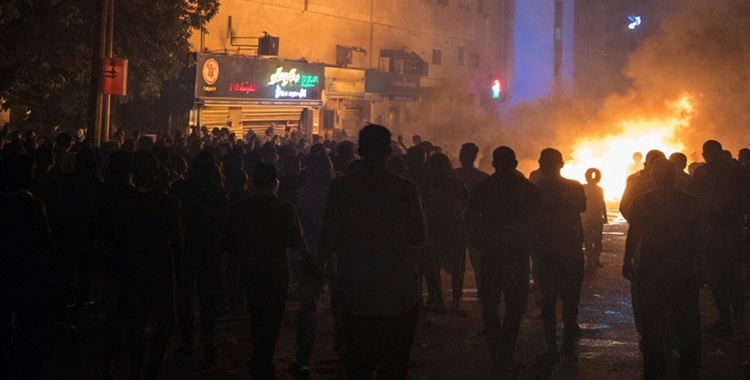
Despite the regime’s imposition of a near-total internet blackout aimed at concealing the scale of the unrest, footage and reports continue to trickle out of the country. Reports from January 8 and 9, which have recently breached the digital blockade, depict a dramatic escalation in tactics by Iranian youth.
In Eslamabad-e Gharb, protesters successfully seized the local governorate building, setting it ablaze in a direct challenge to state authority. Similar scenes of defiance unfolded in Khomein on January 8, where rebellious youth confronted security forces, confiscating their equipment and burning a police trailer.
The suppression forces, often reliant on buses to transport units to protest hotspots, found their logistics targeted. In the Naziabad district of Tehran and in Mashhad, protesters set fire to transport buses used by security forces. In Kermanshah, the rejection of the IRGC’s economic dominance was made visible when youth targeted and burned a branch of the “Kourosh” chain store, a franchise owned by the Revolutionary Guards.
The reports indicate a nationwide shift toward offensive defense. In Ilam on January 9, protesters attacked the prison administration building. In Isfahan and Ahvaz, youth engaged in “hit-and-run” conflicts with special units, blocking access routes with burning tires to prevent the movement of armored vehicles. From the northern city of Rasht to the southern port of Mahshahr, the streets have become contested territory where the regime’s hegemony is visibly fracturing.
Today, the Estonian 🇪🇪 Parliament is voting on a resolution “In Support of the Iranian 🇮🇷 People,” which was initiated by 68 of the 101 members of parliament.
— Marko Mihkelson 🇪🇪🇺🇦 (@markomihkelson) January 28, 2026
Global consensus: The Regime’s Days are “Counted”
As the uprising persists, the diplomatic wall protecting the mullahs is crumbling. In Berlin, German Chancellor Friedrich Merz issued a stark assessment of the regime’s longevity following the violent crackdown. Speaking at a press conference, Merz stated his conviction that “a regime that can only keep itself in power with sheer violence and terror against its own population, its days are counted.” He added that while it might take weeks, the current leadership has lost all legitimacy to govern.
Simultaneously, a significant policy shift is occurring within the European Union. France, previously hesitant, has announced through a presidential spokesperson that there is “no taboo” regarding the designation of the IRGC as a terrorist organization. Paris now supports the initiative driven by Italy to place the Guards on the EU terror list.
Across the Atlantic, United States President Donald Trump has escalated his rhetoric, warning that “time is running out” for the regime.
And the Estonian Parliament is currently voting on a resolution titled “In Support of the Iranian People,” initiated by a majority of its members.
Opinion: How my country, Iran, can become a peaceful, non-nuclear democratic republic https://t.co/VZJ9iiiZ2K pic.twitter.com/nAO3rGKyUi
— The Scotsman (@TheScotsman) January 27, 2026
The Path Forward: A Secular Republic
Amidst the chaos of the uprising, the Iranian Resistance has outlined a clear path for the transition of power. In a recent op-ed, Mrs. Rajavi argued that the central question is no longer if the regime will fall, but when. She dismissed any possibility of a return to the pre-uprising status quo or the monarchical dictatorship of the past, noting that the “roots of discontent remain alive.”
Mrs. Rajavi stressed that the downfall of the theocracy will not happen through external war or spontaneous collapse, but through organized resistance. She highlighted the role of the NCRI’s roadmap for the “day after,” which includes the formation of a provisional government for a maximum of six months. This body’s primary mandate would be to organize free elections for a Constituent Assembly, tasked with drafting a new constitution for a democratic, secular republic.
“Liberation can only come through an uprising and organized resistance,” Mrs. Rajavi wrote, calling on the world to recognize the right of Iranian youth to confront the IRGC and to sever the regime’s financial lifelines.