
Former Irish Minister Jim Higgins: The Iranian People Will Make Change Happen—from Within
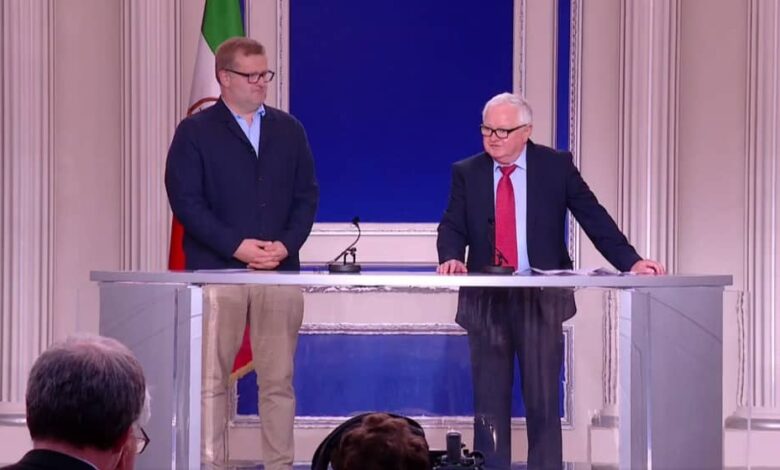
Former Irish Minister and MEP Jim Higgins addresses an NCRI conference on May 31, 2025
Written by
Shamsi Saadati
At the second session of the 2025 Free Iran Conference near Paris on May 31, former Irish Minister and Member of the European Parliament Jim Higgins delivered a passionate speech reaffirming his decades-long support for the Iranian Resistance. Drawing from his extensive experience in European politics, Higgins praised the determination of Iranian activists—especially women and youth—and the relentless advocacy of NCRI representatives in Brussels and Strasbourg.
Higgins commended Maryam Rajavi’s leadership and her speech at the event, describing it as “in a category all of its own”—a hopeful, clear roadmap for a democratic Iran. Reflecting on global turning points like the fall of the Berlin Wall and the collapse of Bashar al-Assad’s regime in Syria, he emphasized that history can pivot quickly—if momentum and unity are sustained.
He stressed that the downfall of the Iranian regime will come not from foreign military intervention but through the efforts of the Iranian people, supported by international political and moral solidarity. Higgins concluded by urging the international community to ensure any future Iranian democracy includes independent institutions—especially a free media—and reaffirmed the shared goal: not just to gather in Paris, but to celebrate one day in a free Tehran.
Excerpts of Jim Higgin’s speech follows. Portions have been lightly edited for clarity and flow.
Check out #en_simayazadi's interview with former MEP Jim Higgins and his passionate support of a #FreeIran2025 pic.twitter.com/DxQE6kmhp4
— SIMAY AZADI TV (@en_simayazadi) June 7, 2025
I got involved in this cause, as John Paul mentioned, when I joined the Irish Senate 23 years ago. But I truly engaged when I became a Member of the European Parliament in 2004—21 years ago.
From the start, one theme that’s been constant is Ashraf—Ashraf 1, Ashraf 2, so-called Camp Liberty, and now Ashraf 3.
I want to make a special plea to the Albanian authorities: please ensure the protection of the people of Ashraf. We saw what happened in Iraq when that protection was denied. These are the people keeping the flag of freedom flying. They deserve safety, dignity, and recognition for what they represent.
Madam Rajavi, your speeches have always inspired us. But what you delivered today was truly in a category of its own. It was comprehensive, hopeful, determined, and visionary. You laid out a clear policy framework that, once our shared goal is achieved, will serve as the blueprint for a democratic Iran.
It reminded me of 1989, when Ireland elected its first female president, Mary Robinson. I remember her inauguration well. She famously said, “The hand that rocks the cradle rules the world.”
And today’s theme—women leading the revolution—could not be more fitting. From the very first video, to the delegation of young activists, to the women who are driving change on the ground in Iran, this movement is led by women. Led by an extraordinary leader in Maryam Rajavi.
Let me turn briefly to strategy. We’ve heard incredible contributions today, and I don’t want to repeat what’s been said. But it’s not enough to have truck drivers striking in isolation. Or teachers, or electricity workers, or other sectors acting alone.
What is needed now is coordination. The students, the universities, the academics—everyone must act in concert. Fragmented action won’t cross the finish line. History shows that change can happen suddenly. Think of the fall of the Berlin Wall. The Iron Curtain crumbled overnight.
Or consider Syria—last year, who would have predicted regime change there after the brutality unleashed by Assad: the bombings, the poison gas, the devastation of Homs and Aleppo?
Jim Higgins: The first video showed clearly— #Iran's revolution is led from underground by women. The young delegation here included 11 courageous women. Women are central to this movement, inspired by the leadership of @Maryam_Rajavi.#NCRIAlternative
https://t.co/dTw9DXrEab— NCRI-FAC (@iran_policy) May 31, 2025
And yet, within months, it happened. And where is Assad now? He’s a political refugee under Putin’s wing in Moscow.
Change can happen—quickly. But it requires belief, coordination, and momentum. Our Romanian colleague reminded us of Ceaușescu—he didn’t listen, and he paid the ultimate price.
Outside intervention will not bring change to Iran—not from the U.S., not from the EU, which is still trying to find its footing with Ukraine. What will bring change is support—moral, political, and through sanctions. But ultimately, it must come from within. Every revolution in history has succeeded because the people themselves made it happen.
Let’s make it happen.
As someone said earlier, it’s inspiring to be here in Paris. These events are moving, well-organized, and full of hope. But where we really want to be is not in Paris—but in Tehran.
A free Tehran. A free Iran that finally realizes its enormous potential. We’ve talked about human rights, the Universal Declaration, the importance of an independent judiciary. But one more element must be emphasized unequivocally: A free media.
A media that can objectively examine any future democratic government in Iran, and hold it accountable. That’s essential for any functioning democracy. Well done to all involved today.
Thank you.