
Iran News: Clerical Regime Deploys 15,000 AI-Powered Cameras in 2025 Crackdown as Infrastructure Collapses
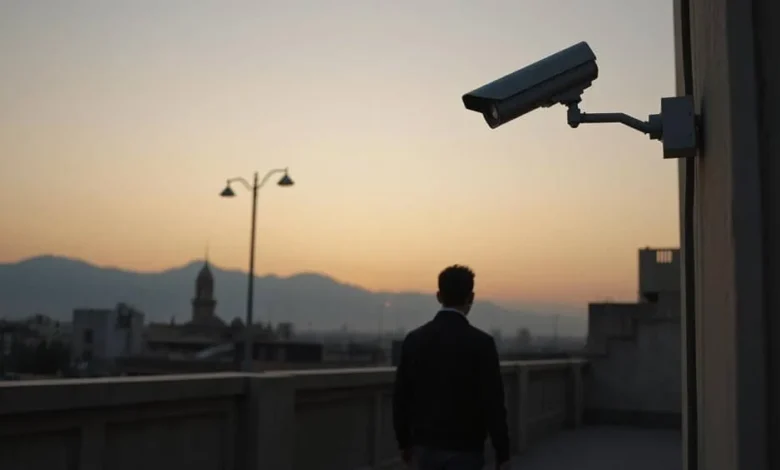
AI-generated surveillance camera monitoring the people in the street
Written by
Amir Taghati
Iran’s clerical regime is intensifying its grip on an increasingly restive population by deploying advanced surveillance technology, including artificial intelligence and thousands of new cameras, to monitor and suppress dissent. Meanwhile, the country’s infrastructure—plagued by chronic underinvestment—continues to deteriorate, exacerbating the suffering of ordinary Iranians and exposing the regime’s stark hypocrisy.
Hamid Baradaran, CEO of Tehran’s Traffic Control Company, a municipal entity, announced on April 9, 2025, plans to install 15,000 surveillance cameras across the capital by the end of 1404 (March 2026). Speaking to the state-run ISNA news agency, Baradaran said, “The approach is a supervisory one, aimed at reducing hazardous violations in the city of Tehran, which in turn will lead to a reduction in accidents and urban deaths.” He added that these cameras, equipped with AI technology, are intended to “detect violations leading to incidents and lawlessness,” with nearly 3,000 billion tomans (approximately $30 million) allocated for the smart city initiative.
Yet, this ambitious high-tech security push stands in sharp contrast to the regime’s failure to address the nation’s crumbling infrastructure. While billions are funneled into surveillance and control mechanisms, Iran’s roads, bridges, and public transportation systems remain dilapidated, contributing to a staggering rate of traffic accidents—over 17,000 deaths annually, according to official statistics. Baradaran himself acknowledged that a separate budget of 4,000 billion tomans is needed to complete the electrification of Tehran’s transport infrastructure, a project that remains underfunded and far from completion.
#Iran News: IRGC Media Pushes Surveillance in Classrooms Amid Crackdown on #Schoolshttps://t.co/TXQWfZsOB6
— NCRI-FAC (@iran_policy) March 24, 2025
The regime’s use of surveillance technology extends far beyond traffic enforcement, revealing its true priorities: maintaining power amid growing unrest. Security officials have openly admitted to repurposing urban cameras to enforce mandatory hijab laws and track protesters. In 2023, Tehran’s Traffic Police Chief confirmed that traffic cameras were being used to identify women violating hijab regulations, a policy reinforced by IRGC-affiliated media outlets like Mashregh News, which boasted of “complete security forces’ dominance over rioters and agitators” through facial recognition technology. During the 2022 nationwide protests, state media published footage from city cameras to identify and arrest demonstrators, underscoring how these tools serve as weapons of repression.
This juxtaposition of high-tech surveillance and neglected public services lays bare the regime’s hypocrisy. While it invests heavily in AI and camera networks to police its citizens, millions of Iranians endure frequent power outages, water shortages, and a collapsing economy. Tehran’s smart city budget dwarfs the paltry funds allocated to modernize its aging electrical grid or expand public transport, leaving citizens to bear the brunt of the regime’s misplaced priorities.
#Iran News in Brief
By passing a new law today, the regime's parliament called on various state organizations for surveillance of citizens' personal lives. In this context, the parliament had instructed the Ministry of Communications to collaborate closely with the #IRGC’s… pic.twitter.com/AEaHxPwqtc— NCRI-FAC (@iran_policy) November 7, 2023
Critics argue that the clerical leadership’s focus on security over welfare is a desperate bid to fend off an “explosive society” teetering on the edge of revolt. The 15,000 new cameras, combined with 600 speed-monitoring systems and additional red-light violation detectors set to roll out by mid-2025, signal an escalation in the regime’s surveillance state. Yet, as Baradaran touts a future of “maximum coverage” to curb urban lawlessness, the question remains: Who pays the price for a government that sees its people as threats to be monitored rather than citizens to be served?
For now, Iran’s rulers appear committed to fortifying their technological fortress, even as the foundations of the nation crumble beneath them.