
Widespread Water and Power Outages Threaten Livelihoods and Public Health Across Iran
iran-hamedan-water-shortage
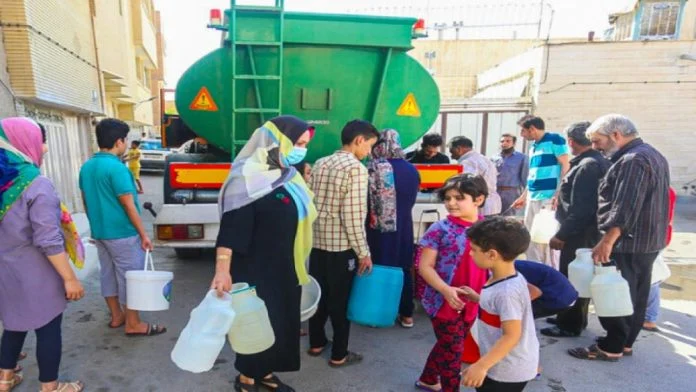
Iranian citizens in the northwestern city of Hamadan wait in line to collect water from a tanker – August 2022
Written by
Mansoureh Galestan
In an alarming escalation of Iran’s infrastructure crises, mounting power outages and water shortages are disrupting daily life, threatening livelihoods, and exposing the systemic failures of the clerical dictatorship. The most recent developments include the shutdown of a major factory due to electricity cuts and widespread water shortages hitting both urban and rural areas, with Tehran itself now under a red alert.
On July 15, state media confirmed the closure of the Pak Choob factory in Shush, Khuzestan due to unplanned power outages. The report acknowledged that this disruption jeopardizes the livelihoods of over a thousand families and is a stark indicator of how deeply the energy crisis is undermining the industrial sector. Quoting state media, the closure represents a “documented and worrying report of current economic realities” in Iran.
This is far from an isolated incident. Chronic mismanagement, lack of investment, and dilapidated infrastructure have turned seasonal shortages into full-blown, year-round emergencies. Power and water outages now plague a broad spectrum of cities and towns, with rural and southern areas suffering the most severe consequences.
#Tehran’s Looming Water Crisis: A National Emergency Decades in the Makinghttps://t.co/t18FDZru8n
— NCRI-FAC (@iran_policy) April 23, 2025
Water shortages are particularly devastating. In Mehdiabad, Ilam, residents report being without water for up to 72 hours, while villagers in Asilabad, Shahriar, describe living in “paralyzing” conditions due to persistent outages. “Every day we’re without water,” one resident told state media on July 18, adding, “we can’t bathe, can’t wash, can’t even cool our homes in this heat.” Similar protests are rising across hundreds of locations.
Meanwhile, Tehran’s water crisis has reached a breaking point. Official figures released by state news agency ISNA show that only 14% of the capital’s dam reservoirs remain filled. The government-owned Bahar News called this summer “one of the driest in the past half-century,” and confirmed that over 300 cities are already experiencing severe water stress. In some districts of south Tehran—including Salehiyeh, Pishva, Kahrizak, and Baghershahr—residents are now coping with regular nightly water cuts, often without prior notice.
Despite the regime’s denial of any official water rationing, multiple reports from HamMihan Daily and Asr Iran contradict these claims. One Tehran resident in Salehiyeh stated, “Every day from 11 p.m. to 11 a.m., we have no water. We had to buy a water tank.” Others described simultaneous power and water cuts, with one noting that “pressure is so low we don’t have water, even on the first floor.”
#Iran News: Widespread Power Outages and #Fuel Crisis Amplify Winter Woeshttps://t.co/Gwdx6T9Utn
— NCRI-FAC (@iran_policy) December 14, 2024
In Alborz Province, the Water and Wastewater Company admitted on July 19 that water supplies in cities like Karaj and Fardis are suffering due to a 50% drop in reservoir levels. They have urged residents to buy household tanks and refrain from using potable water for gardening, car washing, or swimming pools.
Meanwhile, the clerical dictatorship blames rising consumption rather than its own failure to modernize and maintain basic services. The Tehran Water Company’s director, Mohsen Ardakani, announced that “those exceeding consumption norms will face 24-hour water cuts and tiered penalties.” He advised households to install tanks and pumps to compensate for the falling water pressure.
This advice rings hollow in areas hardest hit by poverty. As one factory worker in south Tehran put it, “We’re not excessive users. We just want to bathe or have a glass of clean water. But we’re the first to be cut off.”
#IranProtests: Isfahan Farmers Demand Water Rights Amid Intensifying Crisishttps://t.co/fswuvGMJpB
— NCRI-FAC (@iran_policy) April 4, 2025
The compounded crises of water and power—now accompanied by class-based discrimination in their distribution—are pushing Iran’s working population closer to despair. Entire industries, such as the shuttered Pak Choob plant, are grinding to a halt, while rural populations are reverting to water-hauling methods reminiscent of past centuries.
As HamMihan noted in its July 17 edition, “this is no longer a distant warning, but an immediate, irreversible threat to Iran’s economy, security, and social cohesion.”