
What Tehran’s Own Officials Are Saying about Fear, Control, and the PMOI
Written by
Mohammad Sadat Khansari
The most revealing evidence that Iran’s ruling establishment fears another uprising is not found in opposition rhetoric. It is found in the words of the regime’s own officials, delivered over the course of the last few days in March 2026.
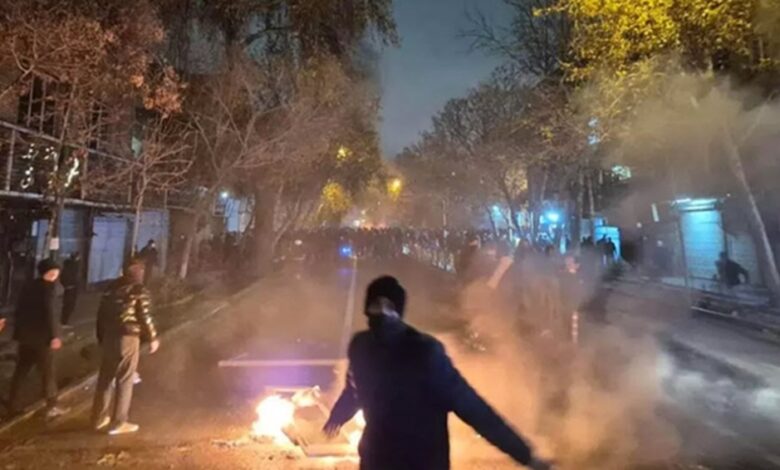
The sequence begins with the security apparatus itself. On March 19, 2026, Hamidreza Moqaddam-Far, an adviser to the commander of the Islamic Revolutionary Guard Corps, spoke in unusually concrete terms. After repeating the regime’s old accusations against the PMOI, he turned to the present tense: “These people sometimes come now. I have seen some suspicious faces; for example, groups of motorcyclists. They try to move together, several of them; they wear masks.” He then became even more specific: “Yes, they try to do this, but they are together, two or three of them, it is quite obvious, with motorcycles, with cars, girls and boys, in any form, women and men, they come.”
This is not the usual register of ideological sloganeering. It is operational language: suspicious faces, motorbikes, masks, twos and threes, mixed-gender movement, cars, mobility. It is the vocabulary of surveillance and street-level anxiety. More to the point, it is how a regime official sounds when he is describing not a distant memory, but a present concern.
Amid Bombing, Tehran Reveals Its Fear of the MEK and Another Uprising https://t.co/agsw8BR5q2
— M. S. Khansari (@khansari_m) March 23, 2026
Systemic fear
A day later, on March 20, 2026, Gholam-Hossein Noforsti, the acting representative of the Supreme Leader in Birjand, was more blunt still. “This was the wish of our martyred leader,” he said, “that our enemies, the Monafeqin, must not feel safe, must not dare, in an alley, in a house, in a shelter, in facilities, to act against the system.” He continued: “Our people must be vigilant in this regard.”
The significance of this statement lies in its nouns and verbs. “Must not feel safe.” “An alley.” “A house.” “A shelter.” “Facilities.” It is a language of penetration and denial. It tells supporters of the regime that the task is not only to defeat opponents in the abstract, but to deny them physical space, privacy, and local footholds. It also revives the regime’s preferred slur for the PMOI, “Monafeqin,” a term long used by Tehran to criminalize, dehumanize, and isolate its principal organized foe.
Then, on March 22, 2026, Ahmad Alamolhoda, the Supreme Leader’s representative in Mashhad, moved from warning to mobilization. “Keep your Hezbollah identity in the streets,” he said. “Brothers and sisters, preserve the arena, keep the scene completely, do not leave this scene and this arena, stand there, participate in these gatherings by day and by night. The enemy fears these gatherings far more than missiles.”
#Breaking Iran News Alert
Simay Azadi Exclusive
Ahvaz – March 16, 2026PMOI Resistance Units target the Ahvaz governorate building ahead of Iran's national Chaharshanbe-Suri (Fire Festival).
While holding a National Liberation Army flag, they chant: "Viva Rajavi." pic.twitter.com/RvtAWUjTtW
— SIMAY AZADI TV (@en_simayazadi) March 16, 2026
Again, the important words are not the slogans but the physical terms. This is a call for constant visible presence in public space. It is also an admission. When Alamolhoda says “the enemy fears these gatherings far more than missiles,” he is telling his audience that what matters now is not only military confrontation, but who occupies the street, who projects confidence, and who controls public space inside Iran.
The regime’s own language points to fear of organized movement, local organization, and a social atmosphere that could again become explosive.
The real fear
Beneath the regime’s loud, ritual chants of “Death to the hypocrites!”—cried out in Tehran’s official Quds Day demonstrations on March 13, in state-aligned protests in the capital around March 2, and in religious and public gatherings between March 14 and 16—echoes a far quieter confession. It does not fear the sudden, leaderless sparks of street anger that ignite and fade on their own. It does not even fear foreign bombs or missiles.
NCRI Statement: #MEKResistanceUnits Mark Anniversary of #Iran’s 2019 Uprising With 167 Actions in 6 Nationwide Campaignshttps://t.co/KryH7iOB4Z pic.twitter.com/aQAgcqRrGU
— NCRI-FAC (@iran_policy) November 19, 2025
What truly keeps Tehran awake at night is an organized movement that can seize every protest, every grievance, every crack in the facade—and forge it, with discipline and direction, into a force for ultimate change.
That is the one threat the slogans cannot drown out. That is why the dread feels endless. The regime is not fighting random chaos. It is fighting the very thing it cannot bomb or arrest away: an opposition that turns the people’s anger into power.