
Unformed Pezeshkian Cabinet Under Siege from Competing Regime Factions in Iran
FILE PHOTO
Written by
Mehdi Oghbai
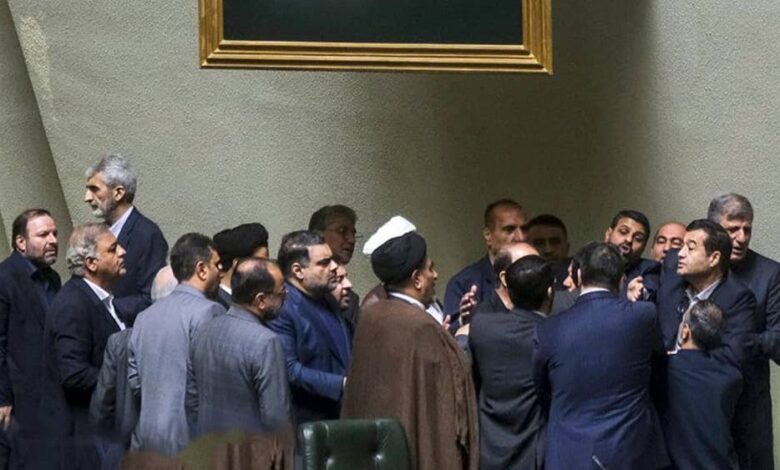
The ongoing power struggle within Iran’s ruling theocracy has reached new heights as factions aligned with Supreme Leader Ali Khamenei escalate their efforts to eliminate rivals within the regime. Following the appointment of Masoud Pezeshkian’s cabinet, these factions have taken further steps to marginalize Pezeshkian’s allies, reflecting the deepening rift.
Following the resignation of Mohammad-Javad Zarif, state media are reporting on the impending departure of other Pezeshkian allies, writing, “According to reliable information, Vahid Aref, the son of Vice President Mohammad-Reza Aref, has obtained German citizenship, making his position illegal under the law regulating sensitive jobs.”
These sources also claimed that the son of Mohammad-Jafar Ghaempanah, Pezeshkian’s executive deputy, is also a resident of a European country and he also gets off the government train. Saberin News said, “It remains to be seen whether Aref and Ghaempanah will comply with the law or be summoned to the Judiciary. Reports suggest that three presidential deputies—Aref, Dabiri, and Ghaempanah —have taken up their positions without security clearances.”
Further amplifying the pressure, the Kayhan newspaper attacked two of Pezeshkian’s proposed ministers, stating, “Among the nominees presented to parliament are individuals with a history of sedition—a red line for the state. Therefore, the parliament must refrain from trusting these seditionists who are on the verge of infiltrating the government.” The newspaper specifically named Mohammad Reza Zafarghandi and Ahmad Meidari, Pezeshkian’s choices for the Ministries of Health and Labor.
On August 12, Mohsen Zanganeh, a member of the parliamentary Budget and Planning Commission, criticized Abdolnaser Hemmati, Pezeshkian’s nominee for Minister of Economy, in a televised interview. Zanganeh remarked, “From 2018 to 2021, during Hemmati’s most critical period of responsibility, the inflation rate increased from 24 percent to around 55 percent. For example, the producer price index surged from 33.8 percent to 103 percent. The 12-month inflation rate for consumer goods and services at the end of his tenure was 51.8 percent. In other words, we experienced the highest inflation rate at the end of his term, which unfortunately persisted for one or two more years.”
Zanganeh further emphasized, “What does Hemmati’s name signify? It means 55 percent inflation, a plummeting stock market, impoverished people, and skyrocketing rent prices.”
#Iranian Regime’s Factions Erupt in Conflict Over Pezeshkian’s Controversial Cabinet Choiceshttps://t.co/JDqRZ8PHIB
— NCRI-FAC (@iran_policy) August 14, 2024
“Reformist” grievances
The criticism from within the regime is not limited to Khamenei’s faction. The so-called “reformist camp,” which has found itself increasingly marginalized, has also lashed out at Pezeshkian. Setareh Sobh newspaper, quoted a state researcher on August 13, saying, “My message to Pezeshkian is that his cabinet resembles a cooperative rather than a national consensus. This cabinet cannot deliver on his campaign promises.”
Donya-e-Eqtesad echoed this discontent, highlighting the ousting of Zarif from Pezeshkian’s strategic advisory role. The newspaper reported, “Zarif’s early departure from the administration has two explanations: first, behind-the-scenes disagreements over ministerial selections within the Strategic Council; second, pressures on Pezeshkian to remove Zarif from the government. According to the second account, Zarif’s presence alongside Pezeshkian from the early days of the election campaign angered the rival faction, and this anger intensified after Zarif was appointed head of the Strategic Council for selecting ministers and appeared on state television. The final blow was delivered when he was given an official role in the fourteenth government, leading to increased pressure on both Pezeshkian and Zarif, prompting Zarif to resign after the final selection of ministers to avoid further strain on the government.”
The state-run Rouydad24 website reported a curious twist in the selection of the Minister of Sports and Youth: “The committee had finalized nine candidates for the position, but Ahmad Donyamali, the current representative from Anzali in parliament, who was not on the list, was ultimately nominated as the new minister to seek a vote of confidence.”
Qodratollah Heshmatian, head of the House of Parties, pointed out that some of Pezeshkian’s proposed ministers were actually supporters of his rivals Saeed Jalili and Mohammad Bagher Ghalibaf, both staunch hardliners. He remarked, “By presenting this cabinet, Pezeshkian has weakened his popular support base. If these individuals were going to be members of the cabinet, it would have been better if the other candidates had won the election.”
Pezeshkian Cabinet Triggers New Battlefront in #Iran’s Factional Power Strugglehttps://t.co/Vyh8UQTz0u pic.twitter.com/Xox0HYuuze
— NCRI-FAC (@iran_policy) August 13, 2024
The eternal apologists
As the attacks on Pezeshkian’s cabinet intensified, former president Mohammad Khatami attempted to downplay the significance of the criticisms. Khatami urged restraint, stating on August 12, “The selection of government members has generally followed a comprehensible and natural course. Any new initiative may encounter issues, but this should not lead to hasty evaluations or despair. Criticizing the president harshly before he has even started his work is unjust.”
Khatami acknowledged that some of the negative reactions stemmed from “accumulated public dissatisfaction and expectations arising from the election,” while others were influenced by “prejudices and misconceptions about the selection process.” He concluded by urging against “emotional, unfair, and hasty judgments based on incomplete or incorrect information and previous biases.”
Also, Javad Zarif, attempting to manage the fallout from his resignation, posted on social media, “Pezeshkian graciously contacted me, and we had a sincere conversation. He remains the same Pezeshkian we voted for, and wherever I am, I will continue to support him and his government.”
Grim outlook
Amid these intense power struggles and growing dissatisfaction, the Pezeshkian administration is already showing signs of strain, with state-affiliated experts like Taqi Azad Armaki predicting a grim future for the new president.
On August 12, Armaki stated, “I foresee a bad fate for Dr. Pezeshkian during this wartime period, which will lead to his downfall early on. If internal disputes between radical reformists and hardliners continue, the resulting chaos in the political sphere will consume the time and focus of the government and the security apparatus, leaving us with less than a year, maybe just a bit more, before we no longer have a president. I’m not saying the president will be killed, but like Raisi, he will face a political demise.”