
Iran: 99 Executions in the Last 30 Days, With 359 Executions Since the Beginning of the War
Iran-Executions-01
Written by
Secretariat of the National Council of Resistance of Iran (NCRI)
Calling for an international investigation mission to visit prisons and take immediate action to save the lives of death-row prisoners
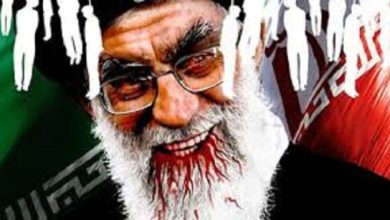
The torture and killing spree machine of Ali Khamenei, aimed at preserving the ominous regime of the Velayat-e Faqih, have led to the hanging of 99 prisoners from December 22 to January 20. In fear of the people’s uprising, the regime has executed at least 359 prisoners since the start of the war in Gaza on October 7, for which it is the main instigator.
On Monday, January 22, the criminal agents of Ali Khamenei hanged Masoud Rigi, and on January 20, executed Hassan Gorgij in Zahedan. Additionally, three prisoners named Nouri Zamani, Hossein Ali Kootahi, and Fathollah Joarkesh were hanged in Isfahan. On January 18, Hamid Ebadinejad and Eslah Allah Bakhsh were executed in Rasht, and on January 17, Jalil Suleimani in Hamedan, Eslam Amaneddini in Qom, and Ali Mashhadi in Mashhad were hanged.
Political prisoner Farhad Salimi, a Sunni compatriot who has been imprisoned for 14 years, was transferred to solitary confinement in Qezelhessar Prison on Saturday night and is at serious risk of execution. His co-defendants, Qasem Abtahi, Davood Abdollahi, and Ayoub Karimi, were executed in the past three months. Three other co-defendants, Anvar Khezri, Kamran Sheikheh, and Khosrow Besharat, are also under the death sentence.
On the other hand, two political prisoner teachers, Iraj Rahnama and Gholamreza Gholami in Shiraz, who were sentenced to 5 and 11 years in prison on fabricated charges of “conspiracy to disturb national security” and “spreading lies,” began a hunger strike on January 13, declaring that “these unjust and unfair sentences are issued to suppress and silence the voice of protest by teachers.” They have been imprisoned multiple times for defending the rights of imprisoned teachers.
In another crime, plainclothes agents in Borujerd murdered a young girl named Anahita Amirpour, a student at Azad University in Borujerd, on the evening of January 19 by shooting at a Peugeot car. The car’s driver, also a student, was severely injured. On January 19, the government’s news agency IRNA reported: “The special governor of Borujerd announced the death of one person in the police pursuit and escape with a car. State Security forces, according to the law, use aerial shooting to stop the car and then shoot the car’s tires… During this pursuit and escape, the occupants of the car were injured, and after being transferred to the hospital, one of them lost her life.”
The mullahs’ regime deprives prisoners, especially political prisoners, of basic amenities, particularly health and medical care, and subjects them to torture. The water in Karaj Central Prison has been heavily contaminated for three months, leading to the spread of infectious skin and gastrointestinal diseases. Prisoners are deprived of basic medical and pharmaceutical facilities. 500 prisoners in Wards 6 and 7 are suffering from skin diseases that have turned into infected wounds. The prison clinic does not provide any medication to the prisoners, and they are not allowed to bring in the medicines procured by their families. 300 prisoners in Ward 7 suffer from gastrointestinal diseases, and two prisoners have lost their lives due to infectious diseases.
The Iranian Resistance once again calls on the United Nations, relevant organizations, the European Union, and member states to take immediate action to save the lives of thousands of prisoners, especially political prisoners. It demands an international fact-finding mission to visit Iranian prisons. The leaders of this regime, especially Ali Khamenei, Ebrahim Raisi, and Gholamhossein Eje’i, must face justice for four decades of crimes against humanity and genocide.
Secretariat of the National Council of Resistance of Iran (NCRI)
22 January 2024
Iran: 99 Executions in the Last 30 Days, With 359 Executions Since the Beginning of the War