
Regime-Made Energy Crisis Sparks Mass Shutdowns in Iran, Pushes Food Out of Reach
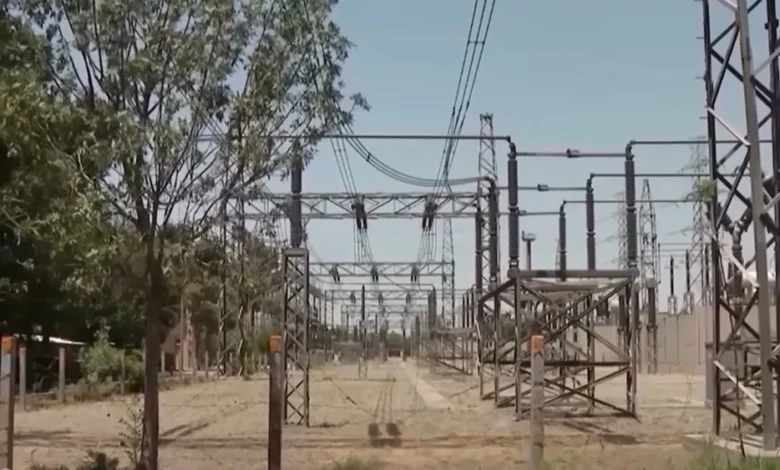
Power infrastructure in Iran, where widespread outages have intensified amid mounting economic and energy crises
Written by
Sedighe Shahrokhi
The Iranian regime’s profound mismanagement of the nation’s resources has plunged the country into a state of paralysis, forcing 16 of its 31 provinces into a complete shutdown on Wednesday, August 13, 2025, due to a severe “energy imbalance,” according to the state-run Eghtesad Online website. The widespread blackouts, affecting major provinces from Khorasan to Khuzestan, are not an isolated event but the latest symptom of a systemic crisis fueled by corruption, which is now crippling key industries and pushing basic food staples beyond the reach of ordinary citizens.
Even the regime’s own state-run media can no longer conceal the scale of the disaster. The Rokna News Agency acknowledged on August 12 that the recurring shutdowns are a “clear sign of a crisis in policy-making and economic management.” It described a nation where economic activity is being “severely disrupted” by a chaotic cycle of forced holidays, revealing a government that has lost control of its most basic functions.
#Iran News: #Crypto Mining Farm Discovered in Ahvaz Stadium Tunnels Exposes Deepening Corruption in Regime Institutionshttps://t.co/68EfJYuXvD
— NCRI-FAC (@iran_policy) August 11, 2025
Anatomy of a Manufactured Crisis
While the regime cites an energy deficit as the reason for the blackouts, official admissions reveal a more sinister reality: national resources are being systematically diverted for the benefit of a corrupt elite. The country’s vital steel industry, for example, has been decimated by the power cuts. According to an astonishing confession from regime official Rasul Khalifeh-Soltani on August 8, the sector has lost over 110 days of production this year, inflicting “billions of dollars” in direct damages upon the economy. He sarcastically noted that the financial loss was enough to build 10,000 megawatts of solar power plants.
The reason for this industrial starvation was exposed by another regime expert, Hedayatollah Khademi. He admitted to the existence of a powerful, government-connected “mafia” running illegal cryptocurrency mining farms. These operations consume vast amounts of “free and cheap energy” with total impunity while the rest of the country is plunged into darkness. “Corruption exists everywhere,” Khademi stated, questioning why authorities refuse to confront the powerful figures behind these energy-draining enterprises. The blackouts, therefore, are not an unavoidable shortage but a direct consequence of the regime prioritizing the illicit profits of a favored few over the nation’s economic stability.
#Iran’s Economic Crisis Isn’t a Mystery—It’s the Regime’s Legacyhttps://t.co/yTq2D6gXgt
— NCRI-FAC (@iran_policy) April 21, 2025
The Price of Collapse: An Empty Table
For the Iranian people, the consequences of this corruption are felt most acutely at the dinner table. The economic chaos has triggered hyperinflation for essential goods. In Tehran, the price of bread has surged by an astounding 52%. According to the state-run Bahar News, an average worker must now spend one-fifth of their monthly wage simply to purchase bread. In areas like Tehran’s Valiasr Square, a single loaf of Sangak bread can sell for as much as 25,000 tomans, putting it out of reach for millions. For an average family of four, the monthly cost of bread alone has reached 1.5 million tomans.
Dairy products have similarly become a “luxury” item that many families have been forced to eliminate from their diets. Citizen reports from across the country paint a grim picture: in Mahallat, the price of a container of yogurt jumped by 40,000 tomans in a single week. In another case, the price of Liqvan cheese skyrocketed from 240,000 to 600,000 tomans. The crisis is compounded by the very blackouts that caused it. Citizens report that the dairy they can still afford is often spoiled by the time they buy it due to constant power cuts affecting store refrigerators. One person from Gilan noted that prices there are now even higher than in the capital.
https://twitter.com/Mojahedineng/status/1954876171654451334
A System Designed to Fail its People
The events of this week are not a series of isolated failures but the logical and devastating endpoint of a system built on corruption. The regime is actively de-industrializing the country and starving its people to enrich a politically connected mafia. The trail of destruction—from the silent steel factories to the darkened provinces to the empty tables in Iranian homes—leads directly back to the ruling theocracy. This crisis demonstrates, with chilling clarity, a government not merely incompetent, but fundamentally at war with the welfare of its own population, making the case for regime change in Iran more evident than ever. And this reality is reflected in daily protests happening in the streets of cities across Iran.