
Newsweek Interview: Dowlat Nowrouzi Says the Tehran Regime Will Fall from Within, Not by Airstrikes
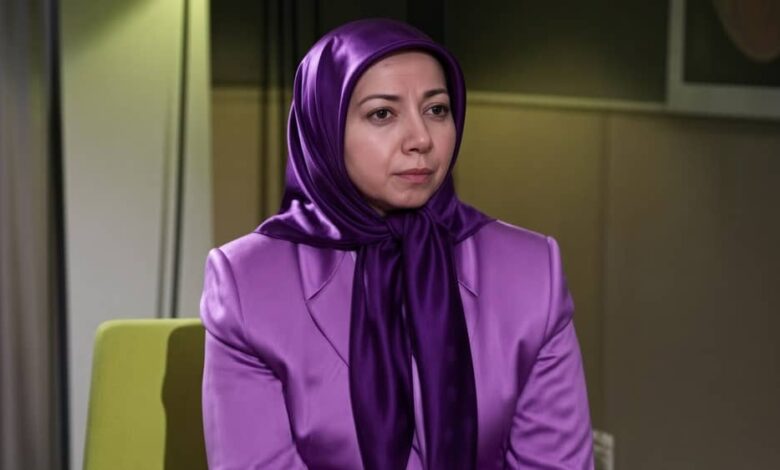
Dowlat Nowrouzi, the UK representative for the National Council of Resistance of Iran
Written by
Shamsi Saadati
On August 13, 2026, in an exclusive interview with Newsweek Romania, Dowlat Nowrouzi, the UK representative for the National Council of Resistance of Iran (NCRI), outlined the path to toppling the clerical regime despite the ongoing US-Iran conflict. Nowrouzi emphasized that airstrikes and external wars will not lead to the regime’s collapse; rather, change must come from within through the Iranian people and their organized resistance. She highlighted the rapid expansion of Resistance Units affiliated with the People’s Mojahedin Organization of Iran (PMOI/MEK) across all 31 provinces, acting as the driving force against the Islamic Revolutionary Guard Corps (IRGC).
Nowrouzi dismissed the possibility of mass IRGC defections, labeling the organization as a fundamental pillar of the regime’s survival rather than a national army. She also warned that Tehran is using the current war as a shield to escalate domestic repression, citing an unprecedented wave of executions targeting political prisoners and protesters since March. Rejecting both foreign war and appeasement, she reiterated Maryam Rajavi’s Ten-Point Plan for a secular, democratic republic. Finally, Nowrouzi urged the international community to recognize the Iranian people’s right to self-defense, enforce comprehensive sanctions, and expel regime agents from Western nations.
A translated version of Dowlat Nowrouzi’s interview follows:
EXCLUSIVE Iranian People’s Resistance: The Tehran Regime Does Not Fall by Airstrikes, but from Within
International
BY Adina Mutăr
Publication date: 13.08.2026 • 18:15
Update date: 13.08.2026 • 19:03
Dowlat Nowrouzi, representative of the National Council of Resistance of Iran in the United Kingdom, answers EXCLUSIVELY for Newsweek on the effects of the US-Iran war on the population. “The regime must fall, but nothing will happen through airstrikes. Only from within.”
Dowlat Nowrouzi, representative of the National Council of Resistance of Iran in the United Kingdom, answered a few questions EXCLUSIVELY for Newsweek about the US-Iran war and what solution could be applied to resolve the crisis.
NEWSWEEK Romania: Donald Trump said during the war with Iran that overthrowing the regime is the responsibility of the popular forces in Iran. What are these popular forces capable of overthrowing the mullahs’ regime?
Dowlat Nowrouzi: Now, more than ever, it has become clear that change in Iran will only be achieved through the overthrow of the regime by the Iranian people, with an organized resistance at the center of this process. This is, in fact, the strategy that the Iranian Resistance promotes.
The strength of the organized resistance is represented by the network of “Resistance Units” affiliated with the People’s Mojahedin Organization of Iran. Despite the regime’s brutal repression, this network is expanding rapidly and is now active in all 31 provinces of Iran.
My latest interview on #Iran with ARISE NEWS TV:
No to Appeasement, No to War
There is a Third Option presented by @Maryam_Rajavi,
Regime change by the people of #Iran & the organised Resistance movementIRAN-ISRAEL: A LOOK BACK AT 12 DAYS OF WAR https://t.co/BJcQPEL1KE via…
— Dowlat Nowrouzi (@DowlatNowrouzi) July 14, 2025
As Maryam Rajavi, the President-elect of the National Council of Resistance of Iran, pointed out: “Change in Iran needs a force that, first of all, has the determination to fight against the Islamic Revolutionary Guard Corps, which is the backbone of the velayat-e faqih regime (a doctrine in which a supreme leader has total power over the state, army, and laws – ed.), and is willing to pay the price of confronting it.
Secondly, it must come from within Iranian society and have forces on the ground, in the cities of Iran. It must not depend on any foreign government or power.
Thirdly, it must be organized and made up of conscious and militant youth who have chosen to fight and are willing to make sacrifices for it.
The People’s Mojahedin Organization of Iran and its Resistance Units, which possess these characteristics and capabilities, represent a decisive force for change in Iran.”
The regime knows, based on experience, that the most important threat to its existence is the synergy between popular protests and organized resistance. The government’s severe reaction—massive arrests on charges of ties to the Mojahedin and the execution of members and supporters of this organization, especially in recent months—clearly confirms this reality.
Is there a force that has the necessary weapons and equipment to act from inside Iran against the regime?
The network of Resistance Units affiliated with the People’s Mojahedin Organization of Iran represents the key force of resistance and of achieving change in Iran. This network is expanding rapidly and has played a key and decisive role in organizing and leading the national uprisings in recent years, especially in the uprisings of 2019, 2022, and 2026.
In past years, the Resistance Units, despite the existing repression and numerous arrests, have managed to consolidate themselves in confronting the Revolutionary Guards and the repressive Basij force, and have begun to expand in the most important cities of Iran.
During the uprising in the month of Dey (December 22 – January 20), the Resistance Units attacked regime centers through 630 operations.
Five days before the recent war, on February 23, 2026, 250 PMOI members, described as brave and devoted fighters, attacked Khamenei’s headquarters, located in the most secure area of central Tehran.
Why is the Islamic Revolutionary Guard Corps so loyal to the regime? Is it possible for the Revolutionary Guards to “switch sides” and join the other party?
The Revolutionary Guard Corps is not a national army created to defend the borders, territorial integrity, and territory of Iran.
Notice that not even the word “Iran” appears in the name of this organization. This institution was created from the very beginning with the mission of preserving the velayat-e faqih policy, and its entire system of recruitment, training, organization, and promotion of personnel has been based on loyalty to the regime’s leadership.
For over four decades, the Revolutionary Guards have been the main factor in suppressing popular protests and uprisings, arresting opponents, killing protesters, establishing repression, exporting terrorism, and supporting the Islamic Republic’s proxy forces.
The commanders and organizational structure of the Revolutionary Guards are not separated from the political and economic structure of the regime but represent one of the main pillars of its survival.
Therefore, although the possibility of limited defections at the lower levels of the Revolutionary Guards cannot be absolutely excluded, expecting this organization, as a whole, to change direction and join the people is an illusion. The solution is the complete destruction and dismantling of this organization.
In this episode of Frankly Speaking we speak to @DowlatNowrouzi, UK Rep. of @iran_policy about why the protests in #Iran, which first began as a reaction to the death of #mahsa_amini in police custody, have turned into a national uprising | Full episode: https://t.co/GTt3b06J5x pic.twitter.com/kS1BOqUVjo
— Frankly Speaking by Arab News (@FranklySpeaking) October 16, 2022
How do the United States and Israel’s bombings help the forces opposing the Iranian government?
The reality is that, for more than two decades, Maryam Rajavi has declared that the solution to the Iranian crisis is neither the policy of appeasement and concessions nor external war. The only solution is regime change by the people and the organized resistance.
This reality has now been proven more than ever: freedom and democracy cannot be achieved from the sky and require an organized resistance movement on the ground.
We must bear in mind that since the beginning of the war, on February 28, the regime has evidently used the war as a shield for its own survival. Taking advantage of the war atmosphere in the country, it has arrested thousands of young opponents and executed numerous participants in the January uprising, as well as members of the People’s Mojahedin Organization of Iran.
Under the same conditions, the regime has kept Basij members on the streets for months to prevent uprisings from breaking out and, through a series of tactics, including shutting down its own controlled Parliament, is trying to prevent the escalation of conflicts between its factions.
Have the United States and Israel’s bombings destroyed the arsenals of the army and the Revolutionary Guards? How long can these forces still resist?
It is very clear that the regime’s military apparatus, especially the Revolutionary Guard Corps, has taken heavy blows. A significant number of the highest-ranking Revolutionary Guard commanders have been killed.
The regime’s economy is on the brink of collapse, and the prices of the most basic food products are rising at an alarming rate.
Although this regime has stayed in power only by massacring the discontented population and by opening the country to an external war—which, of course, cannot last—change will be achieved by the people and the organized resistance.
My interview with the Iranian opposition TV @simayazaditv discussing the growing international recognition & support for the Iranian Resistance & our democratic platform for #Iran's future.
The parliamentary majority in 84 parliaments across 50 countries has drawn significant… pic.twitter.com/JT4Q15ejjD— Dowlat Nowrouzi (@DowlatNowrouzi) August 1, 2024
Since the start of the war and after the regime in power in Tehran was asked to stop the executions, how many civilians and how many members of the People’s Mojahedin Organization of Iran (MKO/MEK) have been executed?
Starting March 19, we have witnessed a wave of political executions in Iran unprecedented since the summer of 1988.
In that year, following the regime’s defeat in the Iran-Iraq war, Ruhollah Khomeini, the founder of the current regime, issued an order to massacre all political prisoners who maintained their positions. Over the course of a few months, approximately 30,000 political prisoners, the vast majority of whom were activists of the People’s Mojahedin Organization of Iran, were massacred.
This year, to date, nearly 40 political prisoners have been executed, 9 of whom were members of the People’s Mojahedin Organization of Iran. The majority of the other victims are young rebels who participated in the January 2026 uprising with the aim of overthrowing the regime.
Currently, at least 50 political prisoners, a significant portion of whom are activists affiliated with the People’s Mojahedin Organization of Iran, and some of whom are women, are facing death sentences.
The regime, which deeply fears the prospect of a new, much broader uprising currently in preparation, is attempting through this wave of executions to prevent the formation of an uprising that could be much larger than the previous ones, and also to prevent a greater number of young people from joining the organized resistance.
What could be the solution for achieving regime change in Iran?
The solution to the Iranian crisis is not the continuation of the policy of appeasement and concessions, nor external war, but change achieved by the Iranian people and their organized resistance.
This solution has several components:
Expanding the uprisings and connecting the economic and social protests with the political demand for the overthrow of the entire velayat-e faqih system.
Consolidating the organized resistance and the Resistance Units inside the country so that popular protests can withstand repression.
Intensifying the political and economic isolation of repressive institutions, especially the Revolutionary Guards and the Ministry of Intelligence, as well as preventing the activity of the government’s espionage and terrorism networks outside Iran.
Recognizing the right of the Iranian people to confront the Revolutionary Guards and the other repressive forces and to overthrow the regime.
According to the National Council of Resistance’s plan for the transitional period of power to the people, after the fall of the regime, an interim government would run the country for a maximum period of six months and organize free elections to form a Constituent Assembly. The final form of government would be determined by the free vote of the people.
The Ten-Point Plan presented by Maryam Rajavi, the President-elect of the National Council of Resistance, emphasizes a republic based on universal suffrage, free elections, the separation of religion and state, equality between women and men, autonomy for oppressed nationalities within Iran’s territorial integrity, the abolition of the death penalty, an independent judicial system, and a non-nuclear Iran.
According to CNN, CENTCOM has asked military analysts to propose new ways to exert pressure on Tehran, given that airstrikes have failed to bring about an agreement. Do you, as opposition forces, have any proposals or ideas in this regard?
The correct strategy starts from understanding the special role of the organized resistance and from the fact that change will be achieved by overthrowing this regime by the people and the organized resistance.
In this regard, we propose the following practical steps:
Declaring explicit support for the Iranian people’s right to change the regime and defend themselves against the repressive apparatus;
Providing political support to the organized popular resistance of the People’s Mojahedin of Iran inside the country and to the resistance units;
Imposing comprehensive sanctions on the regime’s oil and financial sector, as the vast majority of the regime’s budget is spent on weaponry, efforts for regime survival, and procuring the means for internal repression, rather than on improving living conditions and the general welfare of the population;
Supporting the Iranian people’s free access to the internet and secure communications during protests;
Expelling Ministry of Intelligence and Revolutionary Guard agents from Western countries and shutting down centers that have become fronts for espionage, terrorism, or propaganda activities;
Placing human rights violations, the 1988 massacre, and the executions of political prisoners on the agenda of the United Nations Security Council;
Recognizing the interim government of a democratic republic based on the ten-point plan presented by Maryam Rajavi.