
NCRI FAC Member to CNN: Change in Iran Must Come from Within
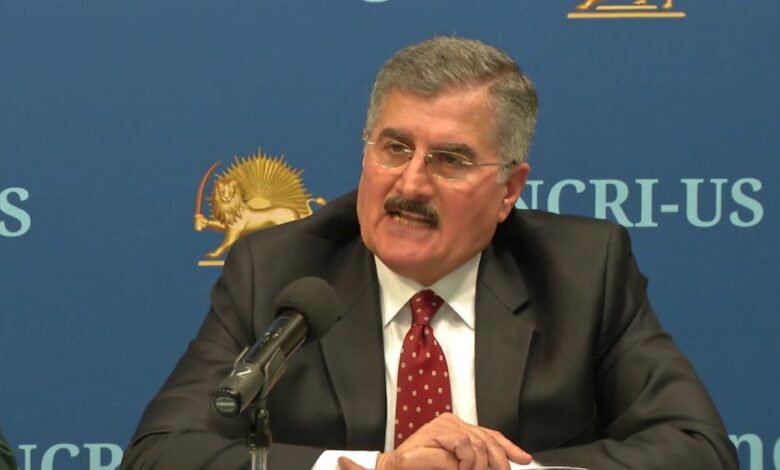
NCRI FAC member Ali Safavi speaking at a press conference in Washington D.C.
Written by
Mehdi Oghbai
Ali Safavi, a member of the NCRI Foreign Affairs Committee, said Iran’s political future must be decided inside the country—arguing that outside military action alone will not deliver regime change—during an interview with CNN’s Jim Sciutto.
Safavi told Sciutto that the reported death of Iran’s supreme leader marked a turning point, saying, “Khamenei’s death marks the end of the religious tyranny ruling Iran for the past… 47 years.” But he emphasized that any transition must be led domestically: “Change in Iran has to come from the ground by the Iranian people and by the organized, structured opposition to this regime.”
Warning against the idea that airstrikes can produce political transformation, Safavi said, “If past is prologue, aerial campaigns will not bring about regime change in Iran.” He pointed instead to opposition organizing, saying the National Council of Resistance of Iran (NCRI) had announced plans for a transition authority. “Yesterday, the president-elect of the National Council of Resistance… announced the formation of a provisional government which, once in Iran, will hold free and fair elections to elect a constituent assembly,” he said, adding that the assembly would draft a future constitution.
My interview with @jimsciutto of @CNN on prospects for change in Iran. "Regime change must come from the ground, by the Iranian people and the organized, structure opposition, the MEK," I said. Take a listen 👇https://t.co/FgWCh3ZyO4@POTUS @SecRubio @kajakallas
— Ali Safavi (@amsafavi) March 2, 2026
Pressed on growing public support in some U.S. circles for Reza Pahlavi, Safavi was blunt: “Reza Pahlavi is a relic of the past. He draws his fame from his father’s infamy.” He criticized what he described as Pahlavi’s governing concept, saying it “concentrates the power of the legislature, the judiciary, and the executive branch in the hands of one man… This is a dictatorship branded differently.”
Safavi argued Iranians would reject any return to dictatorship, saying, “They’re not about to change this regime… to hand over the future of Iran to another dictator.” He added, “Any future for Iran must not have any traces of dictatorship, whether it is monarchical and… clerical.”
NCRI FAC member @amsafavi tells CNN’s @jimsciutto: “Change in Iran has to come from the ground… by the Iranian people,” warning “aerial campaigns will not bring about regime change.” He says the NCRI has announced a “provisional government” to hold “free and fair #elections” for… pic.twitter.com/TVFgmSawTC
— NCRI-FAC (@iran_policy) March 4, 2026
Safavi cited what he described as the MEK’s long history of repression and losses, while pointing to ongoing operational activity inside Iran. He said, “Last Monday, 250 MEK fighters launched a daring assault on Khamenei’s compound… We lost 100 fighters… but 150 retreated successfully.” He added that “the Resistance Units of the MEK are active in different cities of Iran,” saying they have been active “throughout January” and in earlier uprisings.
Safavi framed the Resistance Units as part of a disciplined internal force, telling Sciutto, “You have a very strong and potent resistance movement inside Iran,” and arguing that real momentum comes from “the organized, structured opposition” operating domestically—“being on the ground in Iran, willing to pay the price, and working with the Iranian people.”