
Mojtaba Khamenei’s “Fourth Superpower”: A 240,000-Toman Dollar and Seven Months in the Streets
Written by
Farid Mahoutchi
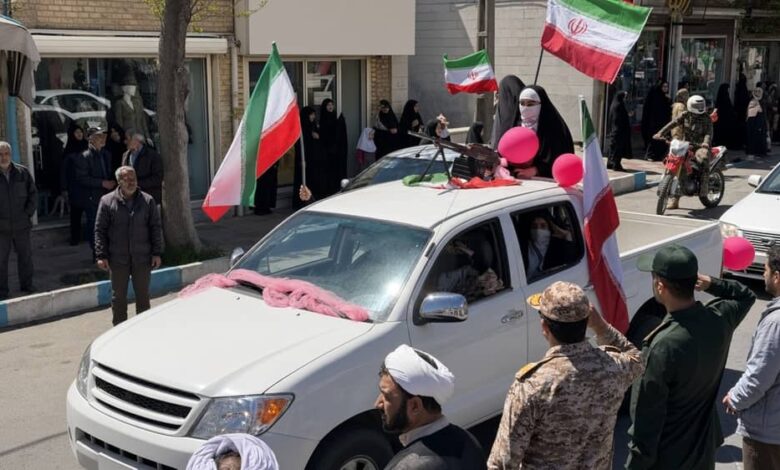
On September 28, Mojtaba Khamenei offered an extraordinary description of Iran’s position in the world. “Today some consider us the world’s fourth superpower,” he declared in his official message marking the anniversary of the Iran-Iraq War. “Of course, they say this based on worldly calculations; divine calculations regard [Iran] as the world’s first power.” He paired the assertion with another: “More than 30 million Iranians have declared themselves ready to sacrifice their lives.” Khamenei also boasted that for seven months government supporters had continuously occupied squares and streets across Iran.
The juxtaposition is difficult to miss. On the same day, Iran’s free-market dollar breached 240,000 tomans, reaching 240,220—about 40 percent above the official rate. A parliamentarian, Mostafavi, was meanwhile warning that runaway inflation and currency instability had “robbed millions of families of peace,” calling inflation “a security threat.” The “superpower” rhetoric therefore reads less like a message intended to persuade foreign strategic planners than one designed to reassure an exhausted domestic political and security base.
Indeed, state rhetoric says as much. Saeed Hosseini, the Friday Prayer leader in Kashan, told state television on September 27 that Basij members should report “the smallest movement” to security commanders and described the “Jan-Fada” parade as an “antidote” to an enemy strategy of exploiting economic pressure to divide society. A state educational publication made the logic even plainer: “If we leave the squares and streets empty, infiltrators and traitors will use them.” It insisted that continuous occupation of public space had become necessary.
"At a time when Mojtaba #Khamenei and the upper echelons of Iran’s ruling establishment are urging regime insiders to avoid public feuding, rival factions are doing precisely the opposite," writes @MehdiOghbai.https://t.co/8mLnu5CPU6
— NCRI-FAC (@iran_policy) September 16, 2026
The War Tehran Still Names
That preoccupation with the street also illuminates another revealing development. At the 55th session of Tehran’s mass trial of the PMOI and 104 of NCRI members on September 22, complainants’ lawyer Masoud Maddah devoted much of his argument to portraying the organization’s conflict with the Islamic Republic as continuous. In the official IRNA account of the hearing, Maddah highlighted Maryam Rajavi’s characterization that “the main war has been underway for 44 years, since June 20, 1981,” presenting it as evidence of enduring confrontation.
Even more revealing was the breadth of criminal liability he urged the court to adopt. Maddah argued that an individual need not have personally participated in a particular operation at a particular time for responsibility to attach through his or her place in the organization’s structure. He then argued that moharebeh—“waging war against God,” a capital offense—could be attributed across the defendants. Whatever the legal merits, the argument shows the scale at which the state still conceptualizes the PMOI as a present security adversary rather than a historical remnant.
That anxiety has a broader history. Iran has repeatedly experienced nationwide protest waves—in 2009, 2017-18, 2019, 2022 and again beginning in December 2025—alongside recurrent local and sectoral unrest. Human Rights watchdogs have described the latest protests as another episode in a decade-long series and said the authorities’ response had “consistently been deadly repression.” Amnesty documented the subsequent militarized clampdown: armed patrols, dense checkpoint networks, nighttime curfews, mass arrests and an internet blackout.
When Mojtaba Khamenei forbids the "#IranWar or negotiation” binary, both camps defy him within days. The new Leader’s word is no longer final. The pillar that once capped factional war is fracturing.
Analysis by @MehdiOghbaihttps://t.co/l4x1BQDA5V— NCRI-FAC (@iran_policy) September 1, 2026
Power Projection Instead of Opening
Yet the political response remains overwhelmingly securitized. A new Cyberspace Regulation Plan would expand identity verification and state control over digital services while retaining filtering; it remains a draft amid institutional disputes. State television reported this week that state-affiliated commentator Abbas Abdi received a one-year prison sentence and Etemad newspaper a two-month suspension, while Sadegh Zibakalam, another veteran state-aligned analyst, received a prison term and media ban. Universities have also seen expulsions and suspensions of students, while the science minister acknowledged in August that professors and students had previously been removed for political reasons.
The same contradiction is visible over compulsory hijab. Enforcement has repeatedly stalled amid concern that a renewed crackdown could trigger unrest, yet on September 28 Judiciary Chief Gholam-Hossein Mohseni-Ejei ordered prosecutors, police and security bodies to confront what he called social “anomalies” and “nudity,” telling officials not to fear the resulting “uproar.” The state thus oscillates between recognizing the political danger of coercion and demanding more coercion.
There is also a human limit to permanent mobilization. The NCRI reported on September 25 that security-force leave had been cancelled during a nationwide alert. Military research is unambiguous about the cost: sustained operations and sleep deprivation impair vigilance, reaction time and working memory, in some studies within hours. No security apparatus can remain indefinitely in an emergency posture without accumulating fatigue.
That is the contradiction behind Khamenei’s “superpower” speech. A state confident of spontaneous social support would have less need to organize public-space mobilizations for seven consecutive months, instruct loyalists to watch for the “smallest movement,” and warn that opponents will seize the streets if supporters vacate them. The most revealing part of Khamenei’s message was therefore not his ranking of the regime among world powers, but the evidence he chose to prove it: thirty million claimed loyalists and a street that must never be left empty.
https://www.ncr-iran.org/en/news/iran-resistance/mojtaba-khameneis-fourth-superpower-a-240000-toman-dollar-and-seven-months-in-the-streets/