
Iran’s Regime Tightens Grip Amid War, Executions, and Mass Arrests to Quell Restive Population
Written by
Safora Sadidi Mohammadi
Three-minute read
Facing what observers describe as an increasingly volatile and “explosive” domestic climate, Iran’s clerical establishment has dramatically tightened its grip on society during a 40-day military confrontation with Israel and the United States. Human rights organizations, citing coordinated patterns of repression, warn that authorities are systematically deploying fear to preempt renewed nationwide unrest.
According to findings by United Nations mechanisms, including the Independent International Fact-Finding Mission (A/HRC/61/60), alongside reports from Human Rights Watch, Amnesty International, and other human rights organizations, the period beginning February 28, 2026, marked a sharp escalation in state repression. What officials framed as wartime “national security measures” has, in practice, evolved into a sweeping campaign targeting dissent across all sectors of society.
January 21, 2026 – As the nationwide uprising in #Iran reaches its 25th consecutive day, the clerical regime has intensified its crackdown, deploying military convoys to crush protests while maintaining a total internet blackout. Read more:https://t.co/SHtBNZTSMB
— NCRI-FAC (@iran_policy) January 22, 2026
A Climate of Fear
Authorities moved quickly to impose one of the longest and most comprehensive internet shutdowns in modern history. Monitoring group NetBlocks reports that Iran has endured over 40 consecutive days of near-total connectivity disruption—more than 960 hours—effectively isolating millions and obstructing the flow of information. UN experts have characterized the blackout as a form of “digital warfare against civilians,” aimed at concealing state actions and preventing mobilization.
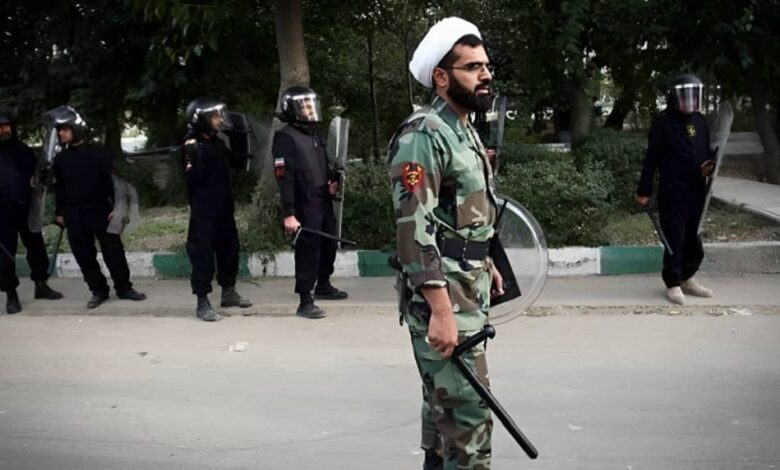
Simultaneously, senior officials issued explicit threats. Police commander Ahmadreza Radan publicly warned that any protest would be treated as hostile action, declaring forces were ready with “fingers on the trigger.” Intelligence bodies echoed these statements, signaling zero tolerance for dissent.
#Iran’s Digital Apartheid: Regime Loyalists Flood the #Internet While the Rest of the Nation Goes Darkhttps://t.co/qFQw7Bi9wc
— NCRI-FAC (@iran_policy) June 20, 2025
Mass Arrests and Expanding Targets
Human rights groups announced that thousands of people have been arbitrarily detained since the onset of the conflict, in addition to more than 50,000 arrested during earlier protests in late 2025 and early 2026. Arrests have taken place without warrants, often during home raids or at checkpoints.
Those targeted include journalists, lawyers, students, teachers, and social media users accused of sharing footage or calling for peace. Authorities have also detained members of religious and ethnic minorities—including Baha’is, Kurds, and Ahvazi Arabs—as well as relatives of activists living abroad, in what appears to be a strategy of indirect coercion.
In recent days alone, state media reported dozens of new arrests across multiple provinces. Individuals have been accused of “collaborating with hostile states” simply for sending images or communicating with foreign media outlets. Even membership in external media channels has been criminalized.
As the nationwide uprising in Iran continues to challenge the theocratic dictatorship, the human cost of the regime’s crackdown is coming into sharper focus.#IranProtests2026 https://t.co/zwNXetYhb6
— NCRI-FAC (@iran_policy) January 25, 2026
Torture, Disappearances, and Coerced Confessions
Numerous detainees have reportedly been held in undisclosed locations, with families receiving no information about their whereabouts—a pattern consistent with enforced disappearances documented by the UN.
Testimonies from rights groups describe widespread use of torture, including beatings, electric shocks, and psychological abuse. In one case, a detained Baha’i man was reportedly subjected to mock executions and forced to sign pre-written confessions implicating himself in violent acts. Threats against family members, including children, have been used to extract compliance.
The case of missing protester Morteza Ebrahimi underscores the opacity of the system. More than 90 days after his disappearance, authorities deny holding him, while his family receives contradictory and extortionary communications suggesting he may have been killed.
Iran’s ruling theocracy is facing a convergence of crises that repression cannot solve: collapsing purchasing power, widening social anger, and growing international penalties linked to the regime’s crackdown. In recent days, reports from inside the country describe coordinated…
— NCRI-FAC (@iran_policy) February 16, 2026
Executions and Political Killings
The most alarming development has been a surge in executions. According to reports from the Iranian Resistance and corroborated by rights organizations, at least 14 political prisoners have been executed within a three-week span. Six of them were members of the People’s Mojahedin Organization of Iran (PMOI) and the rest had taken part in the 2026 uprising.
Trials have been widely condemned as grossly unfair—often conducted without independent legal representation and based on confessions extracted under duress.
International observers, including the UN High Commissioner for Human Rights, have called for an immediate halt to executions, warning that the death penalty is being used as a tool of political repression and intimidation.
"I have sworn to overthrow the tyrant with my blood"
Six PMOI members after being sentenced to death by Iran's regime, singing songs of resistance and defiance against the mullahs' rule.
They were all executed this week:
Mohammad Taghavi (59)
Ali Akbar (Shahrokh) Daneshvarkar… pic.twitter.com/BnvzaRXYLr— People's Mojahedin Organization of Iran (PMOI/MEK) (@Mojahedineng) April 4, 2026
Property Seizures and Economic Pressure
The crackdown has extended beyond arrests and executions to include systematic economic coercion. Authorities have ordered the confiscation of assets belonging to both domestic critics and expatriates, with more than 100 Iranians abroad reportedly targeted.
Provincial courts have announced seizures affecting dozens of individuals, including foreign nationals, on vague charges of “propaganda” or “security violations.” Analysts view these measures as part of a broader effort to dismantle financial support networks and silence dissent beyond Iran’s borders.
A Strategy of Survival
Human rights experts emphasize that these actions are neither isolated nor reactive, but rather components of a coordinated state policy designed to maintain control amid internal fragility.
“The authorities are not simply responding to dissent—they are attempting to preempt it through fear. The scale, coordination, and intensity of these measures indicate a regime deeply concerned about its own stability.
Five years ago, #Iran's November 2019 uprising erupted in over 190 cities—an outcry against tyranny and injustice. Despite the regime’s brutal crackdown, the #MEKResistanceUnits stood tall, leading the charge for freedom. Their sacrifices still ignite Iran’s fight for democracy. pic.twitter.com/sstpdflCP2
— NCRI-FAC (@iran_policy) November 15, 2024
The recent killing of protesters, including individuals shot during demonstrations and others who died under suspicious circumstances in custody, further underscores the lethal dimension of the crackdown.
International Alarm
Global human rights bodies have warned that the clerical regime’s actions may constitute crimes against humanity, citing violations of fundamental rights including the right to life, freedom of expression, and protection from torture.
Despite mounting international pressure, Iranian authorities have shown no indication of reversing course. Instead, senior judicial officials have explicitly called for accelerating executions and punitive measures.
As tensions continue to simmer, many observers say the sweeping crackdown reflects not the strength of the ruling establishment, but its fear of a society that has endured years of repression and may no longer feel it has anything left to lose—raising the prospect of renewed nationwide unrest that authorities are struggling to contain.