
Iran’s Pharmaceutical Industry in Crisis: A Structural Failure Endangering Public Health
Iran-Pharmacy
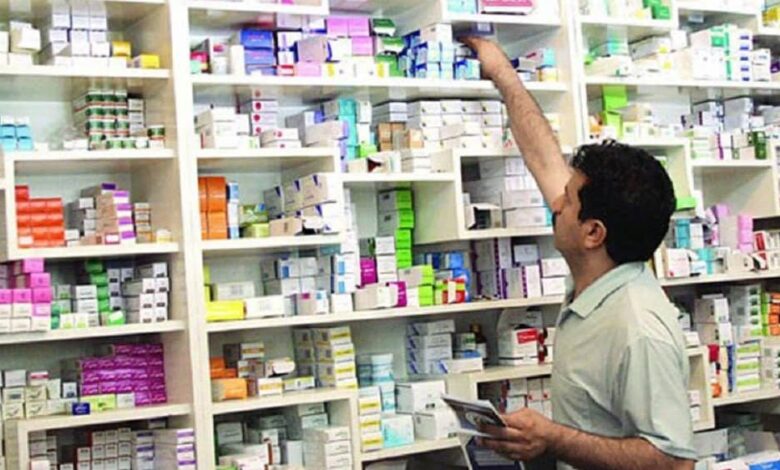
An employee at a pharmacy in Iran serving customers with their prescriptions
Written by
Safora Sadidi Mohammadi
The pharmaceutical and medical equipment sector in Iran, a cornerstone of the country’s health system, is sinking into a deep crisis driven mainly by internal mismanagement and government corruption. This collapse has pushed patients toward unaffordable drug prices, forced manufacturers to the brink of bankruptcy, and laid bare the regime’s structural failures in safeguarding public health.
Price Controls: A Policy That Backfires
Domestically, state-imposed price controls stand out as a major crisis driver. Though presented as patient protection, this policy has crushed both producers and consumers. Heydar Mohammadi, former head of the Food and Drug Organization, notes that the government’s attempt to cap drug prices has weakened the role of insurance and forced companies to halt production of critical hospital medicines due to year-long delays in return on investment.
Experts say that limiting price increases to 15% in an economy with 40% inflation destroys the market and pushes producers toward closure. With profit margins reduced to barely 3.9%, innovation, research, and development are sidelined, leaving the industry technologically stagnant compared to European firms that reinvest high profits into modernization.
#Iran News in Brief
"If the crisis in the #pharmaceutical industry is not resolved as soon as possible, the #healthcare system of the country will be seriously endangered," state-run Hamshahri warned on May 4.https://t.co/Vpm5v2TVeP pic.twitter.com/Q139FE5ihs— NCRI-FAC (@iran_policy) May 4, 2023
Cash Flow Crisis and Delayed Payments
Liquidity shortages have locked the sector into a vicious cycle. Mehdi Pirsalehi, head of the Food and Drug Organization, stresses that massive unpaid debts from government institutions have paralyzed production, rendering allocated currency unusable. With operational cycles exceeding 400 days and financing costs above 38%, companies are forced into high-interest loans that negate the state’s supposed 25% profit margins.
Meanwhile, Mohammad Abbedehzadeh, head of the Syndicate of Human Pharmaceutical Industries, points out that pharmaceutical companies’ claims—often delayed for more than two years—rarely make headlines, unlike the debts of wheat farmers, exposing the regime’s lack of priority for medicine as a strategic commodity.
Insurance Failures and Distorted Subsidies
Insurance weakness further undermines the sector. Mohammadi argues that strong insurance could stabilize the system, but agencies lack funding from the Planning and Budget Organization. The Social Security Organization diverts health premiums toward pensions instead of healthcare, creating six-month payment delays to pharmacies.
Rather than strengthening insurance, the regime resorts to indirect subsidies, fueling smuggling of medicines to neighboring countries, draining domestic supplies, and deepening corruption.
“Today, following a meeting in the Food and Drug Organization, pharmaceutical companies were authorized to increase the prices of their products by 20 to 30 percent from Thursday. Of course, the price increase can be higher,” the state-run Khabaronline reported on July 16. pic.twitter.com/v5PkaWHSrl
— NCRI-FAC (@iran_policy) July 20, 2022
Managerial Instability and Conflicting Authorities
Frequent leadership changes have exacerbated the crisis. In just eight years, some departments saw five director changes, erasing institutional stability. The Food and Drug Organization controls only 30–35% of decision-making, while key powers remain fragmented among the Central Bank, parliament, and other agencies, leaving accountability scattered and ineffective.
The contrast with neighboring countries underscores the severity of the failure. Turkey spends $10.3 billion annually on pharmaceuticals compared to Iran’s $5 billion. Without support for domestic production, Pirsalehi warns, imports will become exponentially costlier. With high depreciation rates and the absence of annual investments of at least $200 million, Iran’s pharmaceutical industry is decaying rapidly.
But a few months later, Raisi’s government introduced the so-called “Darooyar” plan or medical assistance plan, officially allowing pharmaceutical companies to increase the prices of prescription drugs. pic.twitter.com/K03PHKJINh
— NCRI-FAC (@iran_policy) July 20, 2022
A Strategic Defeat
The decline of Iran’s pharmaceutical industry is not merely an economic issue—it is a strategic failure of governance under the rule of absolute clerical authority. What should be a pillar of national health security has become a symbol of systemic corruption, misguided policies, and misplaced priorities.
Patients face shortages, producers face bankruptcy, and the public faces eroding trust in a regime that treats medicine as just another commodity while sacrificing public health to maintain its hold on power.