
How Expelled MEK Members Are Turned into Iranian Regime’s Mouthpieces
Written by
Mohammad Sadat Khansari
In recent years, the world has witnessed the emergence of a profoundly explosive situation inside Iran. Widespread protests, relentless waves of uprisings, and the courage of a younger generation demanding freedom have exposed the regime’s fundamental fragility. The notion that the Islamic Republic stands on the brink of collapse is no longer a prediction—it is a prevailing assessment shared by analysts, policymakers, and global observers alike.
Faced with this mounting crisis of legitimacy, the Iranian regime has desperately clung to power using a multifaceted strategy of repression, deception, and disinformation. One of its most enduring tactics has been to perpetuate the myth that there exists no viable alternative to its rule. At the heart of this deception lies an aggressive and well-funded demonization campaign targeting the regime’s most organized and potent opposition force: the Mujahedin-e Khalq (MEK).
For decades, the regime has invested millions of dollars annually in psychological warfare and propaganda efforts to delegitimize the MEK. It has employed fake defectors, intelligence agents, and even Western media outlets to manufacture narratives aimed at discrediting the movement. By distorting the truth and presenting fabricated accounts, Tehran seeks not only to tarnish the MEK’s image but also to obscure the very existence of a democratic alternative. This article explores one of the regime’s most calculated disinformation tactics: the recruitment and use of expelled MEK members to serve as tools in its elaborate campaign of demonization.
Debunking propaganda against People’s Mojahedin Organization of Iran (PMOI/MEK)
A Familiar Blueprint of Deception
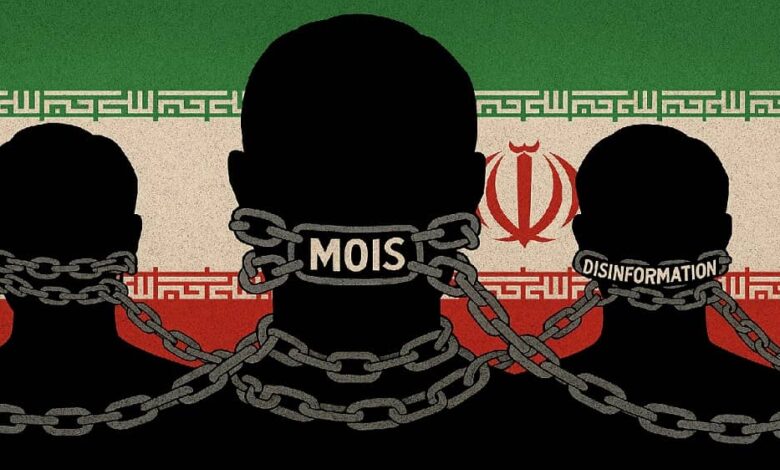
One of the most enduring and insidious tactics employed by the Iranian regime to discredit its principal opposition, the Mujahedin-e Khalq (MEK), is the strategic recruitment and deployment of individuals who were expelled from the organization. The Ministry of Intelligence and Security (MOIS) of Iran has systematically weaponized these expelled individuals to construct a false opposition narrative—one that purports to be both anti-regime and anti-MEK, thus sowing confusion and undermining legitimate resistance.
This approach is neither new nor isolated. For decades, Tehran has utilized this method with astonishing consistency. The regime recruits these individuals—many of whom were removed from the MEK for ethical violations, criminal behavior, or collaboration with enemy intelligence—through its embassies abroad, particularly in countries like Albania, where the MEK has a strong presence. Once co-opted, these individuals are instructed to present themselves as “former members” of the MEK who have since turned into critics of both the Iranian regime and the MEK.
The directive is clear: they are to create blogs, run social media pages, publish “articles” critical of the regime to gain superficial credibility, and then—under the same anti-regime guise—launch a sustained campaign of defamation against the MEK. By masquerading as independent critics, they aim to enhance the credibility of Tehran’s talking points, framing their regime-fed accusations as “insider testimonies.”
#Iran’s Regime Admits Failure in 44-Year Effort to Discredit #MEKhttps://t.co/rgxK3iXWrE
— NCRI-FAC (@iran_policy) January 29, 2024
Case Study: The Albanian Recruitment Pipeline
One compelling illustration of this tactic is found in a letter written by Abdolrahman Mohammadian, a former MEK member whose own letter to the UN Secretary-General (documented in the attached PDF) reveals the depth of MOIS infiltration. Mohammadian confesses to having been recruited by the Iranian Embassy in Tirana, Albania, and trained to launch a media operation masquerading as a human rights platform. He admits that embassy officials instructed him to present himself as a critic of the regime while consistently attacking the MEK and feeding intelligence to Iranian operatives. He writes: “They gave me a directive to create a Facebook page and a YouTube channel pretending to support democracy in Iran while simultaneously accusing the MEK of violations.”
Furthermore, he describes how regime agents attempted to use him to orchestrate incidents intended to portray the MEK in a negative light, including planting false witnesses and fabricating stories for Western media consumption. This operation, according to Mohammadian, was orchestrated and funded directly by Tehran’s embassy in Tirana.
Manufactured Legitimacy Through Media Echo Chambers
The regime amplifies the voices of these “former members” by facilitating their access to sympathetic or misinformed journalists and international media outlets. By positioning them as “whistleblowers” or “survivors” of MEK, the MOIS effectively launders disinformation through seemingly neutral sources. These operations are further supported by fake NGOs, such as the Nejat Society, which masquerade as humanitarian organizations but are, in fact, fronts for Iran’s intelligence apparatus.
The Iranian regime’s use of expelled MEK members to undermine the organization is a textbook case of psychological and information warfare. Through fake opposition fronts, manufactured testimonies, and media infiltration, Tehran has engineered a campaign that seeks not only to discredit the MEK but to deceive democratic nations into enabling that repression. The letter by Abdolrahman Mohammadian is not just a personal confession—it is a blueprint of regime deception that demands exposure and condemnation by all who value truth, human rights, and democratic resistance against tyranny.
Full text of the letter: