
Iran Protests: Retirees and Workers Rise Up Across Dozens of Cities Over Economic Injustice
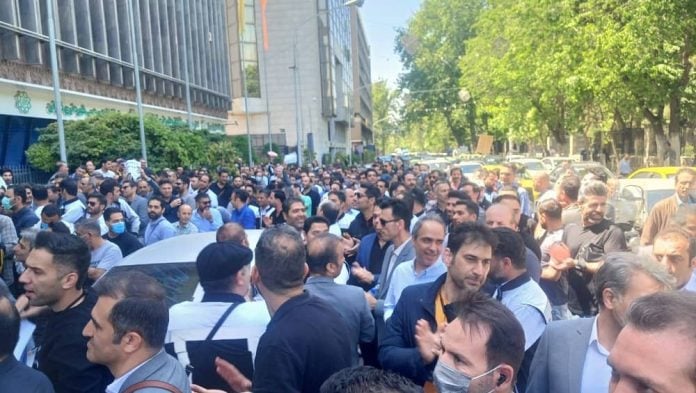
April 20, 2025— Metro workers protested outside the Tehran Municipality, demanding better working conditions and chanting against Mayor Alireza Zakani
Written by
Sedighe Shahrokhi
Today, April 21, 2025, Iran witnessed a sweeping wave of coordinated protests as retirees, workers, and small business owners across more than a dozen cities took to the streets to denounce the regime’s mishandling of pensions, wage stagnation, and economic repression. From Tehran to Tabriz, Kermanshah to Rasht, demonstrators demanded justice, denounced systemic corruption, and warned of further unrest if their cries for dignity continue to go unheard.
In Tehran and other provincial capitals, retirees from the Telecommunications Company of Iran (TCI) rallied against what they called years of betrayal and silence. “We will continue until we get our rights!” protesters chanted in cities including Sanandaj, Zanjan, Bijar, Ilam, Tabriz, Isfahan, Rasht, and Kermanshah. They accused regime-linked institutions—such as the Execution of Imam Khomeini’s Order (EIKO) and the IRGC’s Cooperative Foundation, both major shareholders in the telecom sector—of plundering pension funds and ignoring retirees’ legal claims.
April 21—Tabriz, northwest Iran
Protest rally by retirees of the Telecommunications Company of Iran (TCI). Protesters demand higher pensions and access to basic services.
"We will continue until we get our rights!" protesters chant.#IranProtestspic.twitter.com/0SM5fj714z— People's Mojahedin Organization of Iran (PMOI/MEK) (@Mojahedineng) April 21, 2025
“Our tables are empty, and our voices are silenced,” one protester declared in Tabriz, northwestern Iran. “We served this country for decades, yet today we have to scream just to be seen.”
In Ahvaz and Shush, southern Iran, social security retirees gathered outside local government offices, shouting slogans like: “No to humiliation, no to charity—give us our rights with dignity!” and “They looted the fund, now we’re left with nothing.” Their chants grew sharper in tone, calling out Parliament Speaker Mohammad Bagher Ghalibaf and the appointed government for betrayal: “Ghalibaf, shame on you—step down!” and “No parliament, no cabinet, none of you care for the people.”
In parallel protests, retired steelworkers in Isfahan and Kerman joined former miners from Alborz Sharghi and metro employees in Tehran, decrying the lies and theft that have eroded their pensions. “Lies and robbery are their trade, ‘Hussein’ just their chant,” read one slogan, mocking the regime’s religious posturing amid widespread economic abuse.
April 21—Rasht, northern Iran
Retirees of the Telecommunications Company of Iran (TCI) hold protest rally as the regime refuses to address their demands for higher pensions and basic needs.#IranProtestspic.twitter.com/cGhiCmRvjd— People's Mojahedin Organization of Iran (PMOI/MEK) (@Mojahedineng) April 21, 2025
The unrest was not limited to pensioners. Oil and gas contract workers in Gachsaran, power grid workers in Shiraz, farmers in Varzaneh, and shopkeepers in Marivan also participated in various protests and strikes. In Islamshahr, truck drivers and contractors launched a strike over stagnant transport fees, paralyzing commerce in the area.
The regime’s failure to respond has only deepened the anger. “If this injustice continues,” retirees warned in coordinated statements, “the streets will become our permanent home—and today’s chants will soon turn into cries of ‘Death to the oppressor.’”
As Iran’s economic crisis intensifies under the weight of inflation, collapsing services, and state corruption, the protests mark a new stage in grassroots mobilization: not a sudden uprising, but a steady, spreading rejection of a regime that has lost its last claims to economic legitimacy.