
Mujahedin-E Khalq MEK Supporters to Hold Free Iran Rally in Stockholm Saturday
Written by Sedighe Shahrokhi
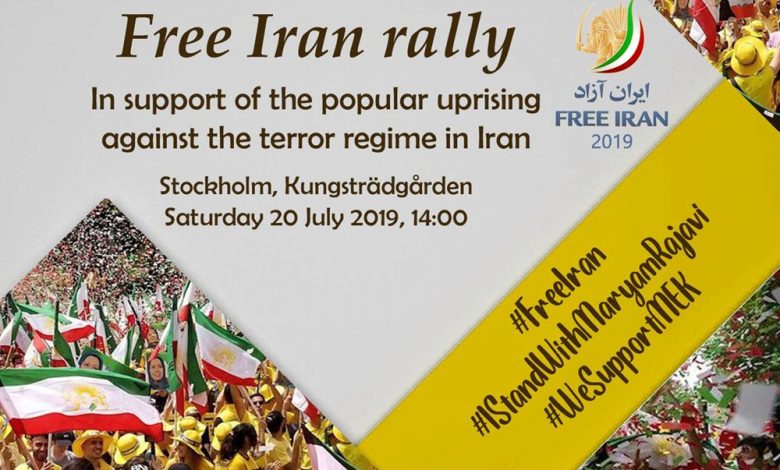
Supporters of the main democratic Iranian opposition group to the mullahs’ regime, the People’s Mojahedin Organization of Iran (PMOI), also known as the Mujahedin e Khalq (MEK), will rally in Stockholm on Saturday to urge European government to end their appeasement policy towards the mullahs’ dictatorship in Iran and instead recognize the right of Iranian people to overthrow their dictators.
Mujahedeen-e Khalq (MEK) supporters in Europe and the United States are urging world powers to impose sanctions on the mullahs’ regime in Iran. The MEK supporters are in particular demanding sanctions against the Iranian regime’s Supreme Leader Ali Khamenei and President Hassan Rouhani.
NCRI-FAC
✔
@iran_policy
Iranians will march for freedom in Stockholm on Saturday to urge European government to end appeasement towards Iran’s regime & recognize the right of Iranian ppl to overthrow their dictators. We’ll be live tweeting the MEK’s #FreeIran rally. #WeSupportMEK #IStandWithMaryamRajavi
Embedded video
103
2:25 PM – Jul 19, 2019
Twitter Ads info and privacy
94 people are talking about this
The MEK supporters in Sweden support opposition leader Maryam Rajavi’s 10-point plan for a future free and democratic Iran.
The MEK supporters will say that any government that partners with Iran’s regime to circumvent sanctions is complicit in preserving an inhumane dictatorship. Imposing sanctions on the mullahs’ regime aids the people of Iran in their struggle against this dictatorship, the MEK supporters will say.
The International community, and specifically the EU, must recognize that resistance is the Iranian people’s right to establish the sovereignty of the people of Iran, the MEK supporters will say in the demonstration in the Swedish capital on Saturday, July 20, 2019.
Prominent Swedish dignitaries and lawmakers are scheduled to speak at Saturday’s march and rally.
The march is being held against a backdrop of international tensions over the Iranian regime’s violations of the 2015 international nuclear deal and its recent spate of terrorist attacks in the region.
The march by supporters of the MEK (PMOI) will follow ‘Free Iran’ marches in June and July by MEK supporters in Berlin, Brussels and Washington in solidarity with the anti-regime protests that have rocked Iran since December 2017.
The Iranian opposition held its annual ‘Free Iran’ conference on July 13, 2019 at ‘Ashraf 3’, the headquarters of the People’s Mojahedin Organization of Iran (Mujahedin-e Khalq, MEK or PMOI) in Albania. Hundreds of lawmakers, officials and dignitaries from around the world flocked to Albania to join the 2019 Free Iran conference. Iranian opposition leader Maryam Rajavi was the event’s keynote speaker.