
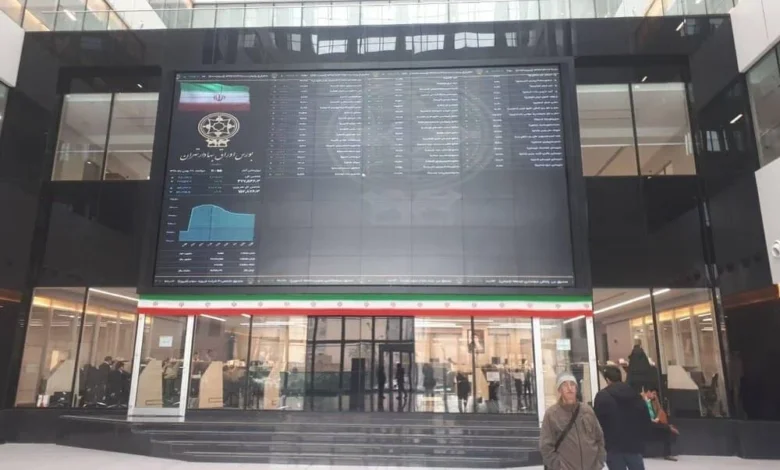
Iran News: Stock Exchange Faces Scandal Over Low-Interest Loans to Board Members
Written by
Mansoureh Galestan
A significant financial controversy has emerged in Iran’s stock market sector, following revelations of multimillion-dollar, low-interest loans given to senior officials of the Tehran Stock Exchange Organization. According to reports, including from the state-affiliated Entekhab news website, loans totaling over 10.5 billion tomans (around $177,000) were distributed to five members of the organization’s board of directors at an extremely low interest rate of 4%, with a repayment term extending over ten years. These loans were drawn from the organization’s internal resources, sparking outrage among the public, especially in light of the country’s broader economic struggles.
The loans were initially disclosed in a letter from the regime’s National Inspection Organization addressed to Economy Minister Abdolnasser Hemmati. It was revealed that the decision to approve these loans was made in July, shortly after the death of former president Ebrahim Raisi in a helicopter crash. The approval, by the High Council of the Stock Exchange and Securities, raised eyebrows as it came during a transitional period in Iran’s political leadership, which was being managed by an interim president.
Among the recipients of the loans, Majid Eshqi, the chairman of the Stock Exchange Organization, received the highest amount—2.7 billion tomans—while four other board members, including Vice Chairman Alireza Naserpour, each received 1.9 billion tomans. Eshqi has since come under fire, particularly after his remarks defending the loans, calling them legal and in line with organizational policies.
#Iran News in Brief
According to state media, today, the total index of the Tehran Stock Exchange dropped by 122,000 units to 2,317,000, experiencing the biggest drop in the history of its entire 56-year period of activity.https://t.co/b9fYGdf2MK pic.twitter.com/hkZxIpzwSq— NCRI-FAC (@iran_policy) May 8, 2023
Facing widespread criticism, Eshqi initially denied the accusations during a televised interview, labeling the reports as false. However, after mounting pressure, he admitted to the payments but justified them by citing “the unique conditions and limitations” faced by employees and managers of the organization. He emphasized that the loans were approved by the High Council based on standard regulations.
The public’s frustration has been further exacerbated by the broader economic context, where ordinary citizens are struggling to secure much smaller loans with interest rates exceeding 20%. This discrepancy has led to accusations of favoritism and corruption, with critics pointing out the stark contrast between the generous terms offered to senior officials and the stringent requirements faced by average Iranians.
The revelation has drawn widespread condemnation from various quarters, adding to the factional feud inside the clerical regime. State-affiliated media activist Mohammad Mohajeri harshly criticized Eshqi, accusing him of incompetence and claiming that his receipt of such a loan was a reward for his failures. “Both the loan and the audacity are astronomical,” Mohajeri remarked, while others echoed these sentiments, likening the affair to blatant “rent-seeking” and “privilege-grabbing.”
In response to the public outcry, Minister of Economy Hemmati announced that he has referred the matter to the Ministry’s Inspection Center for further investigation. He vowed to address the issue, claiming on the social media platform X (formerly Twitter), “We have come to eliminate privileges in the fourteenth government, and we will not allow anyone to benefit from such special favors.”
April 19 – Tehran, #Iran
Stock market investors rallied outside the regime's Securities & Exchange Organization to demand their stolen savings returned. They say regime officials deceived them into investing & stole their money afterwards.#IranProtestspic.twitter.com/adLDd3IMsK— People's Mojahedin Organization of Iran (PMOI/MEK) (@Mojahedineng) April 19, 2021
The stock market, already under pressure due to declining performance following Raisi’s death, has faced further instability as these revelations have shaken investor confidence. Tehran’s stock market index recently dipped below two million units, reflecting the growing uncertainty among investors.
The latest revelation of low-interest loans to top officials of the Tehran Stock Exchange is not an isolated incident, but rather part of a broader pattern where Iran’s clerical regime has exploited the stock market to enrich a select few at the expense of ordinary citizens. For years, the regime has been orchestrating systemic pump-and-dump schemes, manipulating market values to siphon off wealth while millions of Iranians saw their savings and investments evaporate.
As more Iranians perceive the stock market as a tool for looting public wealth, the mounting discontent threatens to escalate, amplifying the rift between the populace and a state driven by greed.