
Iran News: Protests and Unrest Across the Country on September 1, 2024
Written by
Mansoureh Galestan
Tehran, Iran: Multiple protests occurred in Tehran today. Electric taxi drivers gathered outside the Taxi Organization to demand economic improvements. Meanwhile, a separate protest by taxi drivers was held outside the building of the Management and Supervision Organization for Tehran Taxi Drivers, reflecting the growing economic discontent among transport workers in the capital.
High school students and their parents also rallied in front of the president’s office to protest recent rulings by the Supreme Council of the Cultural Revolution. These rulings, which affect final exams and grade point averages, are seen as favoring regime insiders. Additionally, a group of army personnel protested outside the General Staff of the Armed Forces. They are demanding the delivery of pre-purchased homes in the Maskan Mehr project, which they have yet to receive despite payments made years ago.
Arak, Central Iran: Workers from the Wagon Pars train and locomotive manufacturer in Arak faced violent repression from security forces as they prepared to travel to Tehran to continue their protests in front of the presidential palace. Despite threats and arrests, the workers remain determined to demand their overdue wages. At least one worker was injured in the attack and had to be taken to the hospital.
Security forces attack the protest rally of workers of the Wagon Pars company. At least one injured worker had to be transferred to hospital for treatment.#Iran #IranProtestspic.twitter.com/doWzDTVuab
— People's Mojahedin Organization of Iran (PMOI/MEK) (@Mojahedineng) September 1, 2024
Isfahan, Central Iran: In Isfahan, retirees of the steel industry held a protest rally, demanding higher pensions and other basic rights. Protesters chanted, “Neither the parliament nor the government cares about the people,” emphasizing their frustration with the government’s neglect of their economic needs. Concurrently, nurses and emergency personnel at the University of Medical Sciences continued their protests against low wages and long shifts. This protest is part of a larger movement that began in early August, reflecting widespread dissatisfaction among healthcare workers in the city.
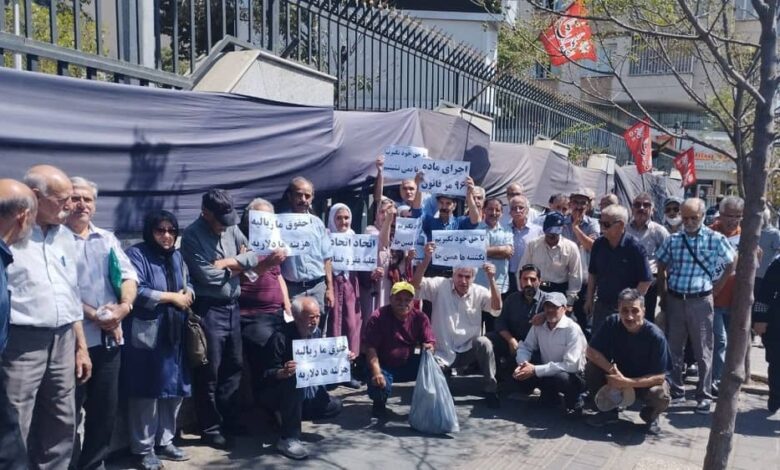
Shush, Southwest Iran: Retirees and pensioners of the Social Security Organization resumed protests in Shush, demanding higher pensions and better living conditions according to the regime’s own laws. The protesters also called for the release of political prisoners, showing solidarity with those arrested for similar acts of dissent across the country.
Kermanshah, Western Iran: In Kermanshah, retirees and pensioners of the Social Security Organization held a protest rally echoing similar demands for higher pensions and essential needs. The rally also included calls for the release of political prisoners, highlighting the widespread frustration with the regime’s handling of both economic and political grievances.
Behbehan, Southwest Iran: Nurses in Behbehan rallied in front of the governorate, protesting low wages and poor working conditions. These protests are part of a broader wave of demonstrations by healthcare workers across Iran, demanding better pay and working conditions in response to the government’s failure to address their long-standing grievances.
September 1—Tehran, Iran
High school students and parents rally in front of the president's office, protesting recent rulings by the Supreme Council of the Cultural Revolution on the final exams and grade points average, which favors regime insiders and the regime's "final exam… pic.twitter.com/W3AVSlsPru— People's Mojahedin Organization of Iran (PMOI/MEK) (@Mojahedineng) September 1, 2024
Aran va Bidgol, Central Iran: Merchants took to the streets to protest against frequent power outages that have disrupted their businesses and daily lives. The power cuts have become a nationwide issue, causing significant inconvenience and economic hardship for many.
Yazd, Central Iran: A group of livestock farmers protested against the importation of frozen meat and the government’s pricing policies, which they claim have severely impacted their businesses. As a symbolic act of protest, some farmers poured out their milk on the ground, highlighting their frustration with rising costs and broken promises from the authorities. They demanded an increase in the price of raw milk to cover their expenses and sustain their livelihoods.
Ahvaz, Southwest Iran: Retirees in Ahvaz gathered for a protest rally to demand higher pensions and better living conditions. These protests are part of a broader movement among retirees across Iran, who are increasingly vocal about their financial struggles and dissatisfaction with the government’s handling of pension funds.
September 1—Shush, southwest Iran
Retirees and pensioners of the Social Security Organization resume protest rallies to demand higher pensions and basic needs according to the regime's own laws.#IranProtestspic.twitter.com/tojRLY35mv— People's Mojahedin Organization of Iran (PMOI/MEK) (@Mojahedineng) September 1, 2024
Kurdish Border Regions: On September 1, security forces reportedly killed three Kurdish kulbars (freight carriers who carry heavy loads for a living) near the Alvatan border area in Sardasht and near Khorramabad. The attacks, described by officials as measures against smuggling, have drawn significant criticism, with reports suggesting the victims were not involved in any illegal activities. A local human rights organization reported that at least 15 Kurdish kulbars have been killed or injured by direct fire from security forces between August 1 and August 31.
UN Report on Forced Prison Labor: According to a recent UN report, Iranian authorities are using prisoners as a cheap labor force for private and government sectors, which the report condemns as a “prominent form of contemporary slavery.” The report highlights that prison administrators seize at least three-quarters of prisoners’ salaries, and inmates are often forced to work long hours under harsh conditions without legal rights or protections. This exploitation has been criticized as a severe human rights violation, calling for immediate international intervention.
The series of protests and unrest across Iran reflects deep-rooted economic, social, and political grievances among various segments of society. From retirees and healthcare workers to students and transport workers, Iranians are increasingly voicing their discontent with the government’s failure to address their basic needs and uphold their rights.
Tehran
Images of Iranian Resistance leader Massoud Rajavi with the message:
"Ashraf is the everlasting epic of Iran's contemporary history." pic.twitter.com/R1V2vjM0a2— People's Mojahedin Organization of Iran (PMOI/MEK) (@Mojahedineng) September 1, 2024