
Iran Expands Crackdown Through Asset Seizures, Mass Arrests, and Tightened Information Control
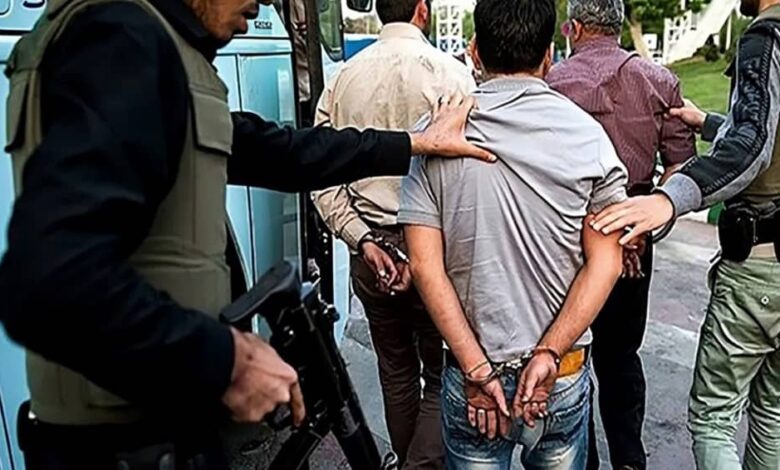
On June 26, 2025, Iranian state media reported the arrest of alleged Israeli spies in Isfahan, central Iran
Written by
Mehdi Oghbai
Iranian authorities have intensified a broad domestic crackdown in recent days, combining mass arrests, executions, property seizures, and expanded control over internet access, according to statements from state media and official institutions.
On April 28, Gholamhossein Mohseni Ejei, the head of the judiciary, defended the confiscation of assets belonging to Iranians accused of cooperating with foreign adversaries, declaring that such measures would continue “with full authority and strength.” He described the policy as justice, stating, “We firmly believe that seizing the property of traitors and collaborators of the aggressors is itself justice.” He also rejected the notion of facilitating the return of Iranians living abroad, saying that the state would not “roll out the red carpet” for them.
Earlier, on April 18, the judiciary’s media center announced that judicial orders had been issued to identify individuals allegedly linked to foreign intelligence services or opposition networks and to proceed with “the seizure of their assets and the blocking of their bank accounts.” The statement, carried by outlets including Mizan Online, indicated that those targeted included a wide range of figures such as journalists, businesspeople, and public personalities.
Accounts emerging from outside the country suggest that these measures have extended to family members inside Iran. In one reported case, relatives of an exiled individual said they had received official notifications of property ownership transfers without prior warning or legal proceedings. Legal observers have described such actions as a violation of property rights and due process.
"Facing what observers describe as an increasingly volatile and “explosive” domestic climate, Iran’s clerical establishment has dramatically tightened its grip on society during #IranWar," writes @SaforaSM.https://t.co/BFMl6jDAaU
— NCRI-FAC (@iran_policy) April 10, 2026
Continued mass arrests
At the same time, Iranian security forces have carried out a series of arrests across multiple provinces. In recent statements reported by Tasnim News Agency, officials said individuals accused of espionage and cooperation with hostile states had been detained, with one report stating that “agents linked to the Mossad were apprehended” and accused of transmitting sensitive information. The scope of arrests has expanded significantly, with security institutions describing detainees as acting “in service of the enemy.”
The crackdown has been accompanied by the continued use of capital punishment in security-related cases. On April 26, Tasnim reported the execution of a man convicted of membership in a militant group, stating that he had been involved in attacks on security forces and was sentenced after arrest during a security operation.
Officials have explicitly framed these measures within a wartime context. In remarks carried by state media, Ejei called for prioritizing cases involving what he described as anti-state activity and indicated that judicial authorities should accelerate proceedings. Previous statements from the judiciary have suggested that certain procedural norms could be set aside under current conditions, reinforcing concerns about due process.
Facing an increasingly explosive society, the Iranian regime has ramped up its rhetoric to signal a “firm” crackdown on any signs of #IranProtests. Judicial and military officials are currently using the pretext of regional conflict to justify aggressive internal suppression,…
— NCRI-FAC (@iran_policy) March 6, 2026
Digital apartheid made official
Alongside physical repression, authorities are also tightening control over access to information. Reports in state-affiliated and domestic media indicate the expansion of a tiered internet system, often referred to as “Internet Pro,” which provides higher-quality and less restricted access only to approved users. On April 29, Ejei ordered an investigation into how such access is allocated, acknowledging that “irregularities” had occurred and warning that unqualified individuals should not be allowed to benefit from these services.
The policy framework for this system is overseen by institutions including the Supreme Council of Cyberspace, which has played a central role in shaping the country’s digital restrictions. While officials have publicly expressed opposition to inequality in access, state-linked reporting indicates that the system is being formalized rather than dismantled, with access determined by approval processes tied to security and administrative bodies.
"The widening crackdown comes as the country struggles to stabilize after #IranWar that degraded significant portions of its infrastructure, while simultaneously exposing vulnerabilities inside the clerical dictatorship," writes @MasumehBolurchi.https://t.co/vkaKRzSuu2
— NCRI-FAC (@iran_policy) April 16, 2026
The enemy within
State media coverage, including reporting by Islamic Republic News Agency, has consistently framed these developments as necessary responses to external threats, linking domestic dissent to foreign adversaries and emphasizing the need for heightened vigilance.
Taken together, these measures suggest not only a coordinated strategy of control, but a deeper anxiety within the state about the society it governs. The simultaneous use of judicial authority, security enforcement, and digital restrictions indicates an effort to preempt and contain internal unrest, rather than merely respond to external threats. The convergence of asset seizures, arrests, executions, and selective access to information points to a system that appears increasingly preoccupied with managing its own population—signaling that the primary concern of the authorities may lie less in foreign adversaries than in the potential mobilization and dissent of Iranian society itself.