
Iran’s Reliance on the Europeans
By Hamideh Taati
When U.S. President Donald Trump pulled out of the 2015 Iran nuclear deal, or the Joint Comprehensive Plan of Action (JCPOA) as it is formally known, many European officials criticised the move. They said that the nuclear deal keeps the world safer and should be kept in place at all costs.
However, Trump very strongly disagreed with these comments, pointing out that the world is not a safer place and that the regime is as belligerent as it has ever been. Trump made it very clear that he wants to bring Iran back to the negotiating table so that all of the concerns are addressed, including the regime’s ballistic missile program and its bloody interventions in the Middle East.
Iran threatened to pull out of the nuclear deal if the United States withdrew, but many were sceptical of this threat because Iran is hugely benefiting from the deal, not least because of the sanctions relief.
However, it did not immediately pull out of the deal and it got the European signatories to come up with a special purpose vehicle (SPV) that should have lessened the impact of U.S. sanctions. Despite a promising start, the Europeans ended up disappointing the Iranian regime with its ineffective measures.
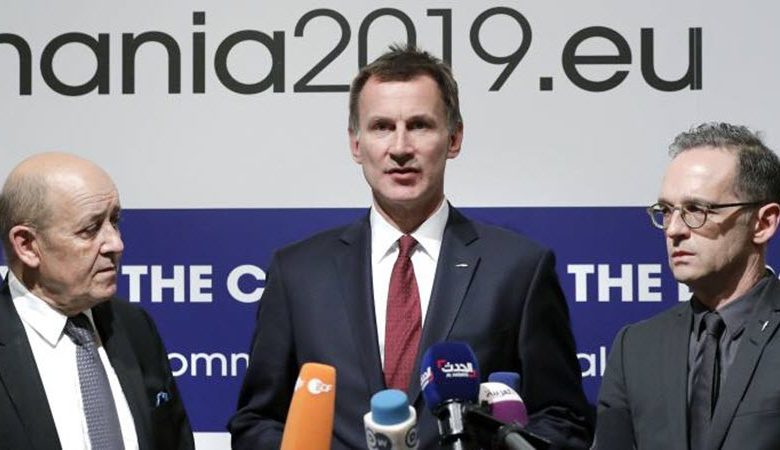
Now, the Iranian regime appears to be giving the Europeans another chance. President Hassan Rouhani warned the European signatories of the nuclear deal – the United Kingdom, France and Germany – that they have 60 days to compensate for U.S. sanctions, failing which Iran would withdraw from the deal.
The SPV, named INSTEX, was a cause of dispute between Iran and the European countries because the regime wanted it to go beyond the scope of medical equipment, medicine and food – it wanted it to include oil and banking transactions. The Trump administration has emphasised that any transactions outside of the medical equipment, medicine and food group would be punished.
Although some officials are trying to pressure Europe into making a difference, not all are in agreement.
In an address to regime officials last week, the country’s Supreme Leader, Ayatollah Ali Khamenei, criticised Europe’s treatment of Iran saying that the European leaders have not fulfilled their obligations under the JCPOA framework, while claiming that they are fully committed to it.
The Supreme Leader then went on to advise the officials that Iran must not “look outside the country” for assistance because it will be let down. He said: “Foreigners will damage us. Look at Europe.”
One of the biggest pressure points on the Iranian regime is its lack of ability to export oil. The United States announced last month that it would not be renewing waivers on countries importing Iranian oil.
Despite the Supreme Leader’s desire to not rely on the EU, one of his top aides, Chairman of Iran’s Strategic Council of Foreign Relations (SCFR) and former foreign minister Kamal Kharrazi travelled to Paris where he called on the Europeans to counter U.S. sanctions and buy Iranian oil.
It seems that the regime’s best chance lies with the Europeans but the situation does not look hopeful.