
Hangings of PMOI Members Shatter the Regime’s Favorite Myth About Iran’s Society
Written by
Mohammad Sadat Khansari
Three-minute read
In the din of war—missile strikes, collapsing alliances, and the daily ledger of oil prices and casualties—one quiet dispatch from Tehran barely registers. On a single spring week of 2026, the clerical dictatorship executed five political prisoners. Four were affiliated with the People’s Mojahedin Organization of Iran (PMOI), the very group the regime has spent decades insisting has no roots inside country. The fifth was an 18-year-old rebel who, when asked in court why he had tried to burn down a Basij base, answered plainly: he was looking for weapons because he intended to overthrow the Iranian regime.
Their deaths were not battlefield collateral. They were deliberate, intimate, and, in the regime’s calculus, necessary. Yet the lives they lived and the choices they made in their final hours expose a deeper truth: the theocracy’s loudest propaganda victory—that the PMOI are a foreign-funded mirage with no domestic support—is being refuted by the very people it hangs.
The letters of PMOI martyr Babak Alipour.
The mullahs' regime may have taken Babak Alipour’s life, but his words will continue to echo across Iran, inspiring a generation determined to turn his dream of a democratic republic into reality.https://t.co/biJjkujYyP
— People's Mojahedin Organization of Iran (PMOI/MEK) (@Mojahedineng) April 1, 2026
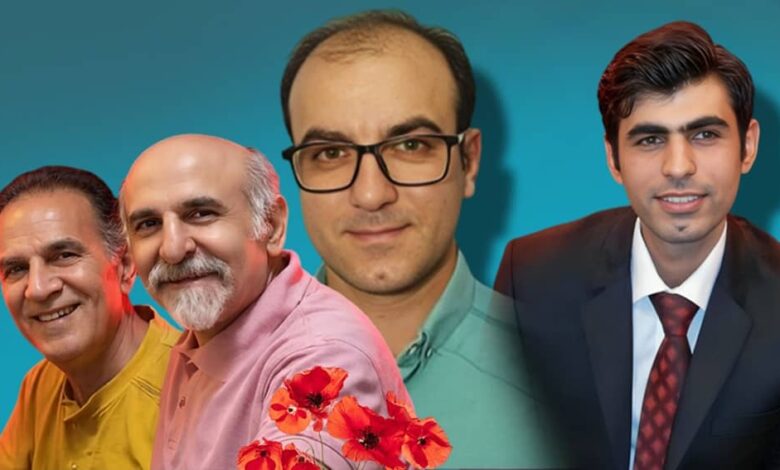
Consider the four PMOI members. Babak Alipour, 34, was a law graduate from Amol who defended gender equality and citizen rights. Pouya Ghobadi, 33, was an electrical engineer from Sanandaj whose technical skills could have built the infrastructure the country desperately needs. Akbar Daneshvar Kar, 60, a civil engineer turned motorcycle courier in the impoverished port of Konarak, spent his days quietly aiding the poor and children in Baluchestan. Mohammad Taghavi Sangdehi, 59, a graphic designer and art teacher from Rasht, had already survived years in the regime’s prisons; he taught creativity to schoolchildren while quietly advocating for workers and farmers.
They grew up and lived in a society where state television, filtered internet, and billions of dollars in propaganda films, books, and articles painted the organization as Satan incarnate. Yet when interrogators demanded they renounce the group on camera in exchange for their lives, they refused. Taghavi left behind a final testament that reads like a manifesto against surrender: “I swear that until my last breath I will fight wholeheartedly and die standing… Hazer! Hazer! Hazer!”
🚨 Simay Azadi Exclusive | #Iran
PMOI member Pouya Ghobadi performs “Chehel Sal” (Forty Years) by @RouzbehEmad3, with lyrics by @alefmehr1, in Ghezel Hesar Prison (February 2026).Pouya and fellow PMOI member Babak Alipour were executed on March 31, 2026. https://t.co/QQ86g727nY pic.twitter.com/d34wXgi8kP
— SIMAY AZADI TV (@en_simayazadi) April 1, 2026
Taghavi’s words—“Hazer” [Persian for present or ready]—goes beyond mere presence, conveying a state of readiness: a brave assertion that he would face whatever lay ahead—pressure, suffering, or judgment—with composure and resolve, determined to endure without yielding.
The triple repetition was no rhetorical flourish; it was defiance aimed squarely at fear, doubt, and submission.
They were the kinds of citizens any functioning society would prize: educated, productive, compassionate. The regime executed them not for what they had done, but for what they refused to stop believing. That refusal, forged in isolation under relentless censorship, suggests something the mullahs cannot admit: their narrative has failed even among those who have never seen the alternative up close.
The fifth prisoner, the teenager Amir Hossein Hatami, a young rebel, stood as another example of a generation driven to confrontation with the regime. State media and foreign outlets alike had spent years promoting “reform within the system” or cost-free incremental change. None of that inspired him to risk everything. He told the court he sought weapons to topple the regime.
His words, like Taghavi’s, were not the product of foreign plotting or exile radio. They were the logical endpoint of a half-century of repression, economic ruin, and suffocated hope.
The unbreakable spirit of PMOI martyr Ali Akbar Daneshvarkar https://t.co/lga4IfCvP4
— People's Mojahedin Organization of Iran (PMOI/MEK) (@Mojahedineng) April 1, 2026
The regime insists the PMOI have “no base” inside Iran. Yet its own courts and prisons tell a different story. After the January 2026 uprising, the organization reported more than 2,000 supporters and rebel-center members vanished into the maw of the security apparatus—an accounting the regime has never rebutted. The hangings of these five are not random cruelty; they are panic dressed as power. While the world watches missiles arc across the sky, the theocracy is frantically trying to cauterize the one threat it cannot bomb away: organized, homegrown defiance with a name and a network.
There is a bitter irony here. The same regime that once boasted of exporting revolution across six Arab capitals now celebrates mere survival as victory. Its loudest claim—that the only real Iranians are those who submit—has been contradicted by the very citizens it must kill to keep the claim alive. In an era of instant global communication, the persistence of such belief despite every barrier the state can erect is remarkable. It suggests that the radical path these prisoners chose is not an aberration but a verdict rendered by a society that has exhausted every other option.
#Iran News Alert – Simay Azadi Exclusive
Message by PMOI member Babak Alipour, following the confirmation of his death sentence by the regime's so-called Revolutionary Court in November 2025. "I vow to continue this path until the end." pic.twitter.com/AzSgQmTAwG— SIMAY AZADI TV (@en_simayazadi) March 31, 2026
As the war grinds on and diplomats haggle over cease-fires and sanctions relief, the executions should serve as a reminder: the Islamic Republic’s most dangerous adversary is not a foreign army. It is the growing cohort of Iranians—engineers, lawyers, teachers, teenagers—who have looked at the ruins of their country and decided that the only remaining language is resistance. The regime can hang the messengers. It cannot silence what their deaths make plain: the demand for an Iran free of clerical dictatorship is not imported. It is indigenous, stubborn, and, as Taghavi vowed while standing on the gallows, very much present.