
Hanging the Unbowed: Iranian Regime’s War on Organized Resistance
Hanging the Unbowed: Iranian Regime’s War on Organized Resistance
Written by
Dr. Masumeh Bolurchi
Three-minute read
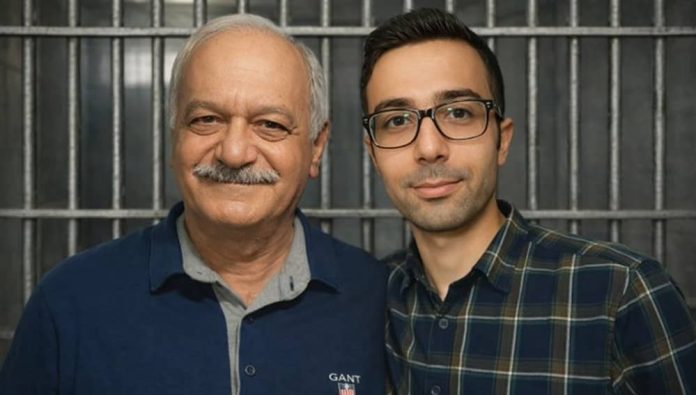
At dawn on April 4, the Iranian authorities executed two political prisoners: Vahid Bani Amerian, 33, and Abolhassan Montazer, 66. Their deaths followed the hanging of four co-defendants just days earlier—Babak Alipour, Pouya Ghobadi, Mohammad Taghavi Sangdehi and Akbar Daneshvarkar—all accused of links to the People’s Mojahedin Organization of Iran (PMOI).
Montazer belonged to an older generation of dissent. An architecture graduate and former political prisoner from the 1980s, he had endured repeated arrests over decades. By the time of his final detention, he was suffering from severe heart, lung and kidney disease. His execution, despite this condition, was not about urgency. It was about erasing a lifetime of resistance that had survived every previous attempt to silence it.
Bani Amerian represented something the authorities arguably fear even more: continuity. Educated and repeatedly imprisoned since 2017, he had already spent years behind bars before his final arrest. Described by those who knew him as disciplined and thoughtful, he reflected a younger generation reaching the same conclusion as Montazer’s: that the system cannot be reformed. His life demonstrated that repression has not extinguished dissent—it has reproduced it.
🚨 #Breaking Iran News Alert
With the executions of Vahid Bani Amerian and Abolhassan Montazer today, all six PMOI members sentenced to death in the same case have now been executed.
They include Babak Alipour, Pouya Ghobadi, Mohammad Taghavi, and Akbar Daneshvarkar, executed on… https://t.co/9BFaFntZd6 pic.twitter.com/2JxM5MmTru— SIMAY AZADI TV (@en_simayazadi) April 4, 2026
Both men were held for months in Evin Prison, reportedly subjected to prolonged solitary confinement and coercive interrogations. Their convictions rested largely on their affiliation with the PMOI. In today’s Iran, that alone can be enough to warrant death.
What the State’s Language Reveals
The official narrative has been emphatic. Iranian state media described the executed men as members of a “terrorist team” who acted “under the direction of enemy operatives,” claiming they were arrested while preparing attacks with “launcher weapons.” Another report insisted they had carried out “multiple terrorist and explosive operations” and worked to “undermine the security of the country.”
This language is intended to justify. But it also reveals.
The emphasis is not only on alleged acts, but on organization—“teams,” “networks,” “coordination.” The state is not simply warning against violence. It is signaling its fear of structure. What unsettles it is not isolated dissent, but the possibility of a disciplined opposition capable of operating beyond spontaneous protest.
"The regime insists the @Mojahedineng have “no base” inside Iran. Yet its own courts and prisons tell a different story," writes @khansari_m on the executions of #MEKResistanceUnits by the clerical dictatorship. https://t.co/SNb6zhtCQZ
— NCRI-FAC (@iran_policy) April 3, 2026
Why This Movement Is Different
For decades, the PMOI has occupied a singular place in the regime’s calculations. Unlike others, it never accepted the premise that the system could evolve. From the earliest years after the revolution, it rejected clerical rule outright and argued that political authority must derive from the people.
That refusal has defined the conflict.
Where others pursued reform, the Iranian Resistance maintained that reform was a dead end—that repression was inherent, not accidental. It also rejected the state’s attempts to frame external conflicts as a unifying national duty, insisting instead that the central struggle lies within Iran itself: between the ruling system and the population.
This position strips the state of two key defenses. It denies the possibility of gradual accommodation, and it challenges the claim that loyalty to the state is synonymous with loyalty to the nation.
The lives of Iranian political prisoners Vahid Bani Amerian and Abolhassan Montazer are in grave danger. The Iranian regime may carry out their executions at any moment.#Save_Vahid #Save_Abolhassan #StopExecutionsInIran pic.twitter.com/5OjVrnOpRV
— People's Mojahedin Organization of Iran (PMOI/MEK) (@Mojahedineng) April 2, 2026
War Abroad, Anxiety at Home
These executions come at a moment of acute pressure. Iran is facing ongoing military confrontation abroad, including daily airstrikes and mounting losses. Under such conditions, governments typically prioritize unity.
The regime’s actions suggest a different priority.
Even as it confronts external threats, it has kept security forces heavily deployed in cities, warning them to maintain control of the streets. The message is unmistakable: the leadership views domestic unrest as the more immediate danger.
This dual strain—external conflict and internal dissent—has exposed the limits of the state’s capacity. Its security apparatus remains vast, but it is increasingly stretched.
Mohammad Taghavi and Akbar Daneshvarkar, members of the PMOI/MEK, were executed this morning by the executioners of Iran’s religious dictatorship. We salute the two heroes for their unwavering resilience—having endured prolonged torture and pressure, they remained faithful to… pic.twitter.com/ctsLIk1mAs
— Maryam Rajavi (@Maryam_Rajavi) March 30, 2026
The Fear of Organization
The clerical dictatorship has repeatedly shown it can suppress spontaneous protests. It has done so with speed and force. What it finds harder to contain is coordination.
The January 2026 uprisings demonstrated that shift. In cities such as Abdanan and Malekshahi, as well as in districts of Tehran, Rasht and Mashhad, protests evolved into something more structured. Reports indicate that organized groups associated with the PMOI played an active role—defending demonstrators, confronting security forces and, in some cases, maintaining control of neighborhoods for hours or even days.
This is the scenario the state fears most.
Organization introduces strategy, communication and persistence. It can exploit weaknesses in a security apparatus already under pressure. Most importantly, it creates the perception that control is not absolute—that the state can be challenged, not just resisted.
Photo of PMOI member Vahid Bani Amerian, in Evin Prison, January 2025, shortly after being sentenced to death by Iran's regime.
The placard reads, "We will stand till the end."
Vahid was executed this morning at the age of 33. He stood tall till the end. pic.twitter.com/zuDIvzut6J
— People's Mojahedin Organization of Iran (PMOI/MEK) (@Mojahedineng) April 4, 2026
Execution as a Strategy of Containment
The judicial murders of Bani Amerian, Montazer, and their fellow Resistance Unit members are not merely acts of retribution; they are a calculated strategy of containment. These executions serve a singular, desperate purpose: prevention through elimination.
By hunting down those tethered to an organized opposition, the regime attempts to decapitate the network and paralyze the populace through sheer dread. This is a frantic effort to sever the lifeline of dissent—to ensure the fire of resistance is extinguished before it can consume the status quo as it has in generations past.
However, this iron-fisted approach is a double-edged sword. By branding these individuals as “enemies of the state” worthy of the gallows, the regime inadvertently immortalizes them. In the shadow of the noose, they cease to be mere defendants and are transformed into powerful symbols of defiance. Their state-sanctioned deaths do not signal an end, but rather provide a searing catalyst for an outraged society.
All PMOI members, all heroes, all executed in the past week.
Farewell brothers. May you rest in power. We will neither forgive nor forget. pic.twitter.com/NR2rjqnypn— People's Mojahedin Organization of Iran (PMOI/MEK) (@Mojahedineng) April 4, 2026