
Editorial: The Real Battle Is Inside Iran
Written by
The Editorial Board
Some observers in the West have treated the survival of Iran’s clerical regime after the recent confrontation with the United States and Israel as evidence of strength. That conclusion mistakes endurance under bombardment for political stability.
The war was not designed to overthrow the regime, and regimes are rarely removed by air strikes alone. The real measure of Tehran’s strength is not whether its institutions survived missiles from abroad, but whether it can survive the forces gathering inside Iran.
By that measure, the regime’s own words tell a very different story.
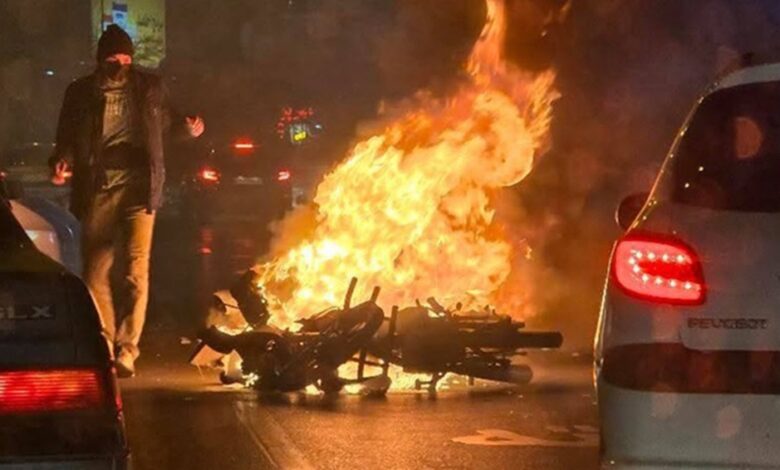
Iranian state media and senior officials increasingly describe the People’s Mojahedin Organization of Iran (PMOI/MEK) and its Resistance Units not as a relic of the 1980s, but as an adaptive, decentralized network operating within a deeply dissatisfied society. Hawzah News, the official outlet of the Qom seminary, recently acknowledged that the Resistance Units have “always played a major role in the nationwide protests inside the country”. It described the organization’s strategy as a combined political, intelligence, cyber and operational model adapted to changing circumstances.
That is not the language of a state facing a defeated adversary.
The contradiction is striking. For public consumption, Tehran insists that the MEK is isolated, ageing and irrelevant. For its security apparatus, however, it warns about young recruits, student and professional networks, decentralized cells, social-media activity and the possibility that scattered public anger may become organized resistance.
The regime’s execution policy exposes the same fear. Between March 30 and April 4, six MEK members — Vahid Bani Amerian, Abolhassan Montazer, Mohammad Taghavi, Akbar Daneshvarkar, Babak Alipour and Pouya Ghobadi — were executed at Ghezel Hesar Prison, a group that included university-educated professionals as well as veteran political prisoners. On April 20, the regime executed two more MEK members, Hamed Validi, a 45-year-old civil engineer, and Mohammad (Nima) Massoum Shahi, a 38-year-old technical worker. In July, Mehdi Khanaki, another young political prisoner linked to the MEK, was also sent to the gallows. The significance of these cases is not merely numerical; it is organizational and generational. After four decades of censorship, executions, demonization and repression, Tehran is still confronting committed members of an organized resistance, including a new generation that continues to find its way to the MEK and its Resistance Units.
History offers an important clue to how Tehran calculates danger. During the Iran-Iraq war, the regime rejected repeated ceasefire efforts even as international pressure for an end to the conflict mounted. But in 1988, after the National Liberation Army linked to the MEK captured the city of Mehran and declared “Today Mehran, tomorrow Tehran”, Khomeini, then the regime’s supreme leader, finally accepted the ceasefire he had long resisted.
The lesson is not that the military balance then is identical to today’s. It is that Tehran has always judged foreign confrontation through the prism of internal survival.
This is also where a common Western calculation goes wrong. The balance of power in Iran cannot be reduced to counting Revolutionary Guards on one side and MEK members on the other. The decisive equation is different: mass social discontent, a younger generation increasingly detached from the regime’s ideological narratives, organized Resistance Units capable of connecting and directing protest, and a national crisis that weakens the state’s capacity for control.
The Iranian regime may possess the guns and coercive machinery, but it remains politically fragile when millions of Iranians reject it and an organized resistance can turn public anger into coordinated action.
That is why, for Tehran, prolonged war and crisis can be more useful than agreement and peace. External confrontation allows the regime to justify repression, sustain a siege narrative and divert attention from its domestic failures. Its principal fear, however, does not come from abroad. It comes from within Iran: from a population that repeatedly rises against it and from an organized resistance capable of turning widespread anger into coordinated action. For the regime, therefore, an external crisis can be managed, and even exploited, while the real existential threat is the prospect of a nationwide uprising linked to organized resistance.
The question, therefore, is not whether the clerical regime can survive another air campaign. It is whether it can indefinitely suppress a society that repeatedly rises against it while an organized resistance continues to adapt, recruit and endure.
Tehran’s own security discourse suggests that it already knows the answer is far from certain.