
Convicted 1988 Massacre Perpetrator Hamid Noury Sparks Outrage with Provocative Cemetery Video
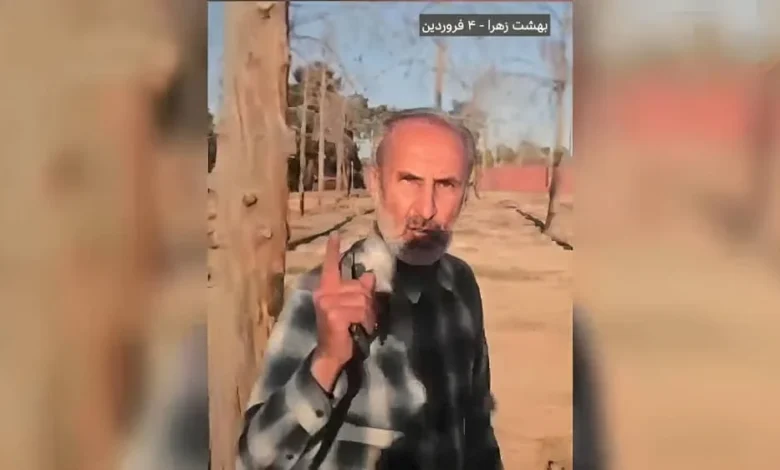
A video posted shows convicted human rights violator Hamid Noury at Behesht-e Zahra cemetery, Tehran, Iran’s capital
Written by
Farid Mahoutchi
In a shocking display that has reignited public outrage over past regime atrocities, Hamid Noury, a former Iranian prison official convicted of crimes against humanity in Sweden, appeared in a video filmed at Behesht-e Zahra cemetery, taunting victims and survivors of the 1988 massacre. Noury, who was sentenced to life in prison in 2022 for his direct role in the mass execution of political prisoners at Gohardasht Prison, was controversially returned to Iran in 2024 through a secretive political deal widely condemned by the Iranian Resistance human rights advocates.
The new footage shows Noury walking through section 92 of Behesht-e Zahra, known to contain the unmarked graves of many Mojahedin-e Khalq (MEK/PMOI) members and other dissidents killed in the 1988 massacre. In the video, Noury shouts provocations at exiled opposition members and those who participated in his prosecution, declaring, “You all should have been here, like your comrades. You ran away abroad.” His message implied that if those in exile had remained in Iran, they too would have faced execution.
Observers and opposition figures quickly denounced the act as a grotesque provocation—one made all the more disturbing by its timing and location. The appearance took place “at the right time and in the right place,” noted one commentary, pointing out that Noury’s outburst comes as the regime faces an unprecedented internal crisis and isolation. “The strategic dead-end confronting Khamenei’s rule makes these grotesque displays necessary for the regime’s morale,” the commentary said, while suggesting that the return of Noury to the scene of the crime may unintentionally signal the regime’s growing fear of justice.
L’arroganza scioccante di Hamid Noury sulle fosse comuni delle vittime del massacro del 1988: il culmine della spudoratezza di un criminale liberato
Hamid Noury, un noto carnefice del regime iraniano, che durante il processo in Svezia cercava di negare i suoi crimini negli anni… pic.twitter.com/JadZsxwPBQ
— Elham Nikzat (@ElhamNikzat78) March 25, 2025
Section 92 of the cemetery, where the video was filmed, is a desolate and neglected part of Behesht-e Zahra. While most of the cemetery is green and manicured, this area stands out in its abandonment—a silent testimony to the regime’s efforts to erase the memory of those it executed. Ironically, that desolation is now a source of pride for the families of the victims, who consider it sacred ground. It is believed that many of those hanged on Khomeini’s orders in 1988 were buried hastily and without identification in this very section.
Noury’s reappearance has triggered renewed anger not only over his crimes but also over the highly controversial deal that led to his release from Swedish custody. In December 2023, Sweden’s Court of Appeals upheld his life sentence for murder and serious violations of international law, confirming the charges that Noury was a key participant in implementing the “death commissions’” orders that sent thousands of political prisoners to execution after minutes-long trials. The court cited the testimony of dozens of witnesses and emphasized its jurisdiction under universal international legal principles, given the nature and gravity of the crimes.
Dr. Mark Ellis highlights the historic trial of Hamid Noury, the first legal proceeding on the #1988Massacre. With testimony from survivors and the use of universal jurisdiction, this conviction serves as a crucial precedent in holding individuals accountable for atrocity crimes. pic.twitter.com/74JZlZz8R0
— NCRI-FAC (@iran_policy) September 8, 2024
Despite the severity of his sentence and the international condemnation, Noury was returned to Iran in what many described as a shameful political exchange. Many Iranians are interpreting his freedom and now his defiant public appearance as further proof of Western appeasement policies that have emboldened Tehran’s worst actors.
The grotesque display by Hamid Noury at Behesht-e Zahra comes against the backdrop of mounting international recognition of the 1988 massacre as a crime of historic magnitude. In his 2022 report to the United Nations Human Rights Council, Javaid Rehman, then UN Special Rapporteur on the situation of human rights in Iran, stated that the mass execution of thousands of political prisoners, primarily members and supporters of the MEK, “may amount to crimes against humanity and genocide.” Rehman emphasized that the victims were targeted not only for their political affiliation but also for their beliefs, and he called for an independent international investigation into the massacre—an appeal that remains unanswered as regime officials like Noury, who directly participated in these killings, now roam free under the protection of Tehran.
In a country where public memory is long, and wounds from past massacres remain raw, Noury’s arrogant return to the scene of his crimes may have one unintended consequence: reminding a new generation that justice, though delayed, is still demanded—and perhaps closer than ever.