
‘No to Executions’ Campaign Enters 128th Week Across 57 Iranian Prisons
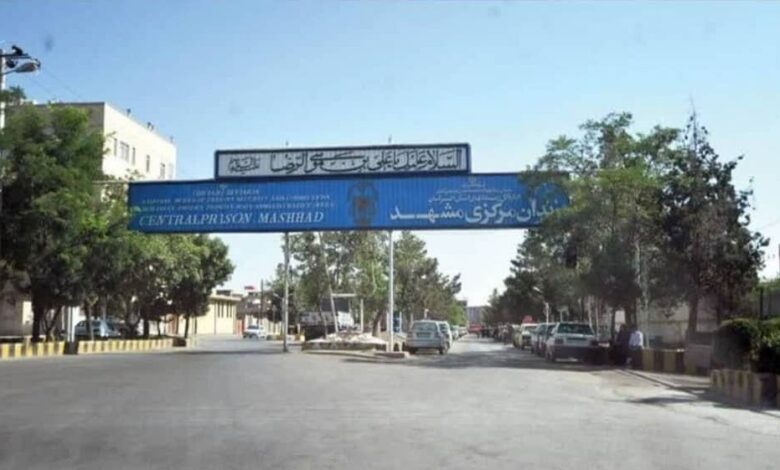
The front gate of the Mashhad Central Prison, northeastern Iran
Written by
Safora Sadidi Mohammadi
The grassroots movement known as “Tuesdays of No to Executions” expanded its reach this week, with inmates across 57 prisons in Iran staging a coordinated hunger strike. Now in its 128th consecutive week, the protest serves as a direct challenge to the judicial practices of the Iranian authorities, which organizers describe as a “humanitarian catastrophe” unfolding behind closed doors.
The movement’s latest manifesto, released Tuesday, coincided with the lead-up to the anniversary of the July 9, 1999, student uprisings, using the occasion to honor those who have died advocating for liberty and equality in Iran.
A Surge in Capital Sentences
The statement highlights a grim escalation in judicial activity, noting that at least 15 individuals have been executed since the start of July. Organizers expressed particular alarm regarding the sentencing of political prisoners, alleging that these rulings are frequently the result of “coercion and physical and psychological torture in interrogation rooms.”
Among the cases highlighted by the campaign is the death sentence recently issued by Judge Salavati against Arghavan Fallahi, a political prisoner held in Tehran’s Evin Prison. The campaign described the sentencing process as “medieval” and conducted under the heavy pressure of security institutions rather than through a fair judicial process.
The #NoDeathPenaltyTuesdays campaign has entered its 128th consecutive week. Political prisoners in 57 prisons across Iran are on hunger strike, protesting death sentences and calling on the international community to act before more lives are lost. #StopExecutionsInIran…
— IRAN HRM (@IranHrm) July 7, 2026
Similar concerns were raised regarding the sentencing of participants in the January 2026 protests. Among those cited were Kamal Khan-Babayi, held in Qazvin’s Chubin-Dar Prison, and Vahid Khan-Sanami, held in Greater Tehran Prison. Both individuals were condemned in what supporters characterize as a bid by the state to “intimidate society.”
Judicial Leadership Under Scrutiny
The movement explicitly linked the current wave of sentencing to the reappointment of Judiciary Chief Gholam-Hossein Mohseni-Ejei by Mojtaba Khamenei.
“Ejei has a record defined entirely by human rights abuses,” the campaign noted, asserting that his tenure has seen the highest frequency of executions in the last three decades.
🚨 Iran: The “No to Execution Tuesdays” campaign continued for its 127th week across 57 prisons, warning that the regime’s execution and repression machine is still operating daily.
The campaign said the judiciary has announced 3,292 arrests on charges of “collaboration with the… pic.twitter.com/ShTsGiVfzL
— SIMAY AZADI TV (@en_simayazadi) June 30, 2026
A Call for International Intervention
As the hunger strikes continue across 57 detention facilities—ranging from Evin and Ghezel Hesar to remote provincial jails—the organizers issued an urgent plea to the international community. The campaign is calling on global human rights bodies and “awakened consciences” to intervene against the accelerating pace of state-sanctioned killings.
“It is essential for everyone to take serious action to pressure the regime to adhere to the principles of a fair trial,” the statement declared, emphasizing the demand for public proceedings in cases where the state seeks to impose the death penalty.
As of Tuesday, the protest has immobilized segments of the inmate population in nearly every major province, including Tehran, Khuzestan, Fars, Sistan and Baluchestan, and across Kurdistan.