

Iran’s “No to Execution” Campaign Marks 127th Week Across 57 Prisons
Front gate of the Dizel Abad Prison in Kermanshah, western Iran
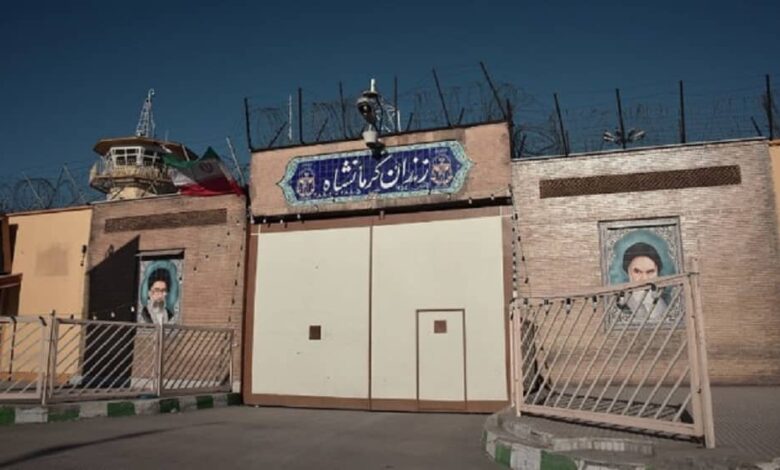
Dizel Abad Prison in Kermanshah, western Iran
Written by
Safora Sadidi Mohammadi
As the Iranian regime intensifies its crackdown on dissent following the nationwide protests of January 2026, prisoners across 57 detention centers have marked the 127th week of the “No to Execution” campaign. On Tuesday, June 30, 2026, participants in this growing protest movement engaged in a coordinated hunger strike to demand an end to the use of capital punishment as a tool for political intimidation.
A Climate of Suppression
Reports originating from the campaign highlight a grim reality within Iran’s judicial system. According to the strikers’ statement, judicial authorities have detained over 3,292 individuals under the charge of “cooperating with the enemy” since the onset of recent military tensions.
The scope of this suppression has expanded significantly following the January 2026 uprisings. Local officials, including the prosecutor of Sari and the Friday prayer leader of Mashhad, have publicly acknowledged the formation of thousands of legal files against protesters. This judicial offensive is occurring against a backdrop of rising executions; approximately 140 people were reported to have been executed during the month of June alone.
Today is 127th week of #NoDeathPenaltyTuesdays, prisoners in 57 prisons across Iran are on hunger strike.
Authorities say 3,292 people have been arrested for alleged “cooperating with the enemy” during the war. Meanwhile, 140 executions were carried out in a single month.…— IRAN HRM (@IranHrm) June 30, 2026
“Punishment Beyond Death”
The campaign’s latest declaration brings renewed attention to the practice of denying families the right to claim the bodies of their executed loved ones or identify their burial sites. Referencing the case of political prisoner Vahid Bani-Amirian, who was executed alongside five others in Ghezel Hesar Prison this past April, the statement describes this policy as a “continuation of punishment beyond death.” This denial of the fundamental right to mourn is characterized by the campaign as a violation of human dignity.
Despite persistent security pressures, the “No to Execution” campaign—one of the most enduring protest movements within the Iranian prison system—continues to gain momentum. The hunger strike on June 30 spans a vast geographical network, including major facilities such as Evin, Ghezel Hesar, and the Central Prison of Karaj, as well as dozens of provincial facilities in cities ranging from Zahedan and Ahvaz to Tabriz and Sanandaj.
Participants assert that their protest is a struggle for the preservation of life and justice. By continuing their weekly strikes, they aim to draw international attention to the regime’s reliance on capital punishment to silence dissent and maintain control.