
Western Coalition and Multinational Bodies Coordinate Decisive Push Against Iranian Regime
un security council
Written by
Mahmoud Hakamian
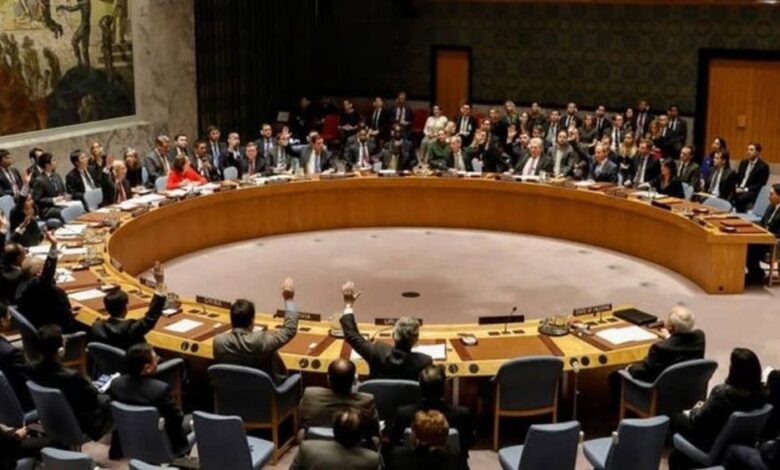
File photo: A vote at the U.N. Security Council in New York
An unprecedented global alignment comprising 18 European nations alongside the United States, United Kingdom, Canada, Australia, and New Zealand has left the Iranian regime facing severe diplomatic isolation. According to an official statement published on the U.S. State Department website on June 10, 2026, this international coalition issued a joint declaration rigorously condemning the lethal plots and malevolent operations orchestrated by the Islamic Revolutionary Guard Corps (IRGC) Intelligence Organization, the Quds Force, and the Ministry of Intelligence. The joint communique explicitly targeted the regime’s repressive trans-border campaigns against dissidents, journalists, and Jewish communities, underscoring a unified global determination to neutralize Tehran’s security threats.
This isolating pressure rapidly extended into multilateral international bodies. On Wednesday, June 10, 2026, the International Atomic Energy Agency (IAEA) Board of Governors passed a U.S.-sponsored resolution with a sweeping majority of 21 votes in favor, leaving Tehran backed by only 3 opposing nations (Russia, China, and Niger). As reported by Reuters on June 10, 2026, the resolution legally orders the regime to comprehensively declare its remaining enriched uranium stockpiles. Commenting on the regime’s growing geopolitical friction, Reuters warned that “this could complicate Washington’s dialogue with Tehran”.
Compounding this systemic censure, the European Union voiced severe apprehensions at the IAEA Board of Governors meeting in Vienna, noting with “deep concern” that due to Tehran’s persistent non-compliance, the agency remained fundamentally “unable to provide any safeguards conclusions regarding Iran’s nuclear material” throughout 2025. The bloc emphasized that the Non-Proliferation Treaty (NPT) remains legally binding and cannot be suspended by Tehran under any circumstances. Concurrently, the UN Security Council voted 11 to 2 on Tuesday, June 9, 2026, to adopt an agenda evaluating the snapback of international sanctions, prompting British and French representatives to explicitly demand the activation of the Dispute Resolution Mechanism to reimpose previous restrictive UN resolutions.
Again and again, Western governments chose #appeasement over firmness, illusion over evidence, short-term bargains over strategic clarity. The result is the world we now inhabit: a region repeatedly set ablaze by Iran’s proxies, a nuclear crisis that never truly left, and a…
— NCRI-FAC (@iran_policy) March 26, 2026
Tehran’s Aggression and Subsequent Isolation
The Iranian regime’s recent long-range missile and drone strikes against neighboring states have backfired sharply, triggering a swift international backlash that has left Tehran profoundly isolated. By launching these aggressive provocations against regional countries, the regime intended to project power; instead, it exposed its own strategic vulnerabilities and severely alienated the international community. Rather than deterring its adversaries, these reckless actions have forced Tehran onto a desperate diplomatic defensive.
On June 8, 2026, the European Union imposed targeted sanctions against Iranian entities disrupting navigation. Furthermore, the EU’s planned “Aspides” naval mission, operating under a coalition led by France and the United Kingdom, aims to clear mines in the Strait of Hormuz, stripping Tehran of its traditional leverage. Addressing the Italian Parliament on June 11, 2026, Prime Minister Giorgia Meloni delivered a stark warning: “If Tehran continues on the wrong path, the European Union must be ready to increase pressure with new targeted measures.”
Crippled by the ongoing war and reeling from the unprecedented social hatred following its bloody suppression of the January 2026 uprising, the regime is resorting to its usual desperate tactic: #nuclear extortion.https://t.co/Ty2DVk0U3t
— NCRI-FAC (@iran_policy) March 31, 2026
Diplomatic Fractures and Regime Infighting
Concurrently, Iranian regime’s UN Envoy Amir Saeid Iravani confirmed that Washington and Tehran are actively exchanging proposals to finalize a text via Pakistan’s diplomatic channel, while Foreign Ministry Spokesman Esmaeil Baghaei stated the memorandum’s primary axis is “ending the war”. However, this prospective compromise has triggered intense factional infighting within the isolated Iranian regime. Highlighting these internal rifts, the head of the Islamic Parliament’s Cultural Commission, Morteza Agha-Tehrani, publicly castigated the administration’s gullibility, revealing that the United States launched its military assault precisely when the Foreign Minister had scheduled formal diplomatic meetings.
The compounding foreign pressure has left the regime fundamentally isolated, arriving at a critical juncture where the clerical establishment has been profoundly weakened by consecutive domestic uprisings, severe regional setbacks, a collapsing economy, and intensifying internal feuds. This structural decay leaves Tehran uniquely vulnerable to the global community’s demands; however, making any significant diplomatic concessions threatens to trigger immediate internal instability. For an autocracy reliant on the projection of absolute power, any visible retreat or compromise instantly exposes its core weakness to an already restive society primed for revolt, while simultaneously demoralizing its shrinking loyal base and fracturing its regional proxy networks.