
Mass Hunger Strike Campaign Reaches 123rd Week Across 56 Iranian Prisons
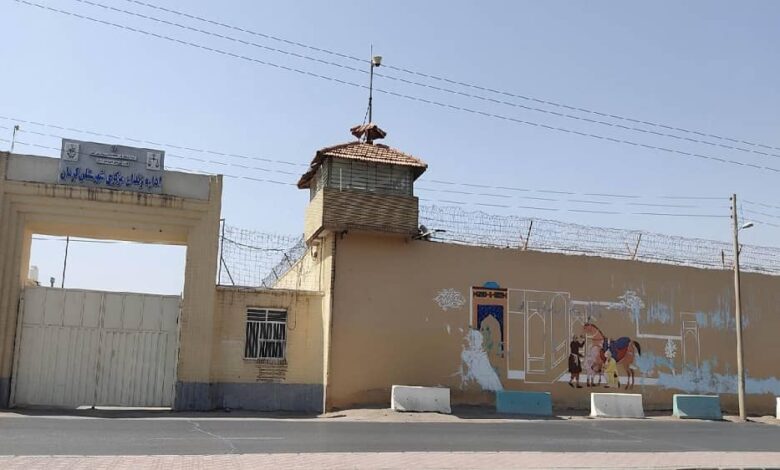
Central Prison in Kerman, southeastern Iran
Written by
Safora Sadidi Mohammadi
In one of the most sustained and coordinated protest movements inside Iran’s penitentiary system, political and ideological prisoners across 56 facilities nationwide went on a hunger strike on Tuesday, June 2, 2026, marking the 123rd consecutive week of the “No to Executions Tuesdays” campaign.
According to statements released by the campaign, the coordinated strike took place despite escalating pressure from judicial and intelligence authorities. Over the past few weeks, prison officials have reportedly intensified threats, interrogations, disciplinary restrictions, and the deprivation of basic rights to break the movement. However, organizers report that the strike has only expanded, drawing support from a growing number of detainees each week.
Escalating Repression vs. an “Explosive Society”
In this week’s manifesto, campaign organizers linked the recent surge in death sentences directly to the country’s worsening economic crisis and deep-seated social unrest following recent anti-government protests, including the demonstrations of this past January.
For 123 consecutive weeks, prisoners across Iran have used their Tuesday hunger strikes to sound the alarm on executions, repression, and the denial of due process.
This week, prisoners in 56 prisons once again issued a unified call for urgent international action to stop the…— IRAN HRM (@IranHrm) June 2, 2026
The statement reads: “Faced with dead-end crises and desperate to prevent the explosion of public anger and the spark of any new uprising, the regime refuses to halt its machinery of suppression and execution… The state is attempting to use the death penalty to instill fear and pre-empt new waves of popular protests.”
The striking prisoners emphasized that executions are not a solution to the structural crises facing the country, but rather a tool of state terror, vowing that they will not remain silent.
Executions, Death Sentences, and Extrajudicial Killings
The campaign’s 123rd statement highlighted several recent cases of executions, new death sentences, and lethal crackdowns against political dissidents:
Amnesty International condemns the arbitrary executions of January 2026 protesters Mehrdad Mohammadinia & Ashkan Maleki on 1 June after a grossly unfair trial by a Revolutionary Court. We are horrified by the political executions of at least 41 people in Iran since 28 Feb. 1/4 pic.twitter.com/9bdZih3d6y
— Amnesty Iran (@AmnestyIran) June 2, 2026
Lethal Raid on Yarsani Brothers: Mojtaba and Meysam Veisi, two Kurdish brothers from the Yarsan religious minority, were killed during an Islamic Revolutionary Guard Corps (IRGC) raid on their safehouse. The brothers had been living in hiding since being targeted for their involvement in the January protests.
Recent Executions: Ashkan Maleki and Mehrdad Mohammadinia, two political prisoners detained during the January 2026 unrest, were hanged at Ghezel Hesar Prison in Karaj on Monday.
New and Confirmed Death Sentences: The death sentence of female political prisoner Zahra Tabari, held in Lakan Prison in Rasht, was reconfirmed. Additionally, death sentences were handed down to Raouf Sheikh-Maroofi and Mohammad Faraji (from Bukan), Benjamin Naqdi (a January protest detainee), and two brothers, Hassan and Hossein Amiri, by Branch 26 of the Revolutionary Court under Judge Afshari. Organizers warned that numerous other unnamed prisoners face imminent execution.
The Voice They Cannot Hang: Iranian Poet and Laborer Amin Farahavar Faces Imminent Execution https://t.co/GhNrWCyCu7
— NCRI-FAC (@iran_policy) May 28, 2026
International Appeal and Geographics of the Strike
The members of the “No to Executions Tuesdays” campaign concluded their statement with an urgent appeal to the Iranian public, fellow detainees, and the international community. They urged global human rights organizations to take immediate, effective action to halt these “extrajudicial and brutal executions carried out without due process.”
The hunger strike spanned 56 detention centers across Iran, including Evin Prison (both men’s and women’s wards), Ghezel Hesar, Greater Tehran Prison, Qarchak, Adelabad in Shiraz, Dastgerd in Isfahan, Sheiban in Ahvaz, and central prisons in Zahedan, Mashhad, Tabriz, Urmia, and Sanandaj, among dozens of others.