
The Transformative Journey of Executed PMOI Freedom Fighter Shahrokh Daneshvarkar
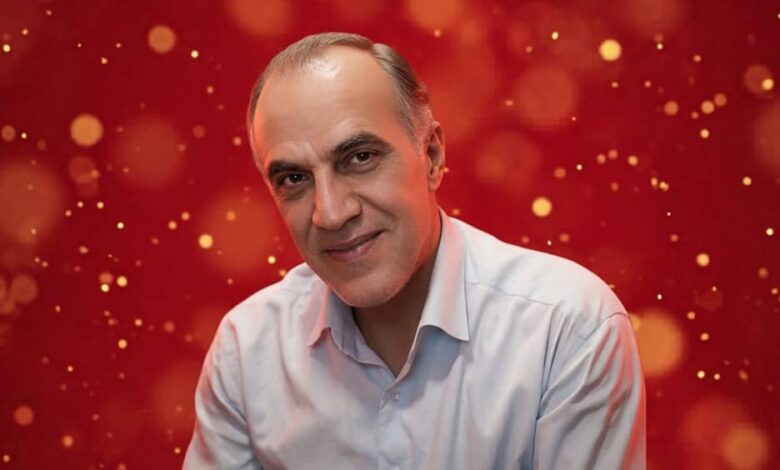
PMOI Resistance Units member Akbar (Shahrokh) Daneshvarkar
Written by
Shahriar Kia
At dawn on March 30, 2026, Iranian authorities executed Akbar (Shahrokh) Daneshvarkar, a civil engineer and member of the PMOI/MEK Resistance Units, in Ghezel Hesar Prison. He was executed alongside another political prisoner as part of a broader wave of killings targeting organized opposition networks.
Daneshvarkar was not an imported dissident, nor a marginal figure. His life followed a path that mirrors a wider social trajectory inside Iran—one that begins within the system and ends in open resistance to it.
In his final letter, he introduces himself simply: “My name is Shahrokh Daneshvarkar… I am now on death row.”
He describes a childhood shaped by faith, duty, and social responsibility. He was a Basij member, participated in the Iran-Iraq war, and engaged in state-backed institutions. Yet even in those early years, he writes that he “did not remain indifferent” to injustice.
That refusal to ignore contradictions became the foundation of his transformation. What began as loyalty gradually turned into questioning. Witnessing injustice, corruption, and the realities of absolute clerical rule led him to reject the system from within. “I asked myself: where does this path lead? … I rejected it,” he writes.
"I have sworn to overthrow the tyrant with my blood"
Six PMOI members after being sentenced to death by Iran's regime, singing songs of resistance and defiance against the mullahs' rule.
They were all executed this week:
Mohammad Taghavi (59)
Ali Akbar (Shahrokh) Daneshvarkar… pic.twitter.com/BnvzaRXYLr— People's Mojahedin Organization of Iran (PMOI/MEK) (@Mojahedineng) April 4, 2026
Like many Iranians of his generation, he did not jump directly into opposition. He first turned to reform. The rise of Mohammad Khatami appeared to offer a path forward, but after years of waiting, he concluded that reform within the system was “a dead end.”
He then explored alternatives outside the system, including support for the monarchists and the so-called non-violent resistance. But the events of November 2019, when hundreds of protesters were killed, became decisive. The gap between state violence and the responses of opposition figures pushed him into another crisis. He describes his reaction bluntly: “I rejected him outright—it was nauseating.”
What follows is perhaps the most important part of his testimony. Daneshvarkar did not arrive at the PMOI through blind allegiance. On the contrary, he writes that he had heard years of negative narratives about the organization and was initially “afraid to approach them.”
His decision came only after comparison, questioning, and what he describes as a conscious, difficult choice. “The time had come to make the hardest choice—the very choice many fear,” he writes.
That choice, he explains, was rooted in clarity: rejection of both monarchy and clerical rule, and commitment to organized resistance. His position is captured in one of the most striking lines of his letter: “Death to the oppressor—whether the Shah or the Supreme Leader.”
The unbreakable spirit of PMOI martyr Ali Akbar Daneshvarkar https://t.co/lga4IfCvP4
— People's Mojahedin Organization of Iran (PMOI/MEK) (@Mojahedineng) April 1, 2026
This transition was driven by what Daneshvarkar observed in the MEK’s actual conduct—a reality that stood in stark contrast to the years of negative narratives he had been fed. He recognized an organization that sought nothing for itself, but was instead entirely dedicated to fighting for the people’s freedom. He was particularly moved by a leadership that expressed a genuine willingness to follow any force that could resist the regime more effectively, a level of selflessness he found nowhere else in the political landscape. For him, this was the “glowing ember of resistance” kept alive through a fierce, uncompromising confrontation with the regime—a commitment to action that finally provided the “total commitment” he had been searching for.
By the time he became part of the PMOI/MEK Resistance Units, his tone is no longer searching but certain. “With each passing day, I grow more convinced, more steadfast, and more resolute in the path I have chosen.”
Even facing execution, there is no sign of retreat. Instead, he frames his path as irreversible: “If I am given another chance, I will return to the struggle… with a hundredfold intensity.”
This trajectory directly challenges the claim that organized resistance in Iran lacks a social base. Daneshvarkar was not born into opposition. He moved toward it through lived experience, disillusionment, and repeated political testing. His life reflects a pattern in which individuals pass through the system, exhaust reform, reject alternative opposition models, and ultimately align with organized resistance structures.
His execution also took place within a broader escalation. Multiple political prisoners linked to the same network were executed within days, pointing not to isolated cases but to the targeting of an organized infrastructure.
States do not systematically execute individuals for belonging to movements they consider irrelevant. They do so when those movements are perceived as structured, persistent, and capable of influence.
Daneshvarkar’s final words are not those of someone detached from society, but of someone who believes he represents it. “For the freedom of my people, I will give my life and pay the price… My head shall never bow.”
His story does not settle the debate about the scale of organized resistance in Iran. But it does establish something harder to dismiss: how such resistance is formed, who it draws from, and why individuals choose it despite the cost.
In that sense, his execution is not only an act of repression. It is also an unintended disclosure.