
Iran’s Regime Runs on Extortion
Iran Regime Is Jamming GPS Signals in Strait of Hormuz to Disrupt Commercial Shipping
Written by
Mehdi Oghbai
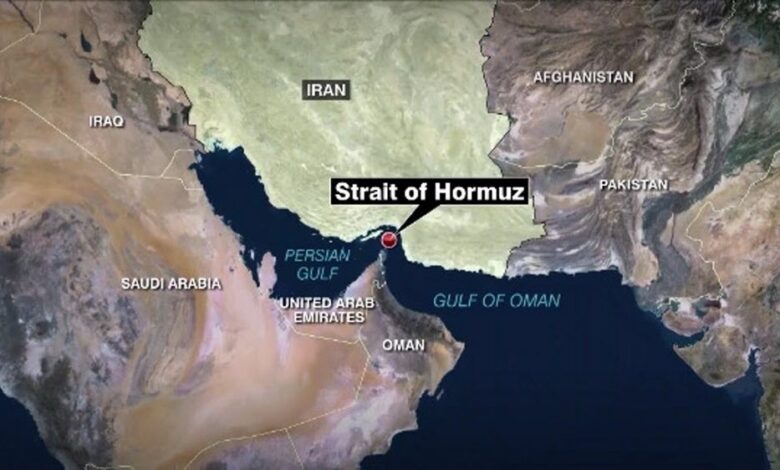
The clerical dictatorship is again doing to the world economy what it has done for decades to people, governments and entire societies: taking hostages. On March 24, 2026, the regime’s representatives told the United Nations and the International Maritime Organization that only “non-hostile” ships could use the Strait of Hormuz, and only in coordination with Iranian authorities. About one-fifth of the world’s oil and liquefied natural gas moves through that waterway. Reuters quoted the head of Kuwait Petroleum saying Iran was “holding the world’s economy hostage.” That was not hyperbole. It was a description of method.
This was never a series of isolated detentions; it was a doctrine. From the first days after 1979, Tehran learned to use hostage-taking as part of a wider strategy of survival: repress opposition at home, create leverage abroad, and turn every foreign government’s concern for its own citizens into a source of political ransom. Over four decades, that system has targeted nationals of the United States, Britain, France, Germany, Sweden, Belgium, Austria, Canada and others, while operating alongside a broader campaign of terrorism, intimidation, and proxy violence across several continents.
The pattern has been painfully consistent: arrests, manufactured charges, diplomatic pressure, and then concessions — money, prisoner releases, political accommodation, or silence. That, more than any single case, is the point. In Tehran’s hands, hostage-taking is not a byproduct of crisis. It is a standing instrument of state policy, sustained for decades by the conviction that the West will eventually pay, bend, or look away.
In light of Hamid Noury's release today, it's crucial to revisit the endless cycle of Western appeasement fueling #Iran's regime #terror and hostage-taking. This loop, starting with Iranian dissidents, now ensnares Western officials and citizens.https://t.co/ieaaOkZb6y
— NCRI-FAC (@iran_policy) June 15, 2024
Nuclear extortion
The nuclear file has followed the same logic. Even before possessing a bomb, Tehran learned that nuclear ambiguity could be used as leverage.
From the E3 talks onward, Tehran treated each act of compliance not as an obligation, but as leverage to be exchanged for time, sanctions relief, or political space. In 2003 and 2004, it agreed to suspend enrichment and accept broader inspections, helping it ease immediate international pressure. But once the pressure shifted, the pattern reversed: the regime resumed uranium conversion at Isfahan in August 2005, and after its dossier went to the U.N. Security Council in 2006, it stopped voluntarily implementing the Additional Protocol. The lesson was clear early on: concede enough to avoid punishment, then restart once the crisis had been defused.
The same logic reappeared after the JCPOA. Following the U.S. withdrawal in 2018, Tehran turned each nuclear breach into a bargaining chip: exceeding stockpile limits, raising enrichment levels, resuming activity at Fordow, curbing inspections, and later removing IAEA cameras after censure. Each step increased pressure while preserving an offer to reverse course — for a price. This was not normal arms-control diplomacy. It was extortion through escalation: create the crisis, deepen it in measured increments, and then demand compensation for restraining the danger Tehran itself had manufactured.
Wary of facing pushback from its warmongering in the #MiddleEastConflict, #Iran's regime has sent another official to play the nuclear extortion card, hinting that its Supreme Leader may reconsider his fatwa and pursue nuclear weapon production. pic.twitter.com/NR14AOpObd
— NCRI-FAC (@iran_policy) April 9, 2024
Proxy warfare as extortion tactic
The same coercive logic shaped Tehran’s regional policy long before the current war. The Islamic Revolutionary Guard Corps’ Quds Force was built precisely to project pressure beyond Iran’s borders through militias, front groups, and deniable violence. In a 2020 legal speech, the Pentagon described the Quds Force as Iran’s “primary tool” for unconventional warfare and said it “funds, trains, supplies, and supports partners and proxies throughout the Middle East,” including Shiite militias in Iraq. The same U.S. defense account stated that Quds Force-backed militias, using Iranian-supplied IEDs, explosively formed penetrators, anti-tank missiles, rockets, and drones, were estimated to have killed more than 600 U.S. personnel in Iraq between 2003 and 2011. That was not freelancing by local actors. It was state policy carried out by proxy.
Afghanistan followed the same pattern. In 2018, the U.S. Treasury and the Terrorist Financing Targeting Center identified Iranian regime sponsors and Taliban facilitators involved in an arrangement under which the Quds Force provided military training, financing, weapons, and sanctuary in return for attacks on the Afghan government; Treasury said Iranian support included training facilities near Birjand, weapons and ammunition, and promises of anti-aircraft weapons. Treasury has separately said the IRGC-QF provided material support to the Taliban, Hezbollah, Hamas, Palestinian Islamic Jihad, and the Houthis, while Iran’s own central bank and sovereign development fund helped move large sums to the Quds Force and its clients in Iraq, Lebanon, and Yemen. The purpose was not simply to spread disorder. It was to make pressure on Tehran costly everywhere else — in Baghdad, Kabul, Beirut, Sana’a, and beyond — so that diplomacy with Iran would always take place under the shadow of violence it could activate or restrain.
#Iran Regime’s Proxy Forces Trained to Use IEDs Against the US in #Syriahttps://t.co/t6A4aoAvQ8 pic.twitter.com/Xad3AL9seI
— NCRI-FAC (@iran_policy) November 29, 2018
Nowhere is that clearer than in the waterways around the Arabian Peninsula. Reuters reports that the Iran-backed Houthis have attacked more than 100 merchant ships since November 2023, sinking four, seizing another and killing at least eight sailors; the attacks cut Suez traffic sharply and forced costly rerouting around Africa. In other words, Tehran did in the Red Sea through a proxy what it is now trying to do directly in Hormuz: convert global commerce into a pressure point.
Human rights taken hostage
Inside Iran, the same logic narrows from states and sea lanes to homes and prison cells. For decades, an entire nation is held hostage by the regime. Amnesty International documented a “ruthless campaign of harassment and intimidation” against families of those killed during the 2022 uprising, including arbitrary arrests, surveillance, threats and pressure to stay silent. It also warned in December 2024 that at least 10 people remained under sentence of death in protest-related cases after 10 others had already been executed. The regime does not only punish the dissenter; it places entire families under pressure, using uncertainty, isolation and the threat of execution as a form of prolonged control.
As part of the leaked documents obtained by dissidents, a booklet was obtained with the title “The crisis in #Ukraine and its consequences on the foreign relations of the Islamic Republic of #Iran– Ambassadors Seminar – April and May 2023”.https://t.co/IO9WmaU8rg
— NCRI-FAC (@iran_policy) June 17, 2023
This behavior will not be reformed away, because it is not incidental. It is the regime’s survival mechanism. Tehran lacks the social legitimacy that comes from consent, the economic power that attracts durable alignment, and the soft power that builds goodwill abroad. What it has instead is coercive capital: a strait to menace, a prisoner to barter, a militia to activate, a nuclear threshold to manipulate, a family to terrorize. Remove extortion, and the system is left exposed. The world should finally treat the clerical dictatorship as it is: an extortionist state that survives by manufacturing hostages at every scale. And it should help the Iranian people and their organized resistance end that system once and for all.