
Iran Faces Rising Security Incidents Amid Deepening Economic Strain
iran-stock-exchange-fiasco (1)
Written by
Mansoureh Galestan
12th February 2026
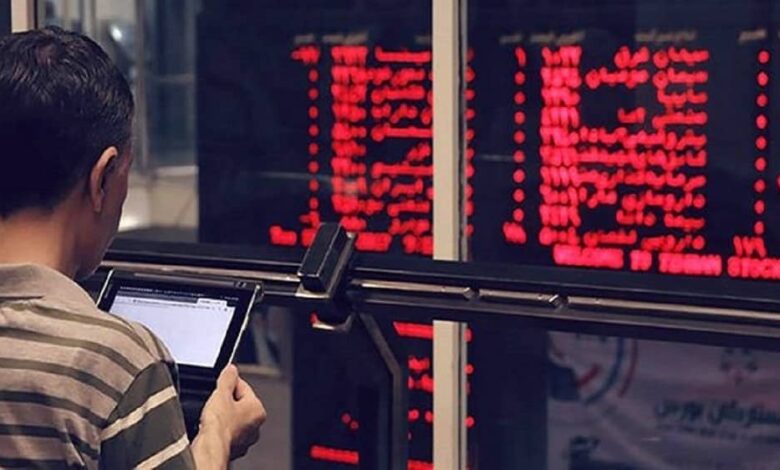
An investor watches red trading screens at the Tehran Stock Exchange
A series of reports from across Iran this week point to mounting security and economic pressures as the country moves through the hot winter of 2026.
State media reported on Thursday that a security officer died after being wounded in an armed confrontation in Mamulan, in Lorestan Province. Officials described the incident as a clash with an “armed robber,” identifying the officer as Mousa Aghaei and saying he died after being taken to hospital. Given the authorities’ frequent tendency to frame attacks on security personnel as ordinary criminal incidents rather than politically motivated violence, the stated motive and circumstances remain difficult to verify.
In a separate incident, opposition-aligned reporting said an explosion targeted a convoy of Iranian security forces near Mohammad Abad as it moved through the Iranshahr area in Sistan and Baluchestan Province. The report suggested that at least two armored vehicles were destroyed. A group calling itself the People’s Fighters Front issued a statement taking responsibility and said further details would follow.
🚨 Simay Azadi EXCLUSIVE | Arak
In Arak defiant youth targeted two IRGC Basij bases on February 10, 2026.📍 The attacks come amid continuing unrest and anti-regime activities reported in multiple cities across Iran. pic.twitter.com/FMW5hIlwMo
— SIMAY AZADI TV (@en_simayazadi) February 11, 2026
Officials stress firm response to unrest-related acts
Amid these incidents, official and semi-official outlets amplified messages from senior political and judicial figures emphasizing a tougher approach to unrest.
In remarks broadcast by Baran TV, lawmaker Mojtaba Zolnouri said what he described as efforts to destabilize the system had not changed. He referred to incidents such as the deliberate spreading of fuel on roads to cause security motorbike units to skid and argued that the country faced coordinated pressure.
Senior judiciary official Mohammad Kazem Khalili said that “those who rioted” and carried out arson “will be dealt with decisively,” casting protest-related cases as matters for rapid punishment rather than due process. In a separate warning, judiciary spokesman Asghar Jahangir said that “those who deliberately and knowingly poured gasoline” should “be sure” they “will face legal action,” adding that the head of the judiciary had ordered these files to be handled “firmly and decisively” and faster. Taken together, the message is unmistakable: the regime is trying to deter and intimidate dissent by advertising speed, certainty, and severity of punishment.
🚨 Simay Azadi EXCLUSIVE | Ahvaz
In Ahvaz, footage shows defiant youth targeting an IRGC Basij base on the eve of the anniversary of the 1979 anti-monarchic revolution.
📍 This occurs amid several anti-regime activities reported in multiple cities.#IranProtests2026 pic.twitter.com/YdsVZ3Rkci
— SIMAY AZADI TV (@en_simayazadi) February 11, 2026
Currency volatility drives sharp repricing in Tehran housing
At the same time, economic reporting described significant volatility in the housing market, particularly in Tehran. State media reported that asking prices for residential properties in the capital have risen by 30 to 50 percent over the past two to three months, reflecting turbulence in currency and other asset markets.
In a report published by ISNA, housing-union official Mehdi Karbasian warned that the recent repricing of Tehran property—driven, in his account, by political and currency “excitement”—is now poised to hit tenants as well, saying that “the policy of rate-setting and imposed prices in the rental market has not worked,” and pointing to a widening gap between official ceilings and real-world outcomes: “the government set the permitted rent increase in Tehran at 25%, but rents have risen by about 50% on average,” which he said shows landlords are not following the mandated limits; he also described a market where listings move but deals do not, stating that “every day we monitor new listings, we see apartment prices change, but no transaction takes place—prices rise only nominally.”
The open-market dollar rate also rose from roughly 130,000–140,000 tomans in late December to more than 160,000 tomans in recent weeks. According to reports, sellers have either withdrawn properties from the market or repeatedly adjusted asking prices upward as expectations shift.
Rent pressures and uncertainty over next year
Beyond housing, a separate economic analysis cited an International Monetary Fund estimate placing real GDP growth at 0.6 percent and said consumer inflation has exceeded 42 percent. A nominal GDP figure of about $451 billion, combined with a population estimate of 87.5 million, implies per-capita output near $4,000.
The same analysis referenced a debt figure of 130 trillion tomans for the country’s social security fund and cited the parliamentary research center as reporting gross fixed capital formation at minus 7.9 percent, indicating several years of declining investment. It also described continued capital flight into hard assets such as gold and foreign currency as confidence in the national currency weakens.
The state-run Didban Iran reported on February 12, 2026, that kidney-sale advertisements have become more common among people born in the 2000s. The report linked the trend to unemployment, debt, and rising living costs, and said some online listings quote prices as high as 5 billion tomans, though advertised figures do not necessarily reflect completed transactions.
Taken together, everything points to a society sitting on the same combustible foundations that ignited the January uprising—currency collapse, unaffordable housing and rent, collapsing purchasing power, and a security-and-judicial apparatus openly primed for repression—only now those drivers appear sharper and more entrenched. These pressures are not dissipating; they are compounding. In that context, the next nationwide flare-up looks less like a question of “if” than a question of when, and what incident will provide the spark.